



Removing fruit stains
On this page:

Removing fruit stains
Fruit stains appear faster than you think. A child with strawberry-stained hands on the sofa, a piece of mango falling on the carpet, or grape juice splattered across the floor. Many fruits contain strong colourings and natural acids. As a result, even a minor accident can quickly lead to noticeable discolouration, a sticky spot or a ring once it dries. Red and dark fruits such as berries, cherries and grapes in particular cause quickly visible stains.
Acting quickly helps, because the dyes have not yet been deeply absorbed. But even if the stain has already dried, you can often still achieve a lot, as long as you work gently and do not scrub.
The same advice applies to these stains: Fruit, Elderberry, Mandarin, Kiwi, Cherry stain, Fruit juice, Fruit juice, Raspberry, Blackberries, Blueberries, Blueberry, Berries, Banana, Apple, Strawberry stain, Strawberry
Characteristics (anatomy) of a fruit spot
Fruit stains usually consist of juice containing natural sugars, acids and colourings. The sugar makes the stain sticky and attracts dirt. The acids can corrode some materials or cause dull spots. The colourings in fruit vary greatly: red fruit often contains pigments that quickly adhere to fibres, while citrus fruit can be more acidic and less colourful. On textiles, fruit dyes penetrate between the fibres and remain visible as shadows. On hard floors, juice can dry into a haze or sticky layer. If you use too much water, you will spread the dyes and get circles more quickly.
Fruit stains in carpets and rugs
Fruit stains vary depending on the type, but often contain colourings and sugars. In carpets, they quickly penetrate the fibres and, after drying, can cause noticeable discolouration, ranging from yellow to red or purple. With berries and cherries, even a small drop can leave a noticeable shadow.
If it remains in place, the spot often becomes sticky and attracts dirt. With berries and cherries, even a small drop can leave a noticeable shadow. This can cause the stain to become darker and appear larger than it was. Some fruit stains may also give off a slight odour if residues remain in the fibres.
Please note that the stain may “run” in the direction of the pile, resulting in a smear rather than a single spot. The edge may also be more visible than the centre after drying. When handling fruit, it is important to take into account colourings that adhere quickly.
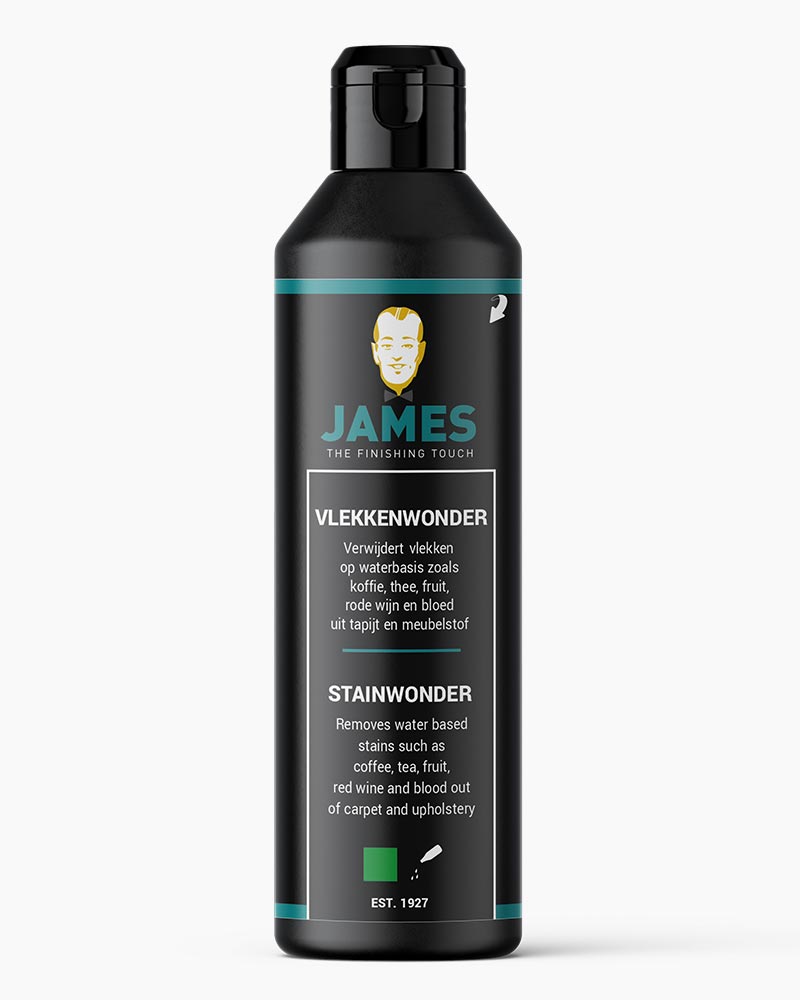
Treat with James Stainwonder
This stain can be treated with James Stainwonder. All you need is a bottle of James Stainwonder!
- Test for colour and material resistance in an inconspicuous area: apply, let it dry completely and evaluate.
- Allow the surface to dry completely.
- Apply James Stainwonder to the dry stain by turning the bottle upside down, placing the opening of the bottle on the stain and treating the entire stain.
- The product works for 12 hours, so the effect does not have to be visible immediately.*
- Is the stain not completely gone after treatment, but it has improved? You may repeat the treatment.
* With wool: in the vast majority of cases, James Stainwonder does not cause any discolouration. You have already established this by testing the product in an inconspicuous area as described above. In that case, you do not need to carry out the following step. If a (slight) discolouration did occur, you should neutralise James Stainwonder as soon as the stain has disappeared. In this case, immediately place a damp cotton cloth on the spot where the stain was and let it dry.
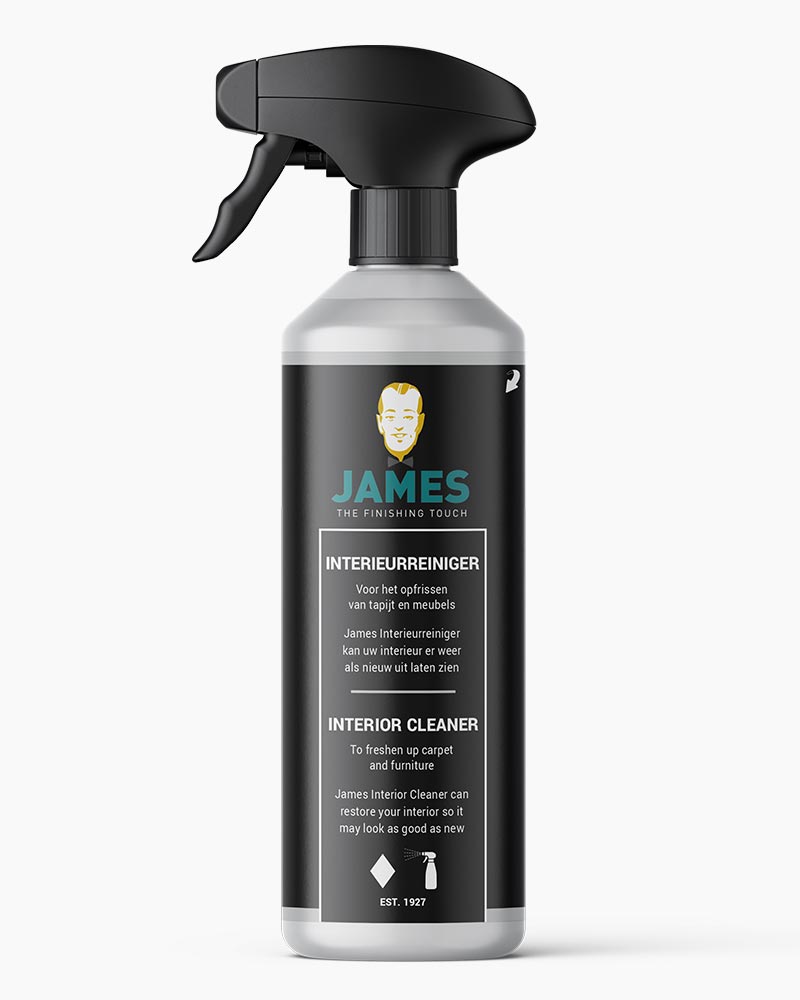
James Interior Cleaner
This stain can be treated with James Interior Cleaner. For this you need a white cotton cloth and James Interior Cleaner. Then follow the next steps:
- Test for colour and material resistance in an inconspicuous area: apply, let it dry completely and evaluate.
- Spray James Interior Cleaner on a dry, white cotton cloth.
- Use this cloth to wipe the purpose area using wide sweeping strokes. If the cloth attracts dirt or grease, you know the treatment is effective.
- Repeat frequently with a clean part of the cloth, until you see the cloth no longer attracts dirt.
No interior cleaner at home?
As a first aid measure, use a clean, slightly damp terry cloth towel and gently rub the stain. This way, you absorb the fruit and sugars and prevent them from being absorbed further into the fabric. In some cases, this is sufficient to remove the stain. If a sticky stain reappears in the future, use James Interior Cleaner to remove the sticky residue. If a colourful stain remains, use James Stain Remover to tackle these colours.
Fruit stains on hard floors
On hard floors, fruit stains often appear as coloured droplets or smears that dry into a sticky film. This layer can become streaky and remain visible as a haze on the top layer when exposed to light. Colour may remain in the structure and along the edges, especially with dark berries.
If you leave it lying around, the coating will harden and attract dust. On PVC, vinyl, LVT and laminate, this can leave a dull mark that is particularly visible from an angle. With natural stone, discolouration may remain visible for longer if colourants penetrate into small pores.
Please note that fruit residues sometimes remain as a ‘sugar film’, making footprints quickly visible. A smear can also occur when you walk through it, which lengthens the stain. The problem often lies in the thin layer that you can only see once it is dry.
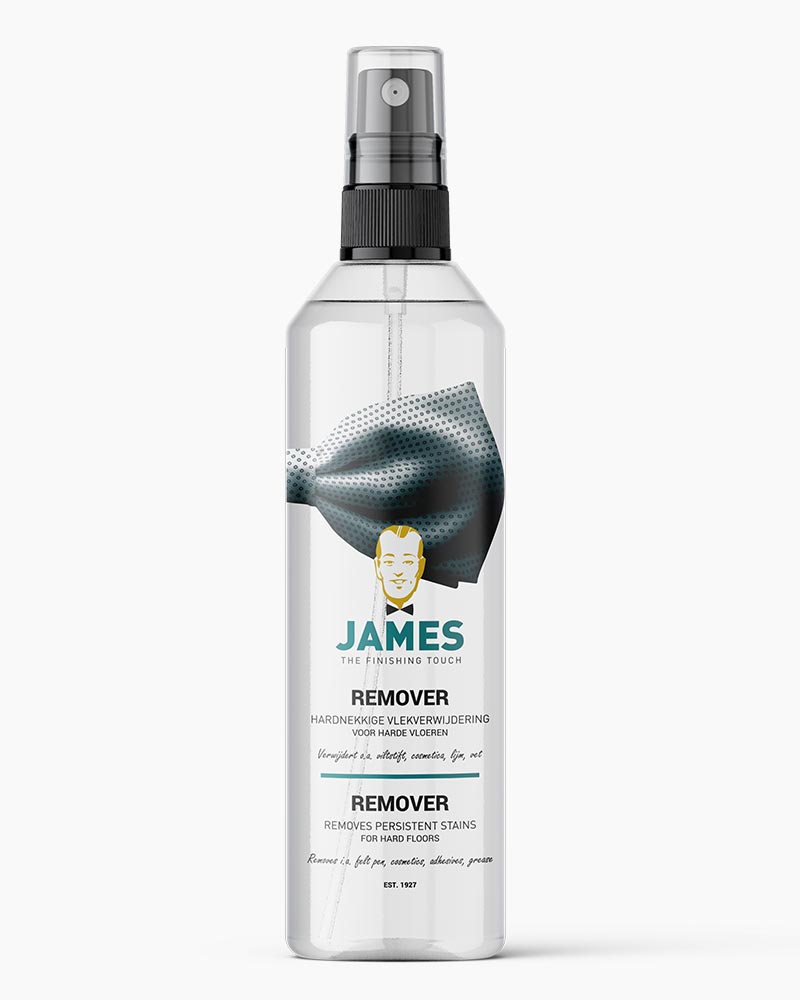
Treatment with James Remover
This stain can be treated with James Remover. Before use, always test the surface in an inconspicuous place for colour and material resistance: apply, leave to set for 5 minutes, wipe the tested area with water, allow to dry and assess.
- Spray directly onto the purpose area
- Leave to soak for about 1 to 5 minutes
- Then, use a white cotton cloth to remove the grease
- If necessary, gently treat stubborn stains with a soft brush or plastic spatula.
- After use, always clean the area with water.
Attention: be careful when working near a glue seams. Allow James Remover to soak in shortly. Do not let the product penetrate into cracks or seams.
Treat using a moist cotton cloth
This stain can be treated immediately with water. Use clean water and preferably a white, cotton cloth.
Fruit stains on upholstery fabric
Fruit on upholstery fabric often results in a combination of colour and stickiness. The liquid absorbs and spreads, making it easier to see the edges than with many other stains. Discolouration is immediately noticeable on light-coloured fabrics, while on dark fabrics you often see a dull area.
If the stain remains, it may attract dirt due to sugar residues. As a result, over time, the area becomes grey or darker than the rest. Cushions can also develop odours if moisture remains trapped in the filling.
Please note that rubbing may spread the stain and alter the fabric structure. A larger damp area around the stain may also remain visible later as a ring. Fruit stains require particular attention due to colourings that quickly become embedded.
Treat with James Stainwonder
This stain can be treated with James Stainwonder. Always test for colour fastness and material perpetuation in an inconspicuous area: apply, let it dry and evaluate.
- Allow the surface to dry completely.
- Apply James Stainwonder to the dry stain by turning the bottle upside down, placing the opening of the bottle on the stain and treating the entire stain. Spread a little James Stainwonder on a clean, dry cotton cloth towel and use it to cover the stain. This is to prevent circles from appearing after drying.
- The product works for 12 hours, so the effect does not have to be immediate. Do not remove the cotton cloth until it is dry to see the result.*
- Is the stain not completely gone after treatment, but it has improved? You may repeat the treatment.
* With wool: in the vast majority of cases James Stainwonder does not cause any discolouration. You have already established this by testing the product in an inconspicuous area as described above. In that case, you do not need to carry out the following step. If there is a (slight) discolouration, neutralise James Stainwonder with water as soon as the stain has disappeared (to do this, however, lift the cotton cloth in between to be able to assess whether the stain has already disappeared). In this case, immediately place another damp cotton cloth on the spot where the stain was and let it dry.
James Interior Cleaner
This stain can be treated with James Interior Cleaner. For this you need a white cotton cloth and James Interior Cleaner. Then follow the next steps:
- Test for colour and material resistance in an inconspicuous area: apply, let it dry completely and evaluate.
- Spray James Interior Cleaner on a dry, white cotton cloth.
- Use this cloth to wipe the purpose area using wide sweeping strokes. If the cloth attracts dirt or grease, you know the treatment is effective.
- Repeat frequently with a clean part of the cloth, until you see the cloth no longer attracts dirt.
No interior cleaner at home?
As a first aid measure, use a clean, slightly damp terry cloth towel and gently rub the stain. This way, you absorb the fruit and sugars and prevent them from being absorbed further into the fabric. In some cases, this is sufficient to remove the stain. If a sticky stain reappears in the future, use James Interior Cleaner to remove the sticky residue. If a colourful stain remains, use James Stain Remover to tackle these colours.
Would you also like to benefit from James’ effective stain removal? Discover our full range and order your James products easily online. You’ll soon be enjoying a clean and stain-free interior again!
Frequently asked questions and myths
There are all sorts of stories circulating about how to remove these fruit stains. From granny’s remedies to persistent tips from the internet – but what really works? In this section, we answer frequently asked questions and debunk a few myths. This allows you to get started with confidence.
Sparkling water is often mentioned, but it is not a guarantee.Sparkling water is often mentioned, but it is not a guarantee. It may help to loosen fresh stains, but it does not always remove the dyes. Furthermore, too much sparkling water can actually spread the stain, especially in carpet or upholstery, causing rings to form. The sugar often remains behind, causing the area to attract dirt again later on. If you wish to use sparkling water, use it very sparingly and pat it on immediately. For lasting results, cleaning with a suitable product is usually necessary.
Lemon juice sounds logical because it is “natural”, but it is acidic. It can cause damage and dull spots on natural stone. It can transfer dyes onto textiles, but it does not always dissolve sugar residues well. This leaves the spot sticky and the stain returns as a shadow. Lemon juice can therefore pose more risks than benefits. It is better to use a cleaner that is suitable for your material and can remove both dyes and sticky residues.
No, warm water is often even unfavourable. This can cause dyes to adhere more quickly and the stain to penetrate deeper into the material. This can lead to a permanent pink or purple colour, especially in red fruits. It is preferable to use lukewarm or cold water if you need moisture, and work locally. The most important thing remains: first remove without rubbing and then clean with a product that dissolves dyes. Thorough drying prevents rings and new haze.
This is often said, but it is usually unnecessary and often even risky. If you wet a large area, you increase the risk of rings forming because the moisture dries unevenly. The stain may also spread. It is better to treat only the stain and then carefully absorb and dry it. Work calmly and remove any residue so that you do not leave any sugar or cleaning agent behind. This usually gives a more attractive and safer result.
Because fruit dyes can penetrate deep into fibres and because sugar residues attract dirt. The spot may become visible again after drying, especially when exposed to light. A residue of cleaning agent may also remain if you do not wipe it off properly. The solution is to clean the area locally with a product that loosens dyes, then absorb it thoroughly and allow the area to dry completely. Sometimes a second treatment is necessary to remove the last traces of colour.
Deal with any stain using the right approach from James
Fruit stains are difficult to remove due to their combination of strong colourings and sticky sugars, but with the right approach, you can usually get rid of them. By dabbing quickly and then cleaning thoroughly, you can prevent dark circles and permanent shadows. With James’ products and advice, you can safely remove fruit stains from carpets, hard floors and upholstery without damaging fibres or surface layers. Treat the stain promptly to keep your interior fresh, smooth, and clean.