



All sorts of stories circulate about how you should remove these fecal stains. From grandma’s remedies to persistent tips from the Internet but what really works? In this section, we answer frequently asked questions and debunk a few myths. This allows you to get started with confidence.
Stain search engine
Removing faecal stains
On this page:

Eigenaar at James B.V.
Door het delen van deze blogs en informatie wil Martijn voorop blijven lopen met kennis over binnenmilieu, hygiëne, onderhoud en vlekverwijdering van tapijt, vloerkleed en meubels. Een bedrijf evenals de consument kan bij James terecht met vragen op het gebied van onderhoud en het verwijderen van vlekken uit tapijten, vloeren, vloerkleden of meubels.
Latest posts by Martijn Peters (see all)
Removing faecal stains
An accident with feces on your floor or furniture is never pleasant. Whether it is a child, pet or health problem. These stains are not only unpleasant to see, but also pose hygienic risks. Odor, discoloration and bacteria can quickly settle in materials. Fortunately, a stain from feces is easy to remove, provided you act quickly and carefully. This article tells you exactly how best to do this for each substrate.
The same advice applies to these stains: Faeces, Shit, Poop, Fly, Feces, Excrements, Dogdirt, Dog Poo, Dirt, Diarrhoea, Catdirt, Bird poop, Fly poop, Excrement, Feces, Cat poop, Dog poop, Diarrhea
Characteristics (anatomy) of a faeces stain
Relief stains contain a mixture of fats, proteins, fibers, dyes and bacteria. The moisture quickly soaks into porous materials, while the solids adhere to the surface. Enzymes and fragrances can cause the stain to discolor or smell over time. Moreover, if you act incorrectly, such as by using hot water or abrasive agents, the chances of spreading or fixing it are high. Quick, hygienic and material-safe cleaning is therefore essential.
Removing faeces from carpet or rug
Carpet and rugs are highly susceptible to fecal stains due to their absorbent nature. Liquid quickly migrates between the fibers, while solids adhere to the top layer. Especially with high-pile carpets, there is a high risk of contamination spreading to the underlying layers. The enzymes and bacteria can cause odor or eventually damage the fibers, especially if the carpet is warm or damp.
If the stain is not removed immediately, the contamination dries and leaves a dark, dull spot. Odor can also settle in the fibers and be re-released with each load, such as walking or vacuuming. As a result, the spot remains noticeably present even after superficial cleaning, both visually and in terms of odor.
A careful approach is required when cleaning carpet with a fecal stain. Scrubbing or using hot water causes the stain to spread or fix. A protein- and bacteria-dissolving cleaner that is safe for textiles offers the best chance for fresh, clean results. Work slowly, allow the product to soak in and take your time for complete removal.
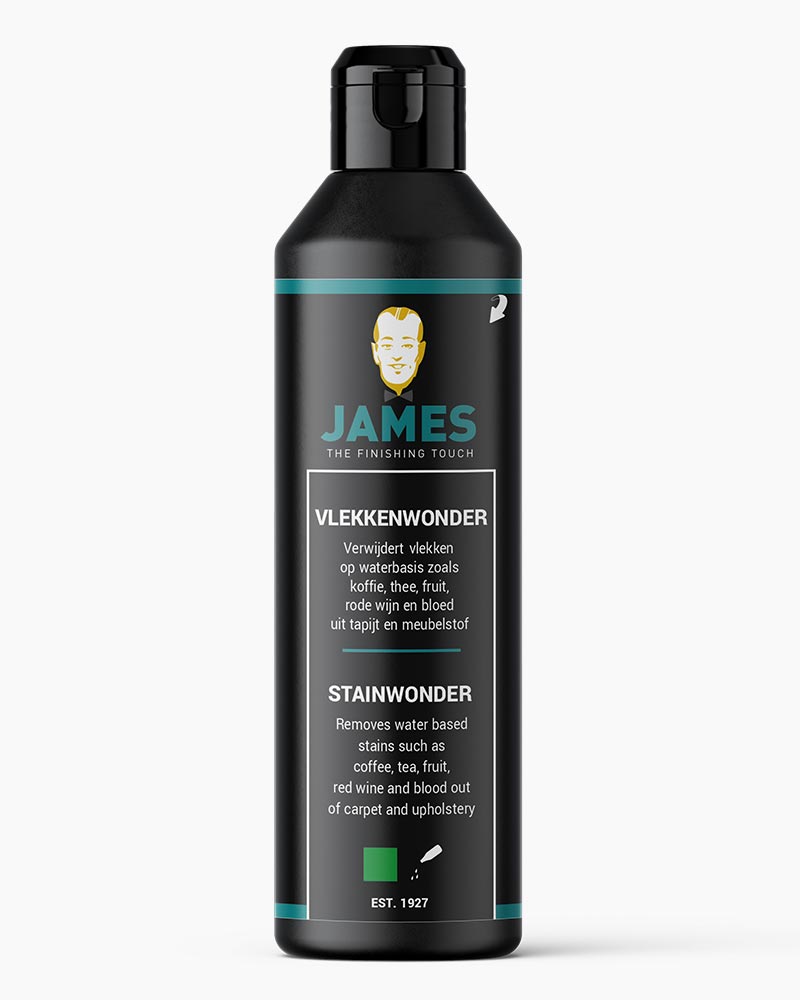
Treat with James Stainwonder
This stain can be treated with James Stainwonder. All you need is a bottle of James Stainwonder!
- Test for colour and material resistance in an inconspicuous area: apply, let it dry completely and evaluate.
- Allow the surface to dry completely.
- Apply James Stainwonder to the dry stain by turning the bottle upside down, placing the opening of the bottle on the stain and treating the entire stain.
- The product works for 12 hours, so the effect does not have to be visible immediately.*
- Is the stain not completely gone after treatment, but it has improved? You may repeat the treatment.
* With wool: in the vast majority of cases, James Stainwonder does not cause any discolouration. You have already established this by testing the product in an inconspicuous area as described above. In that case, you do not need to carry out the following step. If a (slight) discolouration did occur, you should neutralise James Stainwonder as soon as the stain has disappeared. In this case, immediately place a damp cotton cloth on the spot where the stain was and let it dry.
Immediate treatment with water
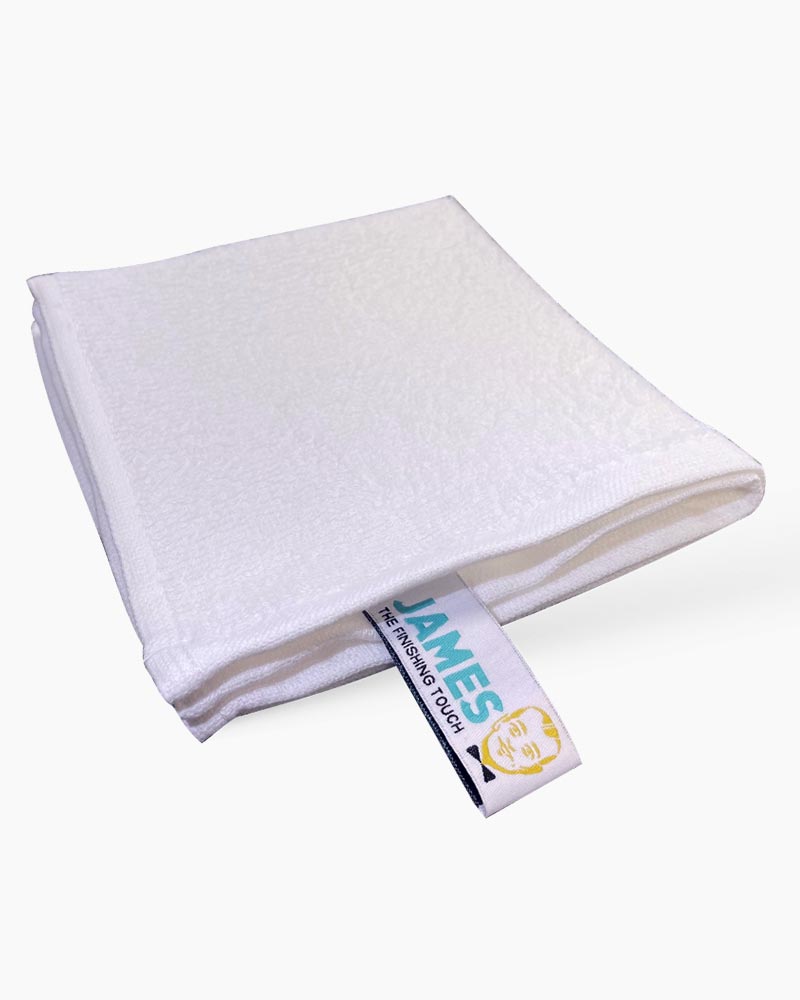
This stain can be treated immediately with water. For this you need a white, cotton cloth and water. Follow the steps below:
- First remove, as far as possible, any loose substances using a spoon.
- Immediately hold a white cotton cloth under the cold tap, wring it out and place it flat on the stain.
- Leave the cotton cloth in place to dry completely, no peeking. Should the cloth become saturated, replace it with a fresh one as described above. Then leave the cloth until it is completely dry.
Note: Do not perform the above instructions if water causes aspect loss or discoloration on the material to be treated.
Removing faeces from hard floors
Faeces are more visible on hard floors, but that does not mean that cleaning is easier. The liquid components can penetrate into seams or pores, while solid residues adhere to the top layer. Zeker bij vloeren met een matte toplaag, structuur of natuurlijke materialen zoals hout en steen, is het risico op blijvende vervuiling groot.The liquid components can penetrate into seams or pores, while solid residues adhere to the top layer.
If the stain remains, the material will dry and leave a sticky or dull spot. In some cases, acids or enzymes from faeces can damage the protective layer of the floor. In addition, a lingering odour develops if residues remain in seams or joints.
Proper cleaning begins with the hygienic removal of dirt without smearing it. Proper cleaning begins with the hygienic removal of dirt without smearing it. Instead, opt for a pH-neutral cleaner that is specifically suitable for organic dirt and use a soft cloth or mop. Repeat if necessary to remove all residues without damaging the surface.
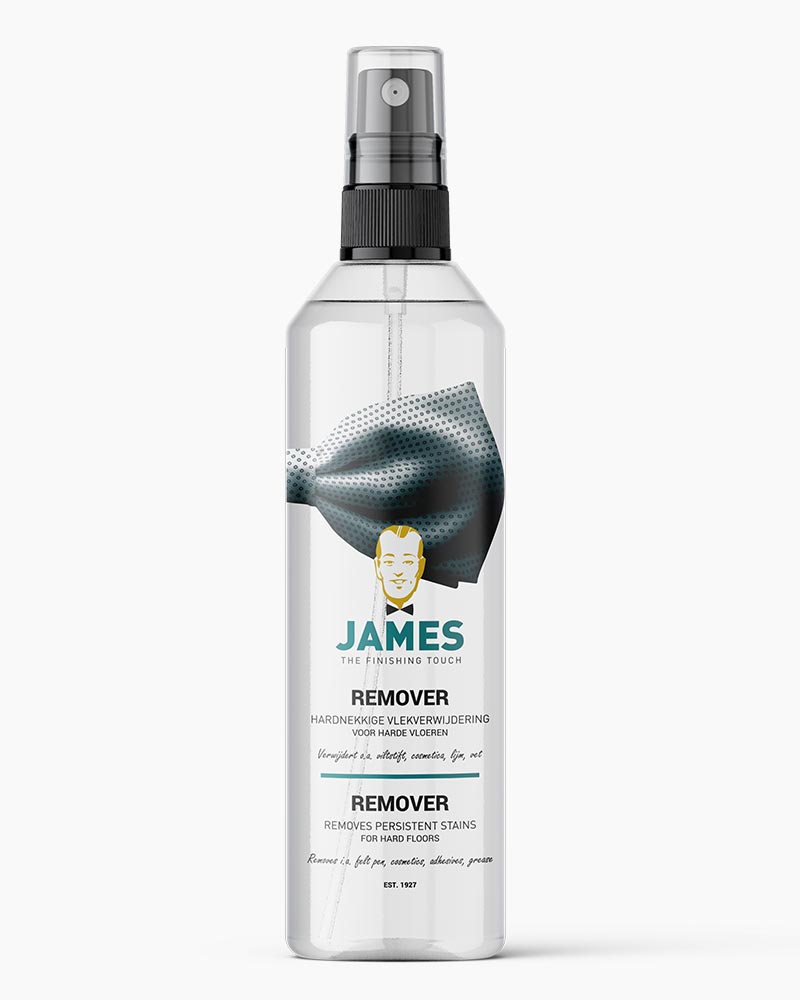
Treatment with James Remover
This stain can be treated with James Remover. Before use, always test the surface in an inconspicuous place for colour and material resistance: apply, leave to set for 5 minutes, wipe the tested area with water, allow to dry and assess.
- Spray directly onto the purpose area
- Leave to soak for about 1 to 5 minutes
- Then, use a white cotton cloth to remove the grease
- Persistent stains may be treated carefully with a soft brush or plastic spatula. After use, always clean the area with water!
- After use, always clean the area with water.
Attention: be careful when working near a glue seams. Allow James Remover to soak in shortly. Do not let the product penetrate into cracks or seams.
Treat using a moist cotton cloth
This stain can be treated immediately with water. Use clean water and preferably a white, cotton cloth.
Removing faeces from upholstery
Furniture fabrics are very susceptible to soiling from faeces. The fabrics absorb moisture quickly, while fats and solid particles become trapped in the upper fibre layer. The stain is particularly visible on soft or light-coloured fabrics. This carries a high risk of odour nuisance, especially if the contamination is not completely removed or if the stain dries without being cleaned.
Over time, a dark, dull spot develops that feels stiff or even hard. The scent settles deep into the fibres and is easily released when the furniture is used. In addition, bacterial growth may occur, which exacerbates the problem and requires additional hygiene measures.
Always clean furniture fabrics with care. Never use hot water or abrasive cleaning agents, as these will spread or set the stain. A cleaner suitable for organic material and textiles is required here. Work with gentle, dabbing movements and ensure that the furniture can dry thoroughly afterwards. This prevents residual odours, discolouration and fibre damage.
Treat with James Stainwonder (*furniture fabrics)
This stain can be treated with James Stainwonder. Always test for colour fastness and material perpetuation in an inconspicuous area: apply, let it dry and evaluate.
- Allow the surface to dry completely.
- Apply James Stainwonder to the dry stain by turning the bottle upside down, placing the opening of the bottle on the stain and treating the entire stain. Spread a little James Stainwonder on a clean, dry cotton cloth towel and use it to cover the stain. This is to prevent circles from appearing after drying.
- The product works for 12 hours, so the effect does not have to be immediate. Do not remove the cotton cloth until it is dry to see the result.*
- Is the stain not completely gone after treatment, but it has improved? You may repeat the treatment.
* With wool: in the vast majority of cases James Stainwonder does not cause any discolouration. You have already established this by testing the product in an inconspicuous area as described above. In that case, you do not need to carry out the following step. If there is a (slight) discolouration, neutralise James Stainwonder with water as soon as the stain has disappeared (to do this, however, lift the cotton cloth in between to be able to assess whether the stain has already disappeared). In this case, immediately place another damp cotton cloth on the spot where the stain was and let it dry.
Immediate treatment with water
This stain can be treated immediately with water. For this you need a white, cotton cloth and water. Follow the steps below:
- First remove, as far as possible, any loose substances using a spoon.
- Immediately hold a white cotton cloth under the cold tap, wring it out and place it flat on the stain.
- Leave the cotton cloth in place to dry completely, no peeking. Should the cloth become saturated, replace it with a fresh one as described above. Then leave the cloth until it is completely dry.
Note: Do not perform the above instructions if water causes aspect loss or discoloration on the material to be treated.
Would you also like to benefit from James’ effective stain removal? Discover our full range and order your James products easily online. You’ll soon be enjoying a clean and stain-free interior again!
Frequently asked questions and myths
Why does the smell of faeces linger, even after thorough cleaning?
Faeces contain not only visible contamination, but also bacteria and volatile organic compounds that can become embedded in fibres, joints or porous surfaces. Even if the stain has been visually removed, odour components may remain and be released again when exposed to heat or moisture. Textiles, carpets and unsealed floors in particular retain these molecules. Only a cleaner that not only cleans but also effectively neutralises odours can solve this problem permanently.
Is it safe to use chlorine or bleach when cleaning a faecal stain?
Although chlorine is disinfecting, it is not recommended on most residential surfaces. It can damage or discolor materials such as floor coatings, furniture fabric and carpet. In addition, it does not dissolve the contamination itself, but temporarily masks the odor. In closed spaces, it can also give off harmful fumes. A specialized cleaner that cleans as well as binds odor is safer and more effective, especially with common materials in the home.
Why does a yellowish or greyish stain remain visible after cleaning?
Faeces contain bile salts, fats and colourants that can adhere strongly to surfaces. Especially on light-coloured surfaces, this can lead to permanent discolouration, even if most of the dirt has been removed. This is particularly noticeable on light-coloured textiles, porous stones or uncoated surfaces. This is particularly noticeable on light-coloured textiles, porous stones or uncoated surfaces.
Can I use a cloth to rub out the stain?
Rubbing spreads bacteria and actually pushes the dirt deeper into the surface. In the case of textiles and carpets, this leads to larger stains and increases the risk of permanent odour or discolouration. Even on hard floors, rubbing can cause debris to become lodged in joints or small irregularities. Dabbing or absorbing is always preferable, followed by thorough but controlled cleaning.
Is baby faeces or diarrhoea easier to clean up than solid faeces?Is baby faeces or diarrhoea easier to clean up than solid faeces?
Not necessarily. Liquid faeces penetrates materials more quickly and often contains more acids and enzymes that can cause odours and damage. Although solid faeces may appear easier to remove, it often leaves traces behind. Diarrhoea spreads more quickly and is therefore more difficult to control. In both cases, swift and careful action is required to prevent permanent damage or odour problems.
Deal with any stain using the right approach from James
A stain of feces requires immediate, careful action. Due to the combination of bacteria, grease and odors, it is not a standard stain, but one that can affect both hygiene and materials. Fortunately, with the right approach and products, you can also remove this contamination properly and safely. Want to make sure you’re handling everything correctly? Don’t take a risk and choose a method that restores the surface as well as freshness for clean and peace of mind.