



Removing coffee stains
On this page:

Removing coffee stains
Coffee often goes wrong at precisely the moment when you are not paying attention. A mug on the sofa, a cappuccino spilled on the rug, or a cup that leaks on the floor on the way. Coffee quickly causes visible discolouration, especially on light-coloured materials. And if there is milk or sugar in it, you immediately have a second problem: a sticky residue that attracts dirt and makes the spot stand out again later.
When dealing with coffee stains, it helps to react quickly, but above all calmly and intelligently. If you rub too hard or use too much liquid, you will often make the stain bigger and cause a ring to form more quickly. Fortunately, in most cases, coffee stains can be easily removed if you follow the right approach. Below, you can first read what is important to know about coffee stains, and then what to look out for depending on the surface. Below you will find James’ advice for each surface.
The same advice applies to these stains: Coffee, Nespresso, Latte, Coffee with Milk, Espresso, Cappuccino, Caffè Latte, Café Au Lait
Characteristics (anatomy) of a coffee stain
Coffee contains colourants that can adhere to fibres and porous structures. As a result, even a slight spill can cause a yellowish to brownish discolouration that becomes more apparent after drying. Black coffee often leaves a clear brown stain, while coffee with milk or cream can leave grease particles in addition to colour. Sugar makes it extra annoying: it dries sticky, attracts dust and makes the area look grey more quickly.
In textiles, coffee easily penetrates between the fibres. With carpet and upholstery fabric, the moisture can sink deeper, causing the stain to be larger than you can see on the surface. On hard floors, coffee usually remains on the top layer, but can remain in the structure, edges and seams. If the stain is not treated quickly, a fixed edge or circle may form and the discolouration may become more pronounced, making it more visible later on.
Coffee stains in carpets and rugs
Carpets and rugs are susceptible to coffee because the liquid quickly sinks between the fibres. As a result, the stain sometimes appears smaller on the surface than what has actually been absorbed into the pile. Especially with deep-pile carpets, coffee can sink deeper and later become visible as a larger brown stain. On light-coloured carpets, this is usually immediately apparent, whereas on dark carpets it is more often noticeable as a dull spot or a difference in pile direction.
What makes coffee stains particularly troublesome is that there is often more to them than just ‘colour’. Coffee with milk may leave behind a fatty residue, and sugar may cause the area to dry out and become sticky. This causes dirt to adhere more quickly and the stain to turn grey over time. The edge of the stain may also become more visible than the centre, as the moisture is drawn outwards during drying. This creates a circle that is difficult to ignore later on, even if the core appears less dark.
When dealing with carpets and rugs, it is important to note that rubbing will push the coffee deeper into the fibres and make the stain larger. Too much moisture can also cause a larger circle and allow residues to sink deeper into the carpet. In addition, it is important to prevent the area from remaining wet for a long time, as this increases the risk of permanent discolouration. With coffee, it is normal that you can only properly assess the result once everything is completely dry.
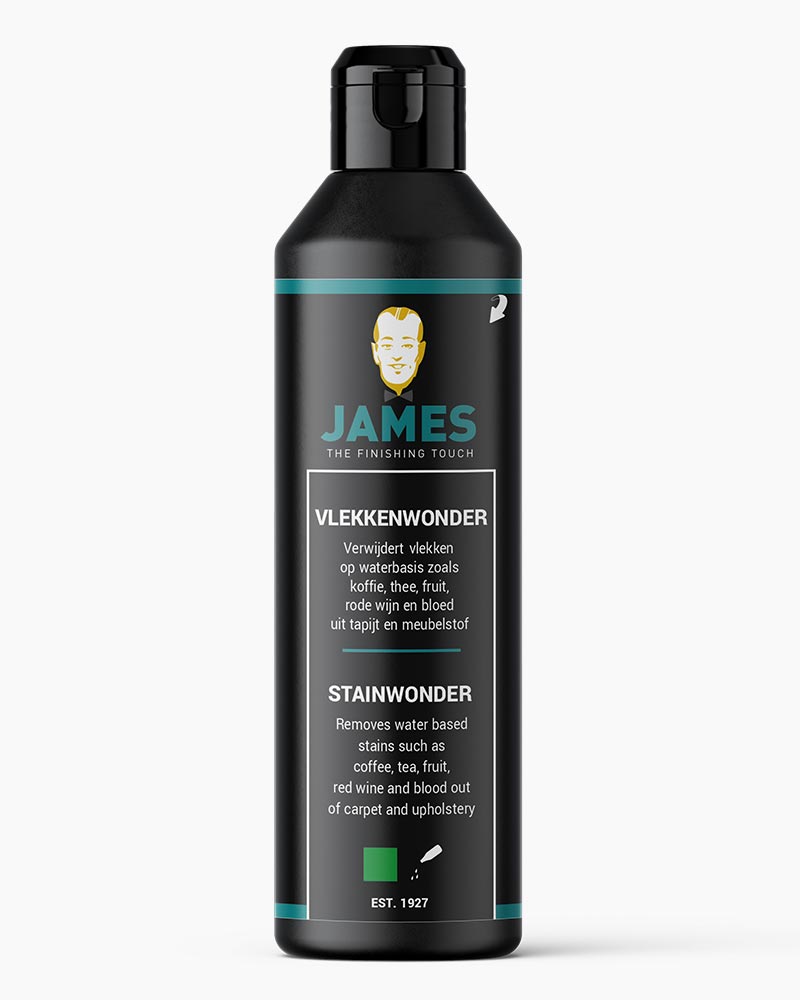
Treat with James Stainwonder
This stain can be treated with James Stainwonder. All you need is a bottle of James Stainwonder!
- Test for colour and material resistance in an inconspicuous area: apply, let it dry completely and evaluate.
- Allow the surface to dry completely.
- Apply James Stainwonder to the dry stain by turning the bottle upside down, placing the opening of the bottle on the stain and treating the entire stain.
- The product works for 12 hours, so the effect does not have to be visible immediately.*
- Is the stain not completely gone after treatment, but it has improved? You may repeat the treatment.
* With wool: in the vast majority of cases, James Stainwonder does not cause any discolouration. You have already established this by testing the product in an inconspicuous area as described above. In that case, you do not need to carry out the following step. If a (slight) discolouration did occur, you should neutralise James Stainwonder as soon as the stain has disappeared. In this case, immediately place a damp cotton cloth on the spot where the stain was and let it dry.
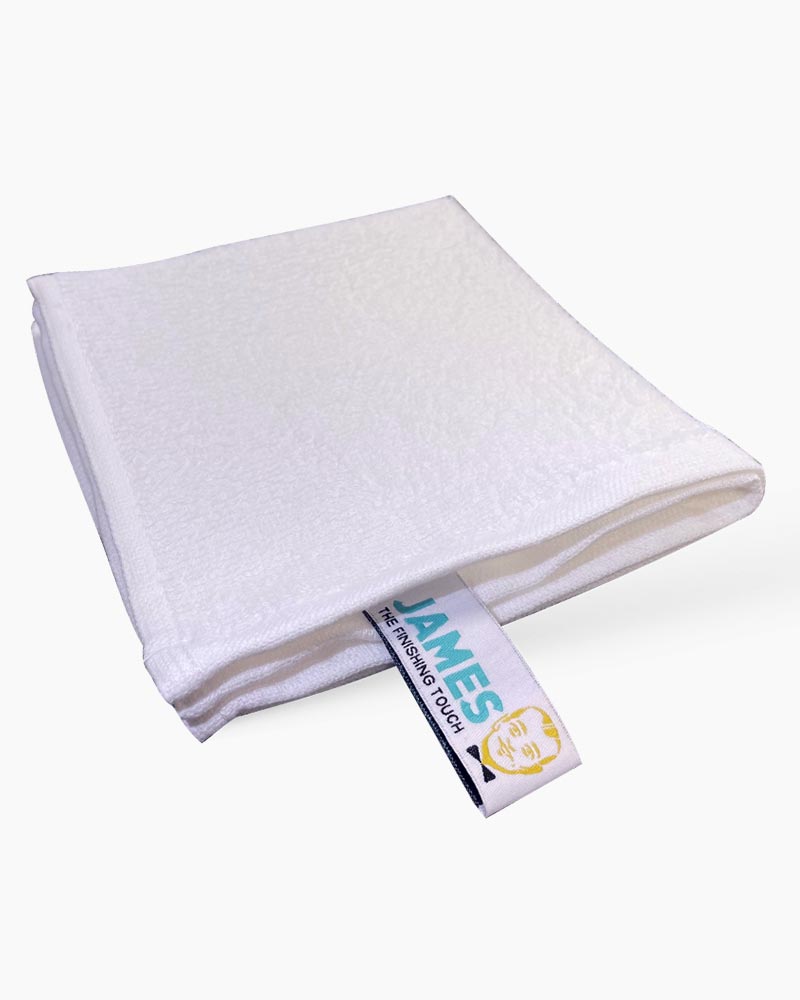
Immediate treatment with water
This stain can be treated immediately with water. For this you need a white, cotton cloth and water. Follow the steps below:
- First remove, as far as possible, any loose substances using a spoon.
- Immediately hold a white cotton cloth under the cold tap, wring it out and place it flat on the stain.
- Leave the cotton cloth in place to dry completely, no peeking. Should the cloth become saturated, replace it with a fresh one as described above. Then leave the cloth until it is completely dry.
Note: Do not perform the above instructions if water causes aspect loss or discoloration on the material to be treated.
Coffee stains on hard floors
On hard floors such as PVC, vinyl, LVT, laminate and natural stone, coffee usually remains on the top layer at first. That is beneficial because you can absorb a lot quickly, but it does not mean you are finished. Coffee can remain in the structure, small scratches and along edges, causing a brown haze or rim to appear after drying. Especially on matt floors and in raking light, such a film can be particularly noticeable as a dull or shiny spot.
With laminate and click flooring, the risk often lies in the seams. If coffee seeps into a seam, a dark edge may remain visible, which you will only notice later, once the spot has dried. Discolouration may remain visible on natural stone for longer if the stone is more porous. Coffee with milk can also leave an extra layer on hard floors that dries in a blotchy manner. This makes the floor appear “uneven”, even if most of the colour seems to have been removed.
When cleaning hard floors, it is important to ensure that you do not smear the coffee and that no residue remains on the top layer. A residue layer attracts dirt and later causes streaks or a dull haze. It is also important that edges and seams Do not remain damp for long periods, as residues can accumulate and remain visible. With coffee stains, you often only see the real difference in daylight and from an angle.
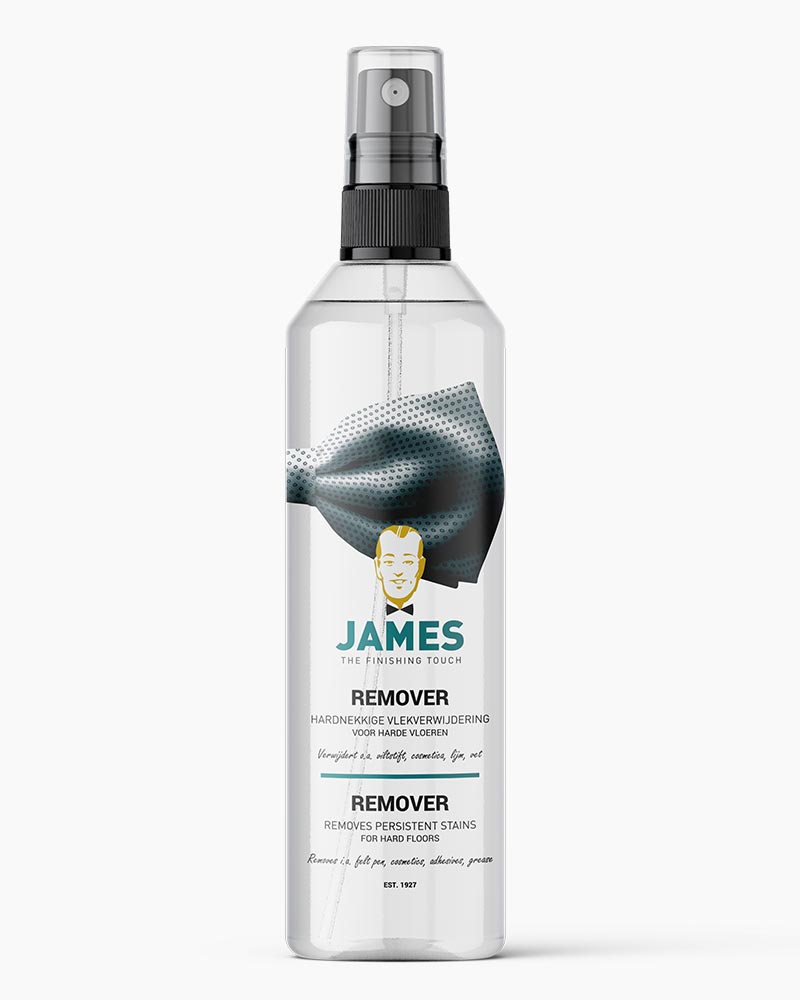
Treatment with James Remover
This stain can be treated with James Remover.
Before use, always test in an inconspicuous area for color and material resistance: apply, leave for 5 minutes, clean the tested area with water, allow to dry and evaluate.
- Spray directly onto the purpose area
- Leave to soak for about 1 to 5 minutes
- Then, use a white cotton cloth to remove the grease
- If necessary, gently treat stubborn stains with a soft brush or plastic spatula.
- After use, always clean the area with water.
Attention: be careful when working near a glue seams. Allow James Remover to soak in shortly. Do not let the product penetrate into cracks or seams.
Treat using a moist cotton cloth
This stain can be treated immediately with water. Use clean water and preferably a white, cotton cloth.
Coffee stains on upholstery
Furniture fabric is particularly sensitive to coffee because the liquid quickly soaks into the fibres and spreads easily. This often results not only in a stain, but also in a ring that is larger than the spot where the coffee actually fell. On light-coloured fabrics, you will usually see a brown or yellowish shadow that becomes more visible after drying. On dark fabrics, it is sometimes less noticeable as a colour, but you will see a dull area or a spot that shines differently.
Coffee with milk or cream makes it more difficult because, in addition to colour, fat is also left behind. This can make the fabric in that area somewhat stiffer and attract dirt, causing the area to look greyish over time. Sugar can cause the area to dry sticky, which has the same effect. If coffee gets into the filling, the spot may reappear later, especially in warm conditions or when humidity rises. Then it looks as if the stain is “coming back”.
When dealing with upholstery fabric, it is important to note that rubbing will make the stain larger and may alter the fabric structure. An excessively large moisture zone may also remain visible later as a ring, even if the colour appears to have faded. In addition, it is important to prevent the area from remaining damp for long periods of time, as this will intensify rings and shadow formation. When it comes to coffee, it is wise to always wait until the substance is completely dry before assessing it.
Treat with James Stainwonder (*furniture fabrics)
This stain can be treated with James Stainwonder. Always test for colour fastness and material perpetuation in an inconspicuous area: apply, let it dry and evaluate.
- Allow the surface to dry completely.
- Apply James Stainwonder to the dry stain by turning the bottle upside down, placing the opening of the bottle on the stain and treating the entire stain. Spread a little James Stainwonder on a clean, dry cotton cloth towel and use it to cover the stain. This is to prevent circles from appearing after drying.
- The product works for 12 hours, so the effect does not have to be immediate. Do not remove the cotton cloth until it is dry to see the result.*
- Is the stain not completely gone after treatment, but it has improved? You may repeat the treatment.
* With wool: in the vast majority of cases James Stainwonder does not cause any discolouration. You have already established this by testing the product in an inconspicuous area as described above. In that case, you do not need to carry out the following step. If there is a (slight) discolouration, neutralise James Stainwonder with water as soon as the stain has disappeared (to do this, however, lift the cotton cloth in between to be able to assess whether the stain has already disappeared). In this case, immediately place another damp cotton cloth on the spot where the stain was and let it dry.
Immediate treatment with water
This stain can be treated immediately with water. For this you need a white, cotton cloth and water. Follow the steps below:
- First remove, as far as possible, any loose substances using a spoon.
- Immediately hold a white cotton cloth under the cold tap, wring it out and place it flat on the stain.
- Leave the cotton cloth in place to dry completely, no peeking. Should the cloth become saturated, replace it with a fresh one as described above. Then leave the cloth until it is completely dry.
Note: Do not perform the above instructions if water causes aspect loss or discoloration on the material to be treated.
Would you also like to benefit from James’ effective stain removal? Discover our full range and order your James products easily online. You’ll soon be enjoying a clean and stain-free interior again!
Frequently asked questions and myths
There are all sorts of stories going around about how to remove these sweat stains. From granny’s remedies to persistent tips from the internet – but what really works? In this section, we answer frequently asked questions and debunk a few myths. This allows you to get started with confidence.
Sparkling water is often mentioned as a quick solution because it is said to loosen fresh stains. In practice, diluting the moisture can sometimes help with small, fresh coffee stains, but it is not a miracle cure. If you use too much, you will make the stain bigger and increase the chance of a ring, especially in carpet and upholstery fabric. Furthermore, sparkling water does not always effectively remove residual sugar or milk. It may therefore be an emergency measure, but not something to rely on blindly.
Baking soda is often mentioned because it can absorb moisture and odours. It may help if there is still wet coffee or if the area smells a bit musty, but it usually does not remove the discolouration. There is also a risk that powder residue will remain in fibres, causing a slight haze or rough spot to appear later, especially in carpets. Furthermore, when adding milk or sugar to coffee, the “sticky part” often remains if you only use powder. Therefore, consider it as support rather than a complete solution.
Vinegar is sometimes mentioned because it is said to dissolve stains, but it is not without risk. Vinegar can damage the surface of natural stone, leaving a dull spot that is worse than the coffee stain. Vinegar can leave a strong odour on textiles and, if you use too much, the stain may actually spread further. In addition, vinegar does not automatically remove milk and sugar residues. If you want to try this, testing on an inconspicuous area is essential, but in many cases, targeted cleaning products are more predictable.
Coffee contains colourants that remain in fibres and pores during drying. When the spot is wet, the colour often appears “diluted”, but once the moisture has disappeared, you can see the shadow. The moisture may also be drawn out during drying, creating a rim that is darker than the centre. With coffee containing milk and sugar, residues can also form a film that reflects light slightly differently. That is why it is important to wait until the area is completely dry before making a judgement.
Many all-purpose cleaners and washing-up liquids leave a film behind. On hard floors, this can cause streaks or a dull haze, and on textiles, it can leave a sticky residue that attracts dirt. This makes the coffee stain appear to reappear later, when in fact it is a combination of residues and dirt. So it is not necessarily ‘wrong’, but it is a well-known cause of disappointing results. It is particularly important that no cleaning residues remain when drinking coffee with milk or sugar.
Deal with any stain using the right approach from James
Coffee stains are troublesome because they discolour quickly and often become more visible after drying, especially if they contain milk or sugar. By dabbing quickly, not making the stain bigger and paying close attention to rings and residual stains, you can prevent coffee from leaving a permanent mark. With the right James approach for each surface, you can usually remove coffee stains completely and restore your interior to its original fresh and smooth condition.