



Removing turmeric stains
On this page:

Removing turmeric stains
Turmeric gives your food a lovely colour, but that same colour is precisely why turmeric stains are so notorious. A splash from the pan, a drop of curry sauce on the carpet or a finger with spice mix on the sofa can be enough to cause a bright yellow stain. Turmeric stains quickly and often remains visible if you are too late or start incorrectly. On hard floors, you sometimes see mainly a yellow haze, whereas on textiles it can penetrate deeply.
Acting quickly helps, but with turmeric it is especially important not to rub the area. This will spread the yellow dye and make the stain larger.
The same advice applies to these stains: Turmeric, curcuma
Characteristics (anatomy) of a turmeric stain
Turmeric contains a strong yellow pigment that easily stains and adheres to materials. Turmeric is often found in curries or spice mixes that also contain fat, oil or sauce. This makes the stain extra difficult to remove: not only do you have colour, but also a layer of grease that holds the dye in place. In carpet and upholstery fabric, it penetrates between the fibres and can leave a permanent yellow stain. On hard floors, it often remains as a thin layer on the top layer, but it can remain stuck in the structure and seams. Sunlight can sometimes change the colour of the stain, making it appear less bright, but that does not mean that the contamination has disappeared.
Turmeric stains in carpets and rugs
Turmeric releases strong yellow pigments that quickly adhere to fibres. On carpet, it often soaks in as a bright yellow stain that later remains darker or yellower as a shadow. If turmeric is included in a sauce or curry, fat is often added as well, which helps to preserve the colour even more.
If you leave it, the stain may become more stubborn because the colour sets and dirt sticks to the greasy area. The spot may therefore change from bright yellow to greyish yellow. A distinct haze often remains visible on light-coloured carpets, even if the surface looks cleaner.
When a turmeric stain is still in powder form, it is important to work dry. As soon as turmeric gets wet, the colourants are activated, allowing them to adhere more strongly to the fibres of the fabric. Therefore, first remove as much of the turmeric stain as possible with a vacuum cleaner or a dry cloth. Only then is it advisable to use a suitable cleaning agent to treat the stain effectively.
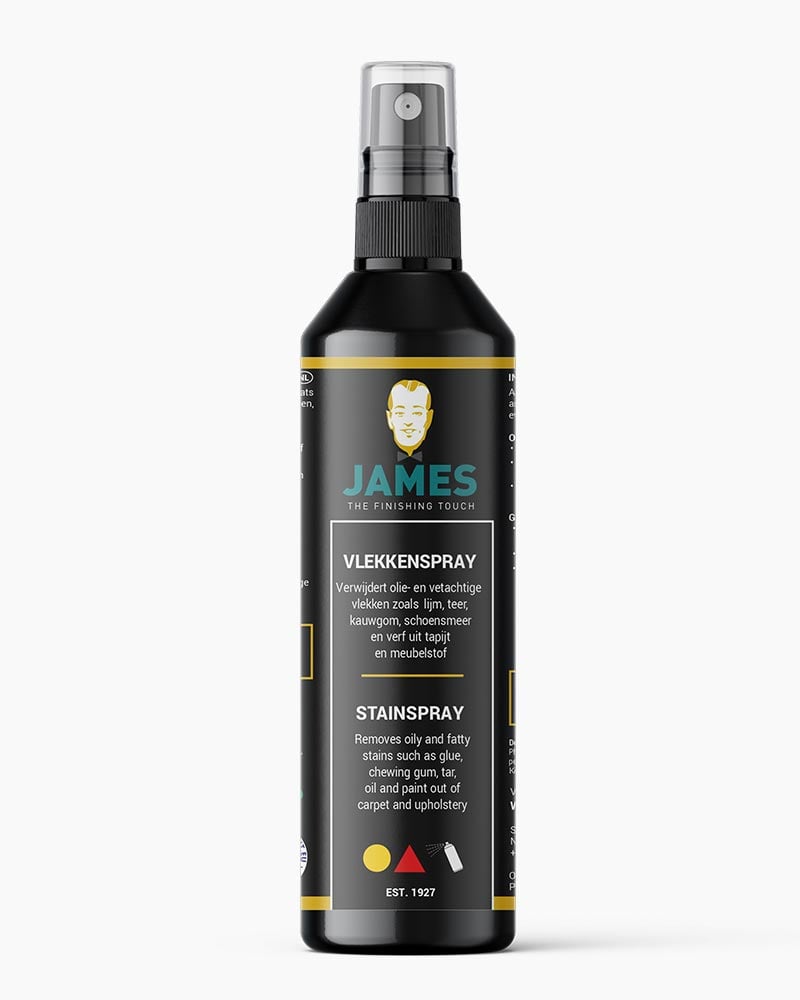
First treat with vacuum cleaner, then with James Stainspray
You can treat this stain with James Stainspray on a cotton cloth. For this you need James Stainspray and a white cotton cloth. Next:
- Test for colour and material resistance in an inconspicuous area: apply, let it dry completely and evaluate.
- Spray James Stainspray on a dry, white cotton cloth.
- Use this cloth to wipe the stain using wide sweeping strokes, without spreading the stain. Repeat frequently with a clean part of the cloth.
- Directly spray James Stainspray onto any residue and repeat the process using wide sweeping strokes.
First treat with vacuum cleaner, then with James Stainspray
Remove the stain by vacuum cleaning. If the stain is completely removed, the treatment is finished and you do not need to perform step 2. Do not use water on this stain!
Second step:
You can treat this stain with James Stainspray on a cotton cloth. For this you need James Stainspray and a white cotton cloth. Next:
- Test for colour and material resistance in an inconspicuous area: apply, let it dry completely and evaluate.
- Spray James Stainspray on a dry, white cotton cloth.
- Use this cloth to wipe the stain using wide sweeping strokes, without spreading the stain. Repeat frequently with a clean part of the cloth.
- Directly spray James Stainspray onto any residue and repeat the process using wide sweeping strokes.
Turmeric stains on hard floors
On hard floors, turmeric often appears as a yellow smear or haze on the top layer. The pigment can remain in the structure and along the edges, so that you can still see it in raking light. If there is grease present, a film will form more quickly, which dries in streaks.
If you leave it lying around, the colour can remain in the seams and relief and become fixed as a thin layer. On PVC, vinyl, LVT and laminate, this appears as a yellow haze. With natural stone, pigment can remain visible for longer if it penetrates into the pores.
Be careful not to make the stain bigger by smearing it over a larger area. Even a seemingly clean floor may still have a yellow tinge that is only noticeable in daylight. With turmeric, there is a big difference between wet and dry: dry is always fairer.
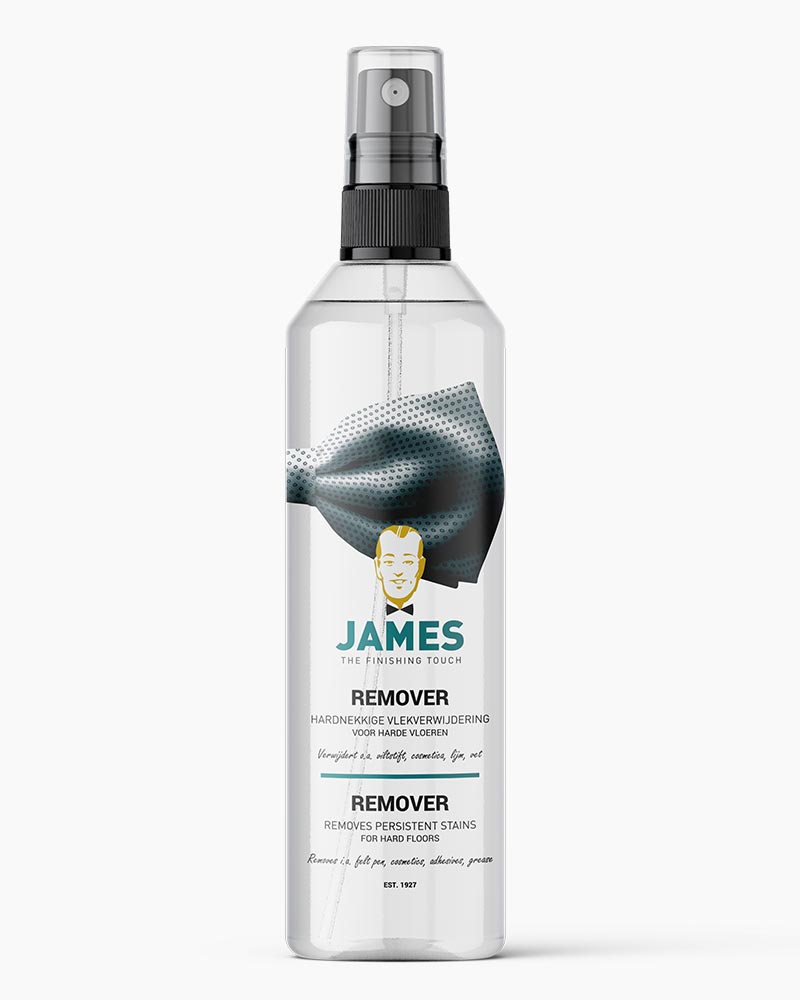
Treatment with James Remover
This stain can be treated with James Remover. Before use, always test the surface in an inconspicuous place for colour and material resistance: apply, leave to set for 5 minutes, wipe the tested area with water, allow to dry and assess.
- Spray directly onto the purpose area
- Leave to soak for about 1 to 5 minutes
- Then, use a white cotton cloth to remove the grease
- If necessary, gently treat stubborn stains with a soft brush or plastic spatula.
- After use, always clean the area with water.
Attention: be careful when working near a glue seams. Allow James Remover to soak in shortly. Do not let the product penetrate into cracks or seams.
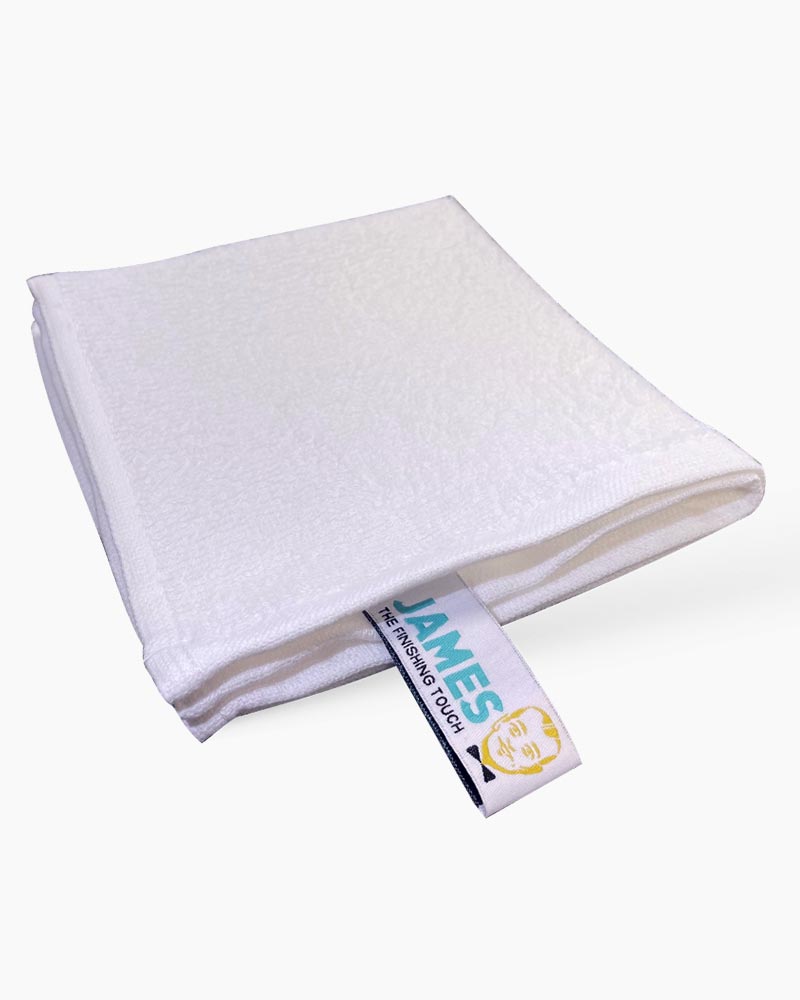
Treat using a moist cotton cloth
This stain can be treated immediately with water. Use clean water and preferably a white, cotton cloth.
Turmeric stains on upholstery fabric
Turmeric often leaves a noticeable yellow stain on upholstery fabric. The colourings adhere quickly, and if it comes from sauce, fat can help the colour stick even more. As a result, after drying, you often see a yellow shadow that is wider than the original spot.
If you leave it, the stain may turn greyish because dust adheres to greasy residues. The area may also feel stiffer due to dried-up components. On light fabrics, turmeric remains extra visible because the yellow tint contrasts strongly.
When a turmeric stain on upholstery fabric is still in powder form, it is important to work dry. As soon as turmeric comes into contact with moisture, the yellow pigments are activated, causing them to adhere more quickly and deeply to the fibres of the upholstery fabric. Therefore, first remove as much of the powder as possible with a vacuum cleaner or a dry, clean cloth. Only then should you use a suitable cleaning agent for furniture fabrics to treat the turmeric stain safely and effectively.
First treat with vacuum cleaner, then with James Stainspray
- Test for colour and material resistance in an inconspicuous area: apply, let it dry completely and evaluate.
- Spray James Stainspray on a dry, white cotton cloth.
- Use this cloth to wipe the stain using wide sweeping strokes, without spreading the stain. Repeat frequently with a clean part of the cloth.
- Directly spray James Stainspray onto any residue and repeat the process using wide sweeping strokes.
First treat with vacuum cleaner, then with James Stainspray
Next:
- Test for colour and material resistance in an inconspicuous area: apply, let it dry completely and evaluate.
- Spray James Stainspray on a dry, white cotton cloth.
- Use this cloth to wipe the stain using wide sweeping strokes, without spreading the stain. Repeat frequently with a clean part of the cloth.
- Directly spray James Stainspray onto any residue and repeat the process using wide sweeping strokes.
Would you also like to benefit from James’ effective stain removal? Discover our full range and order your James products easily online. You’ll soon be enjoying a clean and stain-free interior again!
Frequently asked questions and myths
There are all sorts of stories circulating about how to remove these turmeric stains. From granny’s remedies to persistent tips from the internet – but what really works? In this section, we answer frequently asked questions and debunk a few myths. This allows you to get started with confidence.
Sunlight can sometimes lighten turmeric, as the pigment can discolour when exposed to light. But that does not mean that the pollution has really gone away. On textiles, it may appear as though the stain has disappeared, while there is still grease and residue in the fibres that will later attract dirt or become visible again. In addition, sunlight can also discolour the fabric itself, resulting in colour differences. So do not consider sunlight as a solution, but at most as something that temporarily reduces the intensity of the colour.
Dishwashing liquid can tackle the fatty part of curry or sauce, but it is difficult to remove it completely from carpets and upholstery. This can leave a sticky residue, which attracts dirt and causes a grey spot. Furthermore, washing-up liquid does not always tackle the dye effectively. It may help with a small stain, but a cleaner designed to remove grease and dyes and that is suitable for your surface will usually give better results.
This is often mentioned, but it is risky. Acid can damage the surface of natural stone and cause dull spots. On textiles, it may cause discolouration or actually move the stain. The effect on turmeric is also variable, as the stain often consists of several components, such as grease and colour. So you could end up with damage and still have a stain. It is preferable to choose an approach that is suitable for the material and that removes the stain without risk.
Because you are literally spreading the dye. Turmeric is highly pigmented, and when you rub it, you push it deeper into the fibres and spread it over a larger surface area. Then you get a large yellow circle or haze. The correct approach is to dab and absorb, then loosen locally and absorb again. Working calmly in small steps usually gives you much more control over the stain.
If a turmeric stain on upholstery fabric is still in powder form, it is best not to wet it. As soon as turmeric comes into contact with moisture, the yellow pigments are activated, causing them to adhere more quickly and deeply to the fibres of the upholstery fabric. This makes removing the stain more difficult. The correct approach is to work dry first. Remove as much turmeric powder as possible with a vacuum cleaner or a dry cloth. Only then can you use a suitable cleaning agent for furniture fabrics to treat the stain further.
Deal with any stain using the right approach from James
Turmeric is notorious for its strong yellow colour, but with a gentle and clever approach, you can often get away with a lot. With James’ products and advice, you can safely remove turmeric from carpets, hard floors and upholstery without damaging fibres or top layers. The faster you act, the greater the chance of achieving a nice, even result.