



Removing rust
On this page:
Removing rust
Rust stains often appear at the most unexpected moments. A wet metal object on the floor, a flower pot with a metal ring, a tool lying on the carpet, or water dripping down the metal leg of a chair. You will suddenly notice an orange or brownish stain that appears stubborn and looks ‘burnt in’. Rust is particularly noticeable on light-coloured materials.
Acting quickly helps, because rust can continue to spread as soon as moisture is added. At the same time, it is important not to just start scrubbing or experimenting with acidic cleaning agents, especially not on natural stone or sensitive floors.
The same advice applies to these stains: Rust, Rust water
Characteristics (anatomy) of a rust spot
Rust forms when iron comes into contact with water and oxygen. The rust particles are very fine and can adhere to fibres or penetrate small pores. This causes orange, yellow-brown or red-brown discolouration. On textiles, rust can penetrate deeper between the fibres, meaning that you will not see the stain disappear immediately. On hard floors, rust sometimes remains visible as a ‘shadow’ through the top layer or because the stain has penetrated the structure and seams. Incorrect treatment may cause the stain to spread or damage the surface. Particularly with natural stone, you must be careful with acidic agents, as these can damage the surface.
Rust stains in carpets and rugs
Rust stains on carpets are often caused by metal that has retained moisture, such as a flower pot, furniture leg, tool or wet metal surface. The stain is usually orange to rust brown and may appear as a circle. Because rust consists of fine particles, it can become lodged between the fibres and remain there as a colour stain.
If it remains, the stain may become darker due to further oxidation or because dirt adheres to it. On light-coloured carpets, it often becomes a distinct orange-brown shade, while on dark carpets it sometimes appears more as a dull, warm discolouration. The area may also feel stiff if rust particles adhere to fibres and make the pile rougher.
What you need to bear in mind is that rust is often deeper than it appears, especially if it has been caused by prolonged contact. A rust spot can also have a fairly sharp edge, which makes any difference in structure even more noticeable. The risk is that you will not only see a stain, but also a permanently discoloured area that will remain visible due to light exposure.
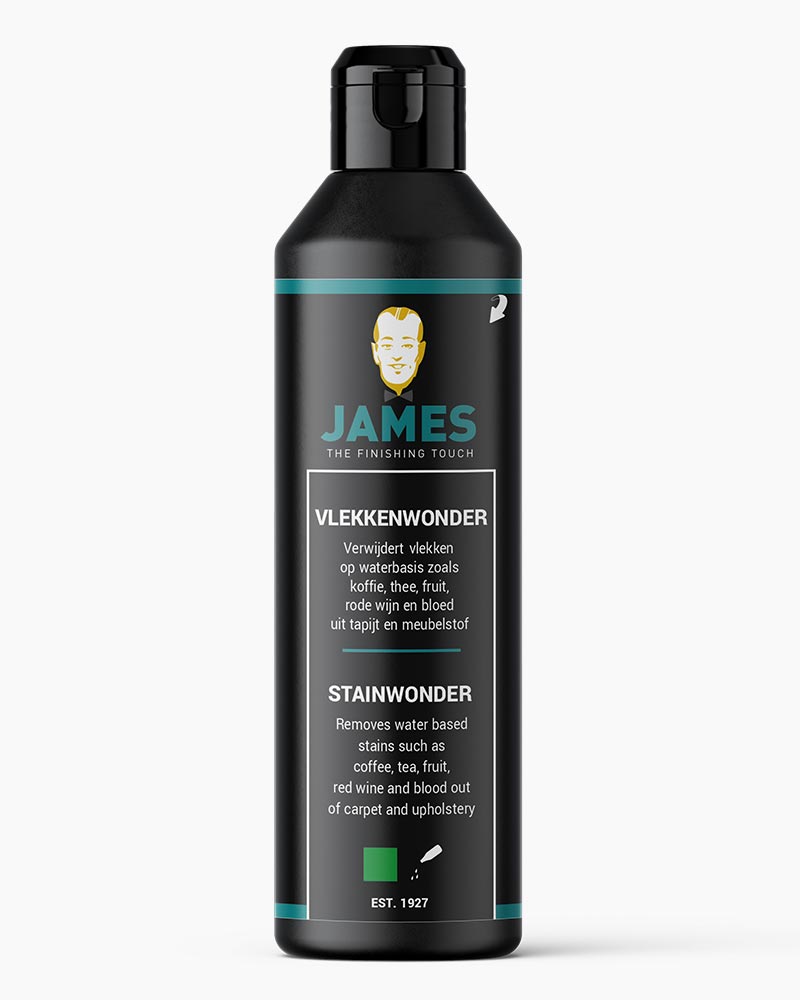
Treat with James Stainwonder
This stain can be treated with James Stainwonder. All you need is a bottle of James Stainwonder!
- Test for colour and material resistance in an inconspicuous area: apply, let it dry completely and evaluate.
- Allow the surface to dry completely.
- Apply James Stainwonder to the dry stain by turning the bottle upside down, placing the opening of the bottle on the stain and treating the entire stain.
- The product works for 12 hours, so the effect does not have to be visible immediately.*
- Is the stain not completely gone after treatment, but it has improved? You may repeat the treatment.
* With wool: in the vast majority of cases, James Stainwonder does not cause any discolouration. You have already established this by testing the product in an inconspicuous area as described above. In that case, you do not need to carry out the following step. If a (slight) discolouration did occur, you should neutralise James Stainwonder as soon as the stain has disappeared. In this case, immediately place a damp cotton cloth on the spot where the stain was and let it dry.
Treat with James Stainwonder
This stain can be treated with James Stainwonder. All you need is a bottle of James Stainwonder!
- Test for colour and material resistance in an inconspicuous area: apply, let it dry completely and evaluate.
- Allow the surface to dry completely.
- Apply James Stainwonder to the dry stain by turning the bottle upside down, placing the opening of the bottle on the stain and treating the entire stain.
- The product works for 12 hours, so the effect does not have to be visible immediately.*
- Is the stain not completely gone after treatment, but it has improved? You may repeat the treatment.
* With wool: in the vast majority of cases, James Stainwonder does not cause any discolouration. You have already established this by testing the product in an inconspicuous area as described above. In that case, you do not need to carry out the following step. If a (slight) discolouration did occur, you should neutralise James Stainwonder as soon as the stain has disappeared. In this case, immediately place a damp cotton cloth on the spot where the stain was and let it dry.
Rust stains on hard floors
On hard floors such as PVC, vinyl, LVT, laminate and natural stone, rust often appears as orange dots, rings or streaks on the top layer. It often follows the shape of the metal object that was placed on it. Rust can remain in the structure and along edges, making the spot more visible in raking light than from above.
If it is left lying around, the rust can develop further, especially in damp conditions. With natural stone, rust can penetrate the pores and cause permanent discolouration. With laminate flooring, marks can appear around joints, which become more visible when they form a ring. On plastic floors, a rust spot can sometimes appear to be ‘marked’ because of the high contrast with the floor.
What you need to bear in mind is that rust stains often consist of metal particles that can become embedded in the surface. Sanding can damage the top layer and make the problem appear worse. The stain may also become visible again once the floor is dry, because rust is particularly noticeable as a colour difference, not as a damp spot.
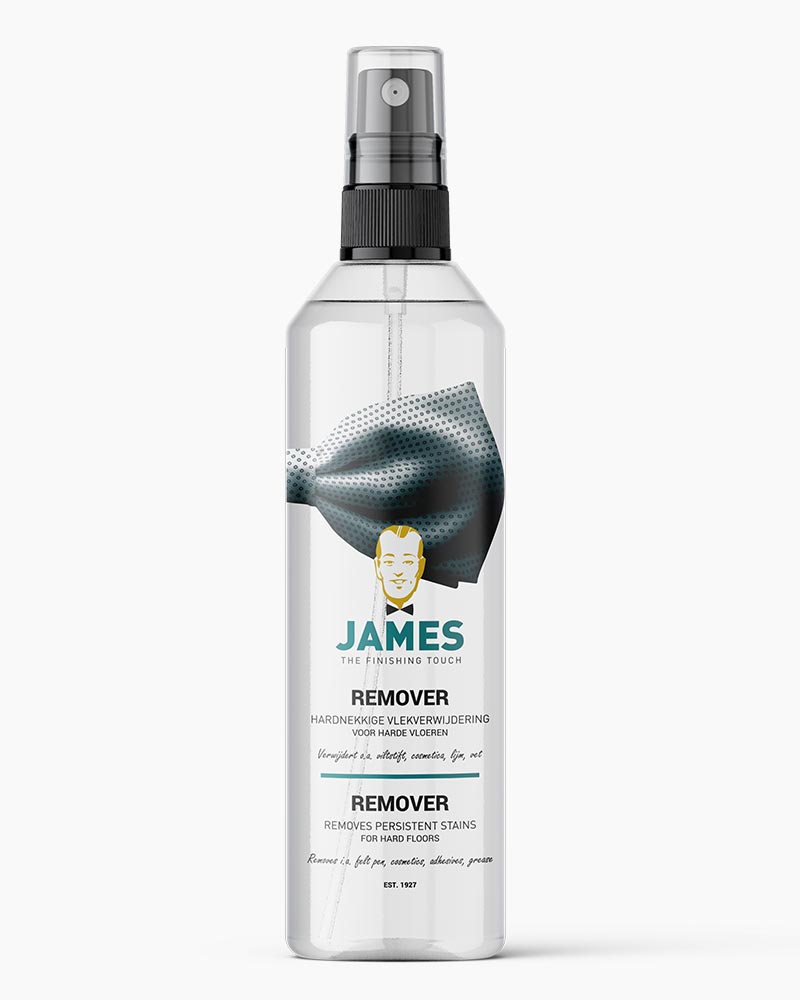
Treatment with James Remover
This stain can be treated with James Remover.
Before use, always test in an inconspicuous area for color and material resistance: apply, leave for 5 minutes, clean the tested area with water, allow to dry and evaluate.
- Spray directly onto the purpose area
- Leave to soak for about 1 to 5 minutes
- Then, use a white cotton cloth to remove the grease
- If necessary, gently treat stubborn stains with a soft brush or plastic spatula.
- After use, always clean the area with water.
Attention: be careful when working near a glue seams. Allow James Remover to soak in shortly. Do not let the product penetrate into cracks or seams.
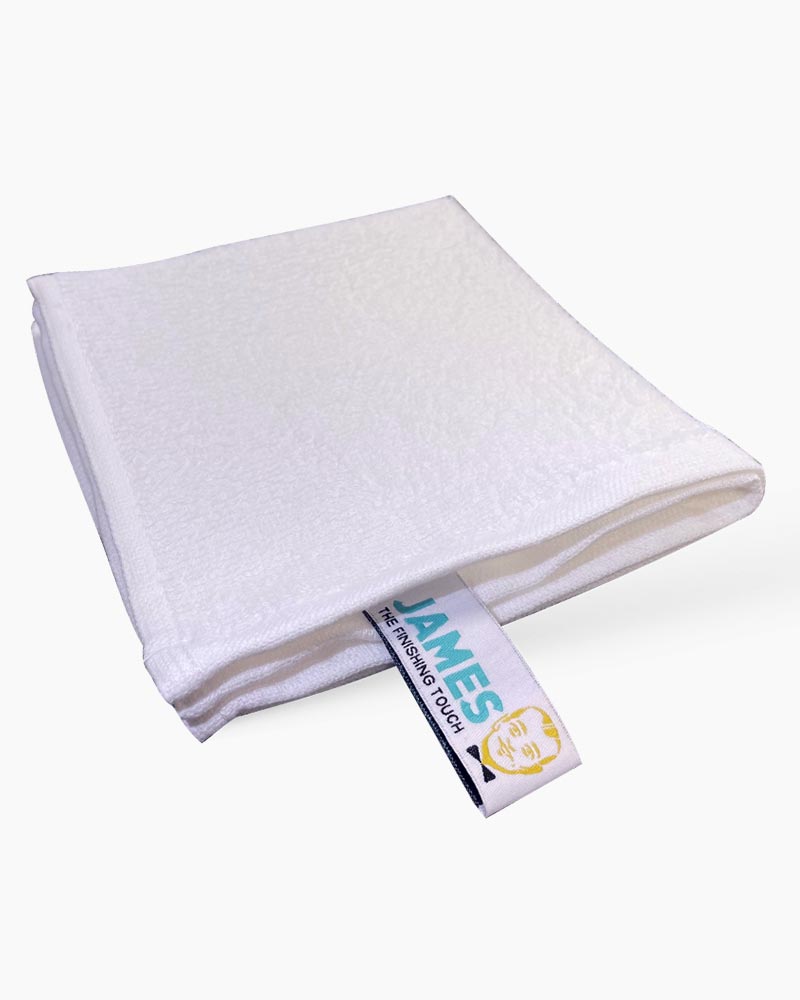
Treat using a moist cotton cloth
This stain can be treated immediately with water. Use clean water and preferably a white, cotton cloth.
Rust stains on upholstery fabric
Rust on upholstery fabric is usually caused by a wet metal object that has been placed against or on the fabric, such as a tool, metal zip, garden furniture component or wet decoration. You often see orange spots or an irregular smear. Because rust particles are fine, they can get into the fibres and remain there as shadows.
If it remains in place, the area may darken and spread if moisture is added again. On light fabrics, it is highly noticeable as orange discolouration, while on dark fabrics it is more likely to become a warm, dull area. In structured fabrics, rust can become lodged between the threads, making it appear as if the discolouration is ‘baked in’.
What you need to bear in mind is that rust stains often go hand in hand with damp patches, meaning that in addition to the rust colour, you may also see a circle of dried water. Friction can also cause the rust particles to work further into the fabric and change its structure. The main risk is permanent discolouration that contrasts sharply with the rest of the upholstery.
Treat with James Stainwonder (*furniture fabrics)
This stain can be treated with James Stainwonder. Always test for colour fastness and material perpetuation in an inconspicuous area: apply, let it dry and evaluate.
- Allow the surface to dry completely.
- Apply James Stainwonder to the dry stain by turning the bottle upside down, placing the opening of the bottle on the stain and treating the entire stain. Spread a little James Stainwonder on a clean, dry cotton cloth towel and use it to cover the stain. This is to prevent circles from appearing after drying.
- The product works for 12 hours, so the effect does not have to be immediate. Do not remove the cotton cloth until it is dry to see the result.*
- Is the stain not completely gone after treatment, but it has improved? You may repeat the treatment.
* With wool: in the vast majority of cases James Stainwonder does not cause any discolouration. You have already established this by testing the product in an inconspicuous area as described above. In that case, you do not need to carry out the following step. If there is a (slight) discolouration, neutralise James Stainwonder with water as soon as the stain has disappeared (to do this, however, lift the cotton cloth in between to be able to assess whether the stain has already disappeared). In this case, immediately place another damp cotton cloth on the spot where the stain was and let it dry.
Treat with James Stainwonder (*furniture fabrics)
This stain can be treated with James Stainwonder. Always test for colour fastness and material perpetuation in an inconspicuous area: apply, let it dry and evaluate.
- Allow the surface to dry completely.
- Apply James Stainwonder to the dry stain by turning the bottle upside down, placing the opening of the bottle on the stain and treating the entire stain. Spread a little James Stainwonder on a clean, dry cotton cloth towel and use it to cover the stain. This is to prevent circles from appearing after drying.
- The product works for 12 hours, so the effect does not have to be immediate. Do not remove the cotton cloth until it is dry to see the result.*
- Is the stain not completely gone after treatment, but it has improved? You may repeat the treatment.
* With wool: in the vast majority of cases James Stainwonder does not cause any discolouration. You have already established this by testing the product in an inconspicuous area as described above. In that case, you do not need to carry out the following step. If there is a (slight) discolouration, neutralise James Stainwonder with water as soon as the stain has disappeared (to do this, however, lift the cotton cloth in between to be able to assess whether the stain has already disappeared). In this case, immediately place another damp cotton cloth on the spot where the stain was and let it dry.
Would you also like to benefit from James’ effective stain removal? Discover our full range and order your James products easily online. You’ll soon be enjoying a clean and stain-free interior again!
Frequently asked questions and myths
There are all sorts of stories circulating about how to remove these rust stains. From granny’s remedies to persistent tips from the internet – but what really works? In this section, we answer frequently asked questions and debunk a few myths. This allows you to get started with confidence.
This is often mentioned because rust sometimes reacts to acid. But it is not without risk. Vinegar and lemon juice can damage the surface of natural stone and cause dull spots. On some floors, they can affect the top layer. On textiles, it may cause the stain to spread or cause colour differences. If you are considering using something acidic, always test it on an inconspicuous area and take extra care. A product that is intended for rust stains and is suitable for your surface is usually safer.
That is a myth and often harmful. Sanding damages the top layer of floors and can cause scratches or dull spots. On carpet and upholstery, you damage fibres and spread rust particles, making the stain larger. Even if the stain appears lighter, the damage remains visible. It is better to loosen and remove rust without using mechanical force. Working calmly and locally usually gives a better result.
Bleach is usually not a good choice. Rust is not a ‘colour stain’ that you can simply bleach away. Bleach can damage the surface, cause discolouration and even damage the fabric on textiles. It may cause differences in gloss on floors. Furthermore, you are not targeting the rust particles, which means that the stain may remain or even discolour in a strange way. If you want to remove rust, you need an approach that loosens the rust particles rather than just trying to change the colour.
Because rust particles remain in fibres, pores or structure. As soon as moisture is added again, those particles are released once more and the stain reappears. A residue of cleaning agent may also keep the spot visible. The solution is to clean the area locally, absorb thoroughly and then dry. Also remove the cause, such as a metal leg or ring that keeps leaving marks. Otherwise, you will keep running into the same problem.
Not always, but it can be persistent. Natural stone can be porous, allowing rust to penetrate deeper. The longer the stain has been there, the more difficult it often becomes. In addition, using the wrong products can damage the surface and make the stain even more visible. With an appropriate, gentle approach that is suitable for natural stone, you can often achieve a great deal. It is important that you work carefully, do not scrub, and keep the area dry afterwards.
Deal with any stain using the right approach from James
Rust stains are noticeable and can be stubborn because rust particles adhere to surfaces and can be released again when exposed to moisture. By drying quickly, not scrubbing and cleaning locally, you can prevent the stain from spreading or damaging the top layer. With James’ products and advice, you can safely remove rust from carpets, hard floors and upholstery without leaving marks, scratches or dull spots. Address the cause as well, then the result will remain good.