



Removing nail polish
On this page:

Removing nail polish
Nail polish on your floor, carpet or sofa is often caused by one clumsy movement: a bottle that falls over, a brush that knocks something over, or a toe that has just been painted and bumps into something. Nail polish is particularly tricky because it hardens quickly and forms a hard, shiny layer. It also contains strong dyes that may remain visible even when most of it has been removed. On textiles, it can become lodged between the fibres, and on floors, it can cause a difference in shine.
Acting quickly is important, but working calmly is even more important. If you start rubbing immediately, you will make the stain bigger and push it deeper into the material.
The same advice applies to these stains: Nail polish
Characteristics (anatomy) of a nail polish stain
Nail polish consists of solvents, resins and pigments. As soon as it comes into contact with air, the solvents evaporate, leaving behind a hard lacquer layer. This layer adheres firmly to surfaces and can form a ‘crust’ on textiles that sticks fibres together. The pigments provide an intense colour that quickly leaves a shadow. Because nail polish is essentially a layer of lacquer, water has little effect on it. Even common household products can pose risks, as solvents can damage the top layer of floors or the colour of fabrics.
Nail polish stains in carpets and rugs
Nail polish is difficult to remove from carpets and rugs because it can quickly seep between the fibres and dry there into a hard, shiny layer. Even a small drop can spread in the pool, so that you do not see a single point but a spot with several small ‘branches’ in the direction of the fibres. With deep-pile carpets, nail varnish can sink deeper, making the visible stain on the surface appear smaller than what is actually in the pile.
What makes nail polish extra stubborn is that it forms a kind of lacquer film after drying. This film can cause fibres to stick together, making the area feel stiff and reflect light differently from the rest of the carpet. On light-coloured carpet, you mainly see the colour, while on dark carpet it often stands out more because of the sheen. With bright colours, glitter polish or gel polish-like variants, the stain often remains visible for longer due to the high pigment density.
What you need to bear in mind is that nail varnish can move further through the fibres under pressure and movement before it has completely hardened. The pool may also be damaged if the lacquer film sticks to fibres and breaks later. The risk is not only discolouration, but also a permanent change in the structure and shine of the carpet in that spot.
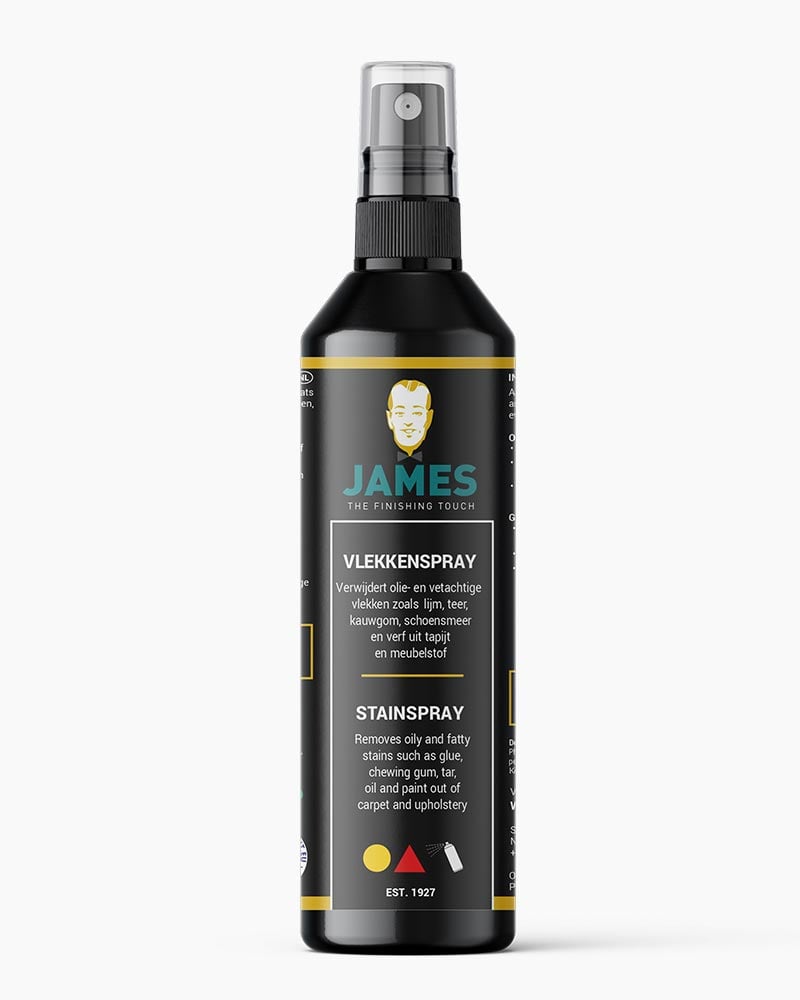
Treat with James Stainspray on a cotton cloth
You can treat this stain with James Stainspray on a cotton cloth. For this you need James Stainspray and a white cotton cloth. Next:
- Test for colour and material resistance in an inconspicuous area: apply, let it dry completely and evaluate.
- Spray James Stainspray on a dry, white cotton cloth.
- Use this cloth to wipe the stain using wide sweeping strokes, without spreading the stain. Repeat frequently with a clean part of the cloth.
- Directly spray James Stainspray onto any residue and repeat the process using wide sweeping strokes.
Treat with James Stainspray on a cotton cloth
You can treat this stain with James Stainspray on a cotton cloth. For this you need James Stainspray and a white cotton cloth. Next:
- Test for colour and material resistance in an inconspicuous area: apply, let it dry completely and evaluate.
- Spray James Stainspray on a dry, white cotton cloth.
- Use this cloth to wipe the stain using wide sweeping strokes, without spreading the stain. Repeat frequently with a clean part of the cloth.
- Directly spray James Stainspray onto any residue and repeat the process using wide sweeping strokes.
Nail polish stains on hard floors
On hard floors such as PVC, vinyl, LVT, laminate and natural stone, nail polish usually remains on the top layer and dries as a hard, shiny drop or smear. You often see a clear edge where the varnish has run, especially if it has been applied to a light-coloured floor. Nail polish can become trapped in the floor structure and along edges, resulting in a sharply defined line after drying.
If left lying around, nail polish hardens and can break into pieces when subjected to stress. These pieces can then form a small trail when they are moved. It is particularly noticeable on matt floors because the difference in gloss is significant. With laminate flooring, edges and seams can “trap” the lacquer coating, causing the stain to remain visible for longer as a kind of inlaid colour.
What you need to bear in mind is that mechanical stress can spread the stain or damage the surface if hard paint residues shift. The lacquer film may also cause a slight elevation that you can feel when you walk over it. The risk here lies mainly in differences in gloss and texture, and in the fact that the stain can become embedded in the relief.
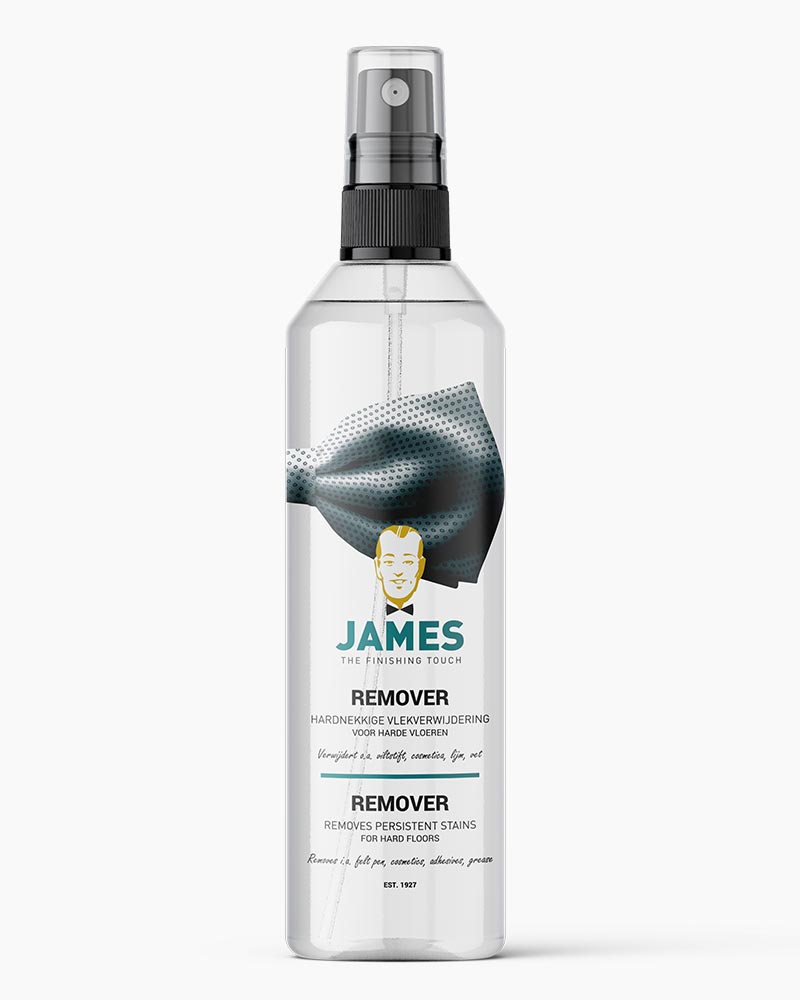
Treatment with James Remover
This stain can be treated with James Remover.
Before use, always test in an inconspicuous area for color and material resistance: apply, leave for 5 minutes, clean the tested area with water, allow to dry and evaluate.
- Spray directly onto the purpose area
- Leave to soak for about 1 to 5 minutes
- Then, use a white cotton cloth to remove the grease
- If necessary, gently treat stubborn stains with a soft brush or plastic spatula.
- After use, always clean the area with water.
Attention: be careful when working near a glue seams. Allow James Remover to soak in shortly. Do not let the product penetrate into cracks or seams.
Treatment with James Remover
This stain can be treated with James Remover.
Before use, always test in an inconspicuous area for color and material resistance: apply, leave for 5 minutes, clean the tested area with water, allow to dry and evaluate.
- Spray directly onto the purpose area
- Leave to soak for about 1 to 5 minutes
- Then, use a white cotton cloth to remove the grease
- If necessary, gently treat stubborn stains with a soft brush or plastic spatula.
- After use, always clean the area with water.
Attention: be careful when working near a glue seams. Allow James Remover to soak in shortly. Do not let the product penetrate into cracks or seams.
Nail polish stains on furniture fabric
On upholstery fabric, nail polish can quickly soak into the fibres and harden there, leaving a hard, shiny spot. With fabrics that have an open weave, the paint can sink between the threads, making the stain larger than you can see on the surface. Nail polish often stands out more on microfibre and velour-like fabrics because it flattens the fibres and leaves a shiny ‘smear’.
If it remains in place, the lacquer film can make the fabric stiff in that spot and change its appearance. Dark fabrics in particular often show less colour, but instead have a striking sheen. With light-coloured fabrics, it is the other way around: colour pigment stands out, and the spot remains visible as a coloured shadow. Glitter or pearlescent paints sometimes leave behind small particles that continue to sparkle, even when the colour appears to be less intense.
What you need to bear in mind is that friction and pressure can spread the paint at first, making the stain wider. A hard lacquer film can also crack when bending or sitting, which can damage fibres. The risk is therefore both visual and tangible: colour, shine and a permanently stiff piece of fabric.
Treat with James Stainspray on a cotton cloth
You can treat this stain with James Stainspray on a cotton cloth. For this you need James Stainspray and a white cotton cloth. Next:
- Test for colour and material resistance in an inconspicuous area: apply, let it dry completely and evaluate.
- Spray James Stainspray on a dry, white cotton cloth.
- Use this cloth to wipe the stain using wide sweeping strokes, without spreading the stain. Repeat frequently with a clean part of the cloth.
- Directly spray James Stainspray onto any residue and repeat the process using wide sweeping strokes.
Treat with James Stainspray on a cotton cloth
You can treat this stain with James Stainspray on a cotton cloth. For this you need James Stainspray and a white cotton cloth. Next:
- Test for colour and material resistance in an inconspicuous area: apply, let it dry completely and evaluate.
- Spray James Stainspray on a dry, white cotton cloth.
- Use this cloth to wipe the stain using wide sweeping strokes, without spreading the stain. Repeat frequently with a clean part of the cloth.
- Directly spray James Stainspray onto any residue and repeat the process using wide sweeping strokes.
Would you also like to benefit from James’ effective stain removal? Discover our full range and order your James products easily online. You’ll soon be enjoying a clean and stain-free interior again!
Frequently asked questions and myths
There are all sorts of stories going around about how to remove these nail polish stains. From granny’s remedies to persistent tips from the internet – but what really works? In this section, we answer frequently asked questions and debunk a few myths. This allows you to get started with confidence.
No, that is a persistent myth. Nail polish remover often contains acetone or other solvents. They can remove nail polish, but they can also damage the top layer of floors, especially PVC, vinyl and laminate. On upholstery fabric, it may cause the colour to bleed or create a hard edge. On natural stone, it may cause dark spots or damage the surface. If you are considering using nail polish remover, always test it on an inconspicuous area and take extra care.
Alcohol is sometimes mentioned, but “safety” is not guaranteed. On some floors, it may cause a difference in gloss, and on textiles, it may affect the colour. Furthermore, alcohol does not always dissolve nail polish effectively, which means that you mainly end up smearing and spreading it. The risk is that you will get a larger colour haze. An approach that suits your surface and is intended to loosen paint residues is usually more predictable. Testing on an inconspicuous area remains important, especially with coloured fabrics.
This is sometimes possible on hard, scratch-resistant surfaces, but there is a high risk of scratches. On PVC, vinyl and laminate, you can quickly damage the top layer, resulting in permanent damage, even if the varnish is gone. Natural stone surfaces can become damaged or dull. It is not advisable to scratch carpets and upholstery, as this may tear the fibres. It is better to loosen and remove it locally, without using sharp tools.
Not usually. Nail polish is a lacquer coating and does not mix with water. Soap can only remove surface dirt, but the paint remains. The risk is that you will rub and spread the colourants, while the lacquer layer will not disappear. You can also get rings on textiles by working too wet. It is better to first remove as much as possible without applying any lubricant and then use a product that loosens paint residue, suitable for the surface.
Because pigments from nail polish can transfer to fibres or penetrate small pores, especially in bright colours. A residual layer of varnish or cleaning agent may also reflect light differently, causing you to see a haze. A second, localised cleaning can help to remove the last remaining residues. It is important to absorb and dry thoroughly so that no residue remains that could make the spot visible or attract dirt again.
Deal with any stain using the right approach from James
Nail polish stains are difficult to remove because they harden quickly and form a real lacquer layer. By proceeding with caution and only cleaning locally, you can prevent scratches, rings and colour haze. With James’ products and advice, you can safely remove nail polish from carpets, hard floors and upholstery without damaging fibres or top layers. Work calmly and in small steps, and you will usually get the area clean again.