



Removing sweat stains
On this page:

Removing sweat stains
Sweat stains often occur unnoticed. A warm night with perspiration in bed, a sofa cushion you often lie on, or a chair you plop down on after exercising. On textiles, you will see yellow or greyish spots, and sometimes a clear edge remains visible. In addition to the stain, the odour is also a common problem. Sweat can accumulate in upholstery fabric and carpets in particular, causing them to start smelling more quickly.
Acting quickly helps, but sweat stains are often ‘build-up stains’. This means that they do not form all at once, but layer by layer. With the right approach, you can usually remove them easily, as long as you don’t work too wet and dry the area thoroughly afterwards.
The same advice applies to these stains: Sweat, Moisture, Perspiration, Body Fluid
Characteristics (anatomy) of a sweat patch
Sweat consists mainly of water, but also contains salts, skin oils and sometimes care products such as deodorant. When it dries, these substances remain in the fibres or on the top layer of the floor. Salts can cause a slight yellowish haze and make the area feel hard or stiff. Skin oil makes the area susceptible to dirt, causing the stain to become darker and reappear more quickly. The odour is caused by residues remaining in the material and starting to smell over time, especially if the area regularly becomes damp again. Using too much water increases the risk of rings and can actually push the odour deeper into the material.
Sweat stains in carpets and rugs
Sweat stains in carpets usually occur in places where people often sit or lie down, or in sports areas where mats and clothing end up on the floor. Sweat itself is not always strongly coloured, but it contains salts that can cause a slight haze or stiffness after drying. On dark carpets, you sometimes see it as a lighter, dull area; on light carpets, it appears as a yellowish circle.
If it remains in place, salts can attract moisture from the air, causing the area to become more ‘active’ again in warm or humid weather. This can intensify odours and cause the area to become dirty more quickly. The pool may also be flatter in that spot due to the accumulation of sweat and skin oils. Over time, you will see a clear difference between clean carpet and a worn area.
What you need to bear in mind is that sweat often mixes with skin oils and deodorant residue, meaning that the stain is not a single distinct mark but a build-up of residue. An excessively large moisture zone may also remain visible later as a ring. Sweat problems in carpets often involve long-term build-up and odour, not just colour.
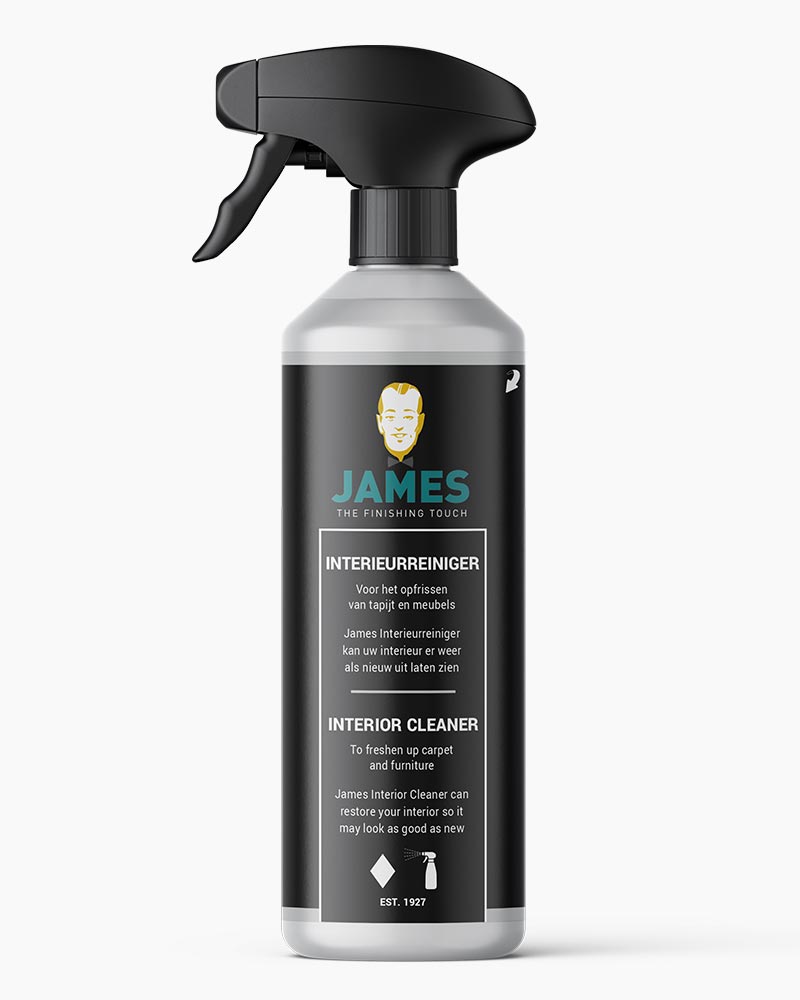
James Interior Cleaner
This stain can be treated with James Interior Cleaner. For this you need a white cotton cloth and James Interior Cleaner. Then follow the next steps:
- Test for colour and material resistance in an inconspicuous area: apply, let it dry completely and evaluate.
- Spray James Interior Cleaner on a dry, white cotton cloth.
- Use this cloth to wipe the purpose area using wide sweeping strokes. If the cloth attracts dirt or grease, you know the treatment is effective.
- Repeat frequently with a clean part of the cloth, until you see the cloth no longer attracts dirt.
James Interior Cleaner
This stain can be treated with James Interior Cleaner. For this you need a white cotton cloth and James Interior Cleaner. Then follow the next steps:
- Test for colour and material resistance in an inconspicuous area: apply, let it dry completely and evaluate.
- Spray James Interior Cleaner on a dry, white cotton cloth.
- Use this cloth to wipe the purpose area using wide sweeping strokes. If the cloth attracts dirt or grease, you know the treatment is effective.
- Repeat frequently with a clean part of the cloth, until you see the cloth no longer attracts dirt.
Sweat stains on hard floors
On hard floors, sweat is usually not visible as bright stains, but rather as dull spots or streaks, especially in areas where people walk barefoot. The salts may dry out as a light haze that is visible in raking light. Residue may remain in the structure and along the edges, resulting in a blotchy image.
If it remains in place, it may feel sticky and attract dirt more quickly. This makes the floor appear dirty more quickly, especially on matt floors. With PVC, vinyl, LVT and laminate, this is noticeable as uneven gloss. With natural stone, residue can remain in small pores, causing a permanent dull area.
What you need to bear in mind is that sweat often combines with skin oils, causing a film to form more quickly. Also, spots may only become truly visible when everything is dry and you look at the floor from an angle. Sweat on hard floors is therefore mainly a matter of residue and shine.
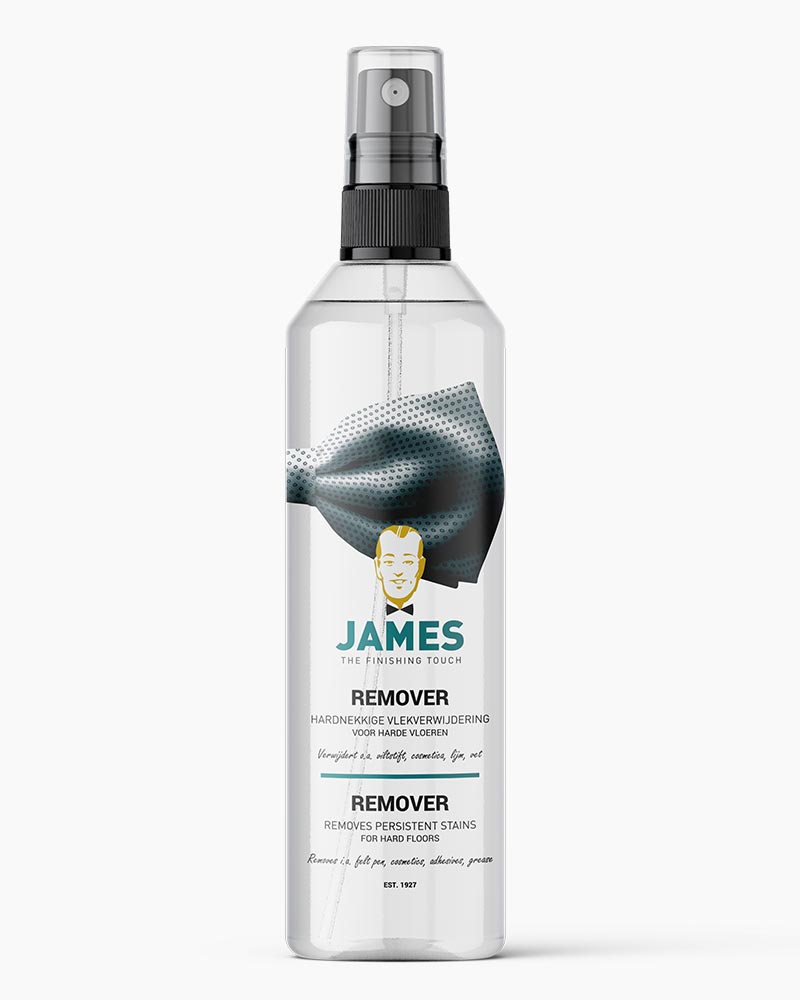
Treatment with James Remover
This stain can be treated with James Remover.
Before use, always test in an inconspicuous area for color and material resistance: apply, leave for 5 minutes, clean the tested area with water, allow to dry and evaluate.
- Spray directly onto the purpose area
- Leave to soak for about 1 to 5 minutes
- Then, use a white cotton cloth to remove the grease
- If necessary, gently treat stubborn stains with a soft brush or plastic spatula.
- After use, always clean the area with water.
Attention: be careful when working near a glue seams. Allow James Remover to soak in shortly. Do not let the product penetrate into cracks or seams.
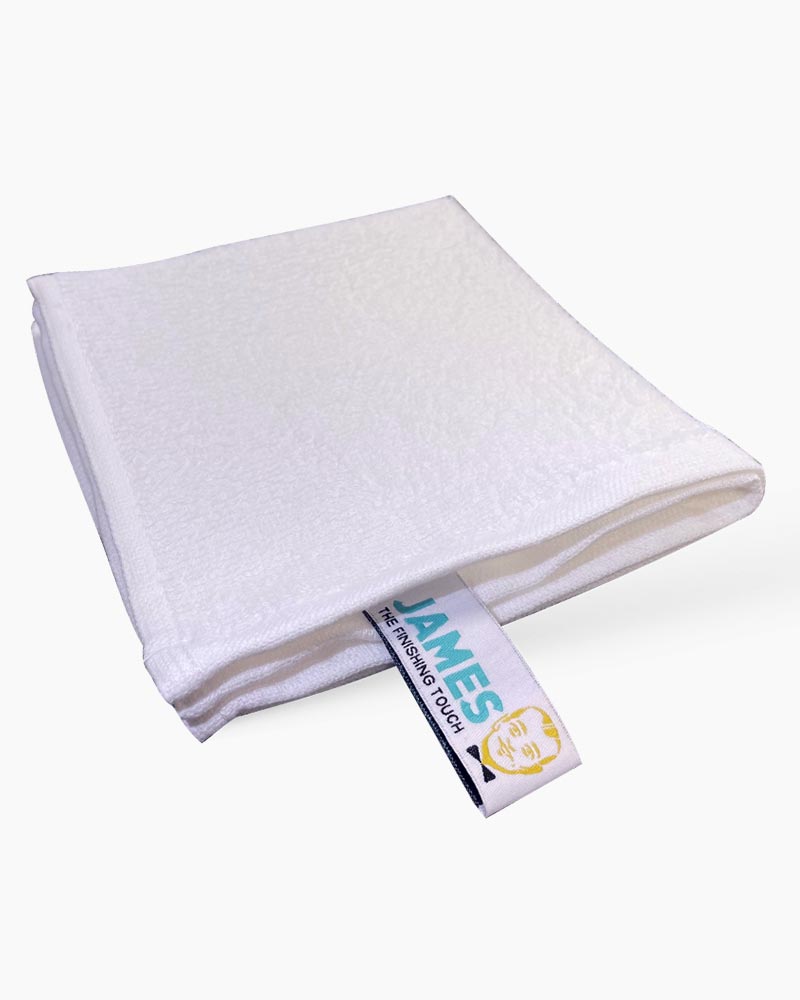
Treat using a moist cotton cloth
This stain can be treated immediately with water. Use clean water and preferably a white, cotton cloth.
Sweat stains in upholstery fabric
On upholstery fabric, sweat stains are often visible on headrests, backrests and seats. Sweat can cause yellowish circles on light-coloured fabric due to salts, and it can also cause dull spots because the fabric structure changes. Skin oil often plays a role, making the area darker and shinier than sweat alone would.
If it remains in place, odour may become an issue, particularly if perspiration has been absorbed into the padding. The fabric in that area may also attract dirt more quickly and develop a permanent colour difference. With microfibre, you sometimes see a shiny, “polished” area, whereas woven fabrics tend to show a dull shadow.
What you need to bear in mind is that sweat is usually not a sharply defined stain, but rather a build-up over a larger area. A damp patch may also remain visible later as a ring, separate from the discolouration. Sweat in upholstery fabric is often a combination of residue, odour and a changed appearance in pressure points.
James Interior Cleaner
This stain can be treated with James Interior Cleaner. For this you need a white cotton cloth and James Interior Cleaner. Then follow the next steps:
- Test for colour and material resistance in an inconspicuous area: apply, let it dry completely and evaluate.
- Spray James Interior Cleaner on a dry, white cotton cloth.
- Use this cloth to wipe the purpose area using wide sweeping strokes. If the cloth attracts dirt or grease, you know the treatment is effective.
- Repeat frequently with a clean part of the cloth, until you see the cloth no longer attracts dirt.
James Interior Cleaner
This stain can be treated with James Interior Cleaner. For this you need a white cotton cloth and James Interior Cleaner. Then follow the next steps:
- Test for colour and material resistance in an inconspicuous area: apply, let it dry completely and evaluate.
- Spray James Interior Cleaner on a dry, white cotton cloth.
- Use this cloth to wipe the purpose area using wide sweeping strokes. If the cloth attracts dirt or grease, you know the treatment is effective.
- Repeat frequently with a clean part of the cloth, until you see the cloth no longer attracts dirt.
Would you also like to benefit from James’ effective stain removal? Discover our full range and order your James products easily online. You’ll soon be enjoying a clean and stain-free interior again!
Frequently asked questions and myths
There are all sorts of stories going around about how to remove these sweat stains. From granny’s remedies to persistent tips from the internet – but what really works? In this section, we answer frequently asked questions and debunk a few myths. This allows you to get started with confidence.
Vinegar is often mentioned, but it is not always safe or effective. It may temporarily reduce odour, but if sweat residue remains in fibres or padding, the odour will often return. Vinegar is not recommended for natural stone, as it can damage the surface. Vinegar can sometimes cause discolouration on textiles, especially on delicate fabrics. If you want to do something about sweat, you need to remove the residue, not just mask the smell. A suitable cleaning agent is usually safer.
Baking soda can absorb odours, but it does not address the cause if there are still salts and skin oils in the material. The powder may remain on upholstery and carpets, causing a haze or making the fibres stiff. If it becomes damp, it can clump and cause rings. It may provide temporary relief for light odours, but for truly clean results, cleaning is necessary to loosen and remove the residues.
This is due to a mixture of salts from sweat, skin oils and sometimes deodorant or skin care products. When this dries and builds up, it discolours, especially on light-coloured fabrics. It can also react with dirt that was already in the fabric, causing the area to turn yellow or grey even faster. Simply rinsing with water usually does not remove these substances. You have to loosen them and remove them, otherwise the discolouration will keep coming back and the spot will quickly become visible again.
Hot water and soap seem logical, but often cause problems. Soap can leave a film that attracts dirt, causing the stain to reappear more quickly. Hot water can cause residues to penetrate deeper into fabrics and increases the risk of rings. It may leave streaks on floors. It works better to clean locally with a product that loosens grease and salts and then to absorb everything thoroughly and dry it.
Because there are often still residues in the material, especially in the filling of upholstery fabric or deeper in carpets. The odour may also return if the area becomes damp again, for example due to heat, humid air or renewed perspiration. If you have worked too wet, this can actually exacerbate the problem. The solution is to clean the area locally, absorb thoroughly and allow to dry completely. Sometimes a second treatment is necessary to remove the last source of odour.
Deal with any stain using the right approach from James
Sweat stains and body odour are unpleasant, but with a calm, localised approach, you can usually control them effectively. It is all about loosening and absorbing salts and skin oils, and then drying thoroughly to prevent the source of the odour from returning. With James’ products and advice, you can safely remove sweat from carpets, hard floors and upholstery without leaving marks, streaks or damage to the surface. Tackle it in good time, and your interior will remain fresh and tidy.