



Removing oil stains
On this page:

Removing oil stains
An oil slick often forms in a matter of seconds. A drop from the pan, oil from a bicycle or door hinge, massage oil on a cushion or a splash while cooking. Oil is treacherous because it does not mix with water and is rapidly absorbed by many materials. This allows you to quickly spot a dark spot, a shiny layer or a sticky area that attracts dirt. On some surfaces, the stain may even appear to get bigger after drying, as the oil slowly spreads further.
Acting quickly helps to limit deep retraction. But even with an older oil stain, you can often still achieve results, as long as you loosen the grease in the right way and then absorb everything thoroughly.
The same advice applies to these stains: Oil, Oil stains, Baby oil, Vaseline, Styling gel, Shaving foam, Hair wax, Hairspray, Hair gel, Deodorant, Body lotion, Bio-oil, Bath oil, Almond oil
Characteristics (anatomy) of an oil slick
Oil consists of fatty substances that adhere to fibres and surfaces. It penetrates textiles between the fibres and can sink into the underlayer. On hard floors, oil forms a thin film on the top layer, making the surface slippery and more prone to attracting dirt. Some oils contain colourants or fragrances, which can cause additional visible stains or odours. Because oil does not dissolve in water, water alone usually does not work. If you start with too much water or rub too hard, you will spread the oil and enlarge the stain, resulting in circles or differences in shine.
Oil stains in carpets and rugs
Oil is treacherous in carpets and rugs because it quickly sinks between the fibres and forms a dark shadow there. You often see a wet spot first, but after drying, a darker area remains because the grease has been absorbed into the fibres. With deep-pile carpets, oil can sink deeper and leave a layer of grease on several layers of fibres, making the stain larger than you think.
If it remains, the stain will attract dust and sand, causing the area to become increasingly darker and duller. The pool may also flatten in that spot and reflect differently, which enhances the colour difference. On light-coloured carpets, it is particularly noticeable as a dark circle, while on dark carpets it is more often seen as a difference in shine or texture. An oil stain can therefore “change” over time: initially dark, later also blotchy.
What you need to bear in mind is that oil spreads slowly through fibres, even without you seeing it. Pressure from walking or furniture can push the fat deeper and enlarge the area. An excessively broad moisture zone may also remain visible later as a border, separate from the dark core. Oil is particularly stubborn because it is not only a stain, but also a magnet for new dirt.
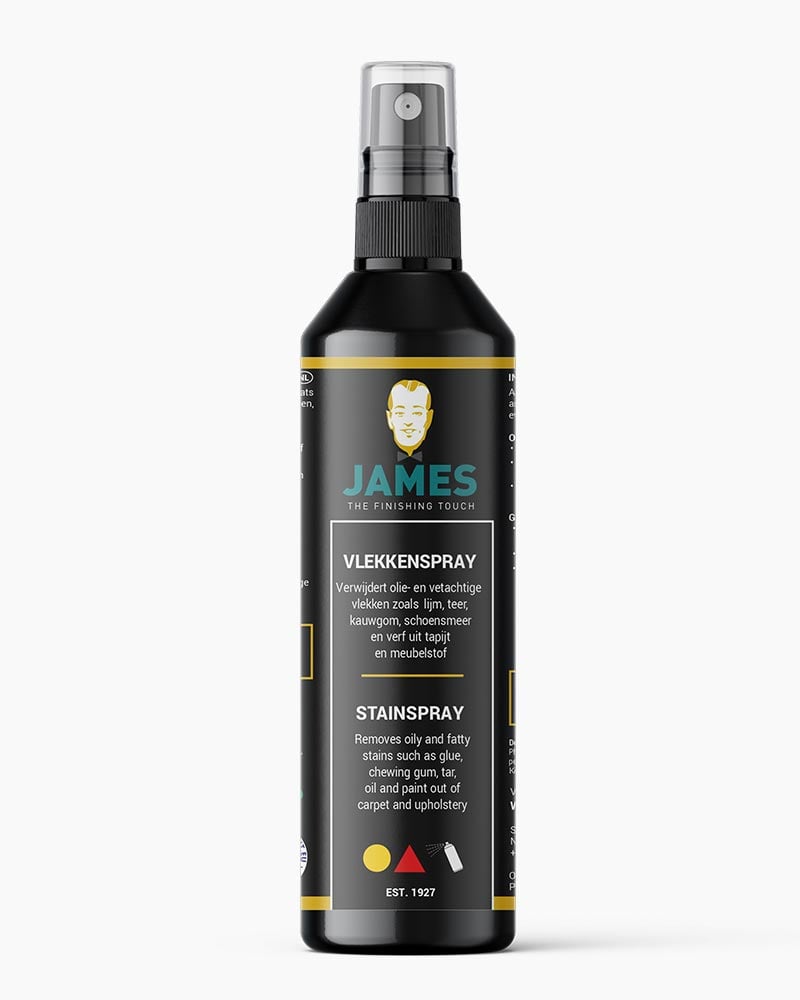
Treat with James Stainspray on a cotton cloth
You can treat this stain with James Stainspray on a cotton cloth. For this you need James Stainspray and a white cotton cloth. Next:
- Test for colour and material resistance in an inconspicuous area: apply, let it dry completely and evaluate.
- Spray James Stainspray on a dry, white cotton cloth.
- Use this cloth to wipe the stain using wide sweeping strokes, without spreading the stain. Repeat frequently with a clean part of the cloth.
- Directly spray James Stainspray onto any residue and repeat the process using wide sweeping strokes.
Treat with James Stainspray on a cotton cloth
You can treat this stain with James Stainspray on a cotton cloth. For this you need James Stainspray and a white cotton cloth. Next:
- Test for colour and material resistance in an inconspicuous area: apply, let it dry completely and evaluate.
- Spray James Stainspray on a dry, white cotton cloth.
- Use this cloth to wipe the stain using wide sweeping strokes, without spreading the stain. Repeat frequently with a clean part of the cloth.
- Directly spray James Stainspray onto any residue and repeat the process using wide sweeping strokes.
Oil stains on hard floors
On hard floors such as PVC, vinyl, LVT, laminate and natural stone, oil remains on the top layer as a thin film. Often, you don’t immediately see it as a stain, but you notice it because of shine, streaks or a slippery feeling. Oil can remain in the structure and along the edges, resulting in a blotchy appearance that is particularly visible in raking light.
If left in place, the film will attract dirt and the area will become darker and stickier. On matt floors, you will quickly see an “apparent cleaning spot” that actually looks dirtier than the rest. With laminate flooring, oil can accumulate along the seams, creating a visible edge that is difficult to remove later on. With natural stone, oil can penetrate the pores, creating a darker spot that is not only on the surface.
What you need to bear in mind is that oil is easily spread over a larger area by walking. Sand or dust in an oil film can also have an abrasive effect and cause fine scratches. The risk here is often not a single stain, but a larger area with uneven shine and a persistent film that affects the appearance of the floor.
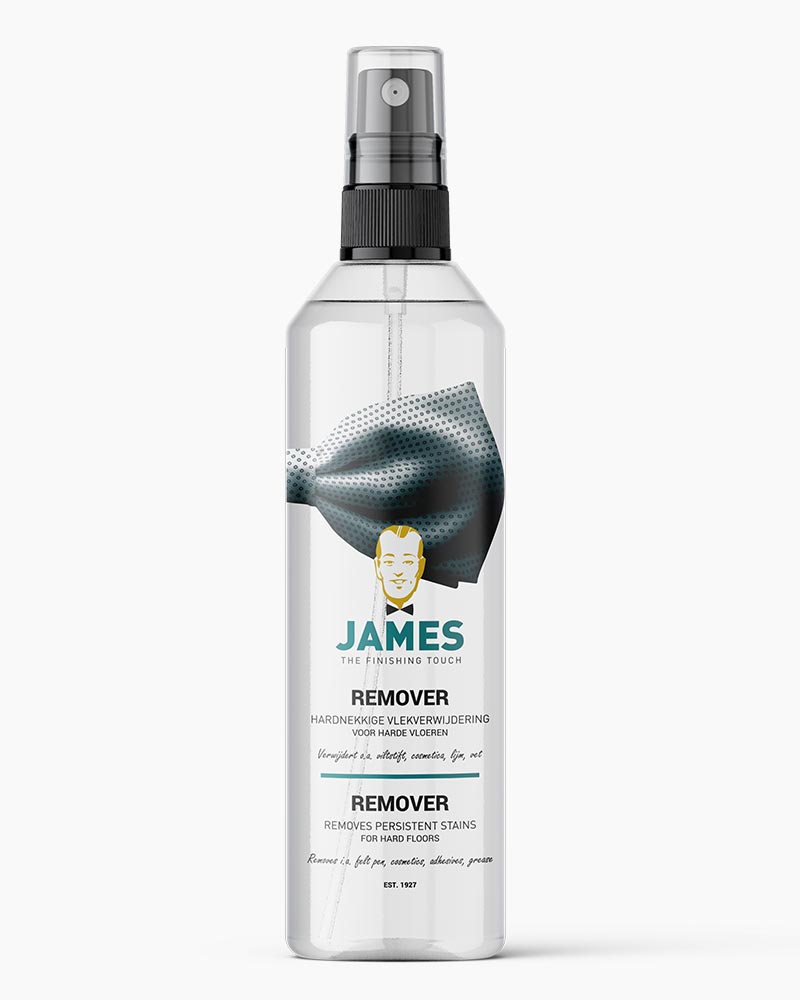
Treatment with James Remover
This stain can be treated with James Remover.
Before use, always test in an inconspicuous area for color and material resistance: apply, leave for 5 minutes, clean the tested area with water, allow to dry and evaluate.
- Spray directly onto the purpose area
- Leave to soak for about 1 to 5 minutes
- Then, use a white cotton cloth to remove the grease
- If necessary, gently treat stubborn stains with a soft brush or plastic spatula.
- After use, always clean the area with water.
Attention: be careful when working near a glue seams. Allow James Remover to soak in shortly. Do not let the product penetrate into cracks or seams.
Treatment with James Remover
This stain can be treated with James Remover.
Before use, always test in an inconspicuous area for color and material resistance: apply, leave for 5 minutes, clean the tested area with water, allow to dry and evaluate.
- Spray directly onto the purpose area
- Leave to soak for about 1 to 5 minutes
- Then, use a white cotton cloth to remove the grease
- If necessary, gently treat stubborn stains with a soft brush or plastic spatula.
- After use, always clean the area with water.
Attention: be careful when working near a glue seams. Allow James Remover to soak in shortly. Do not let the product penetrate into cracks or seams.
Oil stains in upholstery fabric
Oil is readily absorbed by upholstery fabric, forming a dark, often irregular stain. The edge may be darker than the centre because fat spreads into the fibres. With microfibre, you often see a shiny area that looks “polished”, while woven fabrics tend to take on a darker shade.
If it remains in place, it will attract dirt and become increasingly visible, especially on armrests and headrests. The fabric structure may also change: fibres become flatter and the area may feel greasy or stiff to the touch. In cushions, oil can penetrate deeper into the filling, causing the stain to spread and reappear later when exposed to heat.
What you need to bear in mind is that pressure and body heat cause the oil to penetrate further into the fabric. There is also a high risk that the stain will not have a clear edge, which means that the problem may be bigger than it appears. With oil, it often involves a permanent dark area and a change in the appearance of the fabric.
Treat with James Stainspray on a cotton cloth
You can treat this stain with James Stainspray on a cotton cloth. For this you need James Stainspray and a white cotton cloth. Next:
- Test for colour and material resistance in an inconspicuous area: apply, let it dry completely and evaluate.
- Spray James Stainspray on a dry, white cotton cloth.
- Use this cloth to wipe the stain using wide sweeping strokes, without spreading the stain. Repeat frequently with a clean part of the cloth.
- Directly spray James Stainspray onto any residue and repeat the process using wide sweeping strokes.
Treat with James Stainspray on a cotton cloth
You can treat this stain with James Stainspray on a cotton cloth. For this you need James Stainspray and a white cotton cloth. Next:
- Test for colour and material resistance in an inconspicuous area: apply, let it dry completely and evaluate.
- Spray James Stainspray on a dry, white cotton cloth.
- Use this cloth to wipe the stain using wide sweeping strokes, without spreading the stain. Repeat frequently with a clean part of the cloth.
- Directly spray James Stainspray onto any residue and repeat the process using wide sweeping strokes.
Would you also like to benefit from James’ effective stain removal? Discover our full range and order your James products easily online. You’ll soon be enjoying a clean and stain-free interior again!
Frequently asked questions and myths
There are all sorts of stories circulating about how to remove these oil stains. From granny’s remedies to persistent tips from the internet – but what really works? In this section, we answer frequently asked questions and debunk a few myths. This allows you to get started with confidence.
Dishwashing liquid can remove grease, but it is not always ideal. It is difficult to completely remove washing-up liquid from the fibres of carpets and upholstery fabric. This leaves behind a sticky residue that attracts dirt, causing the spot to become visible again later. It may leave streaks on floors. It may work on a small stain, but a cleaner that is designed for grease removal and is suitable for your surface will usually give a cleaner result and less chance of haze.
Powders can absorb some of the fresh oil, especially if you act quickly. But they don't really dissolve oil. Powder residue may remain in carpets and upholstery fabric, causing a haze or making the fibres stiff. If you wet the powder, it may clump and cause circles. It may cause abrasion on hard floors. It may be a temporary first step, but targeted cleaning is then required to really remove the oil.
No, oil does not mix with water. Hot water can actually make the oil more spreadable, causing you to contaminate a larger area. On textiles, the grease can penetrate deeper, and on floors, it can form a film once it dries. It is preferable to use a fat-dissolving approach and work locally. The most important thing is to loosen and absorb the oil, and then ensure that no residue remains that could attract dirt again.
That is usually a myth. With a damp cloth, you often spread the oil and push it deeper into the fibres or structure. The result is a larger stain and a greater chance of rings or differences in shine. It is better to first dab the oil with kitchen paper and then clean the area with a product that dissolves grease. Afterwards, soak it thoroughly and dry it to ensure that the stain does not return.
Because there is often still grease in the material, or because cleaning agent has been left behind. Fat changes how light reflects, causing you to continue to see a dark or shiny spot. A residual layer also quickly attracts new dirt. The solution is to clean the area further using a grease-dissolving approach and then absorb everything thoroughly and dry it. Sometimes two gentle treatments are needed to completely remove the oil from fibres or pores.
Deal with any stain using the right approach from James
Oil stains are stubborn because grease absorbs quickly and cannot be removed with water. By first dabbing and then loosening grease locally, you prevent smearing, circles and shine differences. With James’ products and advice, you can safely remove oil from carpets, hard floors and upholstery without damaging fibres or top layers. Treat the stain promptly to keep your interior fresh, smooth and clean.