



Removing olive oil stains
On this page:
Removing olive oil stains
A splash from the pan, a leaky bottle on the countertop or a drop on your trousers: an olive oil stain can happen in an instant. These grease stains quickly soak into fabrics and floors, leaving shiny, dark or sticky marks. Olive oil is particularly visible on light-coloured surfaces.
The quicker you react, the better you can prevent the grease from sticking or penetrating deeply. If you leave the stain, it will be much more difficult to remove. Fortunately, olive oil stains are usually easy to remove. Below you can read about the best approach for each surface, without risk of damage.
The same advice applies to these stains: Olive oil, Vegetable oil, Salted snacks, Sunflower oil, Soy sauce, Salad oil, Chips, Hummus, Frying fat, Frying oil, French fry fat, French fry oil, Dressing, Crisps, Snack nuts, Bitterballen, Cooking oil
Characteristics (anatomy) of an olive oil stain
Olive oil consists of fats that quickly adhere to surfaces. Due to its liquid structure, the oil easily penetrates textiles, joints or porous floors. When it dries, it leaves behind a shiny, dark or sticky spot. On fabrics, the stain often becomes stiff or darker in colour. If you spread the grease or wet it before absorbing it properly, the stain will spread and penetrate deeper. The residual grease also attracts dust and dirt, making the stain more visible over time.
Olive oil stains in carpets and rugs
Olive oil often behaves like a typical grease stain on carpets and rugs, but with an extra treacherous characteristic: it spreads easily and leaves a distinct dark shadow. A small drop can “fan out” through the pool, resulting in an irregular shape. With deep-pile carpets, olive oil can sink deeper and only become visible later as a larger dark area.With deep-pile carpets, olive oil can sink deeper and only become visible later as a larger dark area.
If it remains in place, the stain will attract dust and become grey, especially on walkways or in places where people often sit. The pool may also become flat in that spot, resulting in a permanent structural difference. On light-coloured carpets, the stain is quickly visible as a dark circle, while on dark carpets you mainly see a difference in shine. Sometimes it seems as if the stain changes depending on the light, which is typical for grease in fibres.
What you need to bear in mind is that olive oil often remains “active” for longer than you think. Even if the surface feels dry, grease may still be present in the fibres and may spread again when heated. Pressure from furniture can push the grease outwards, making the stain larger. The risk is that, over time, you will not only have a stain, but also an area that gets dirty more quickly.
Treat with James Stainspray on a cotton cloth
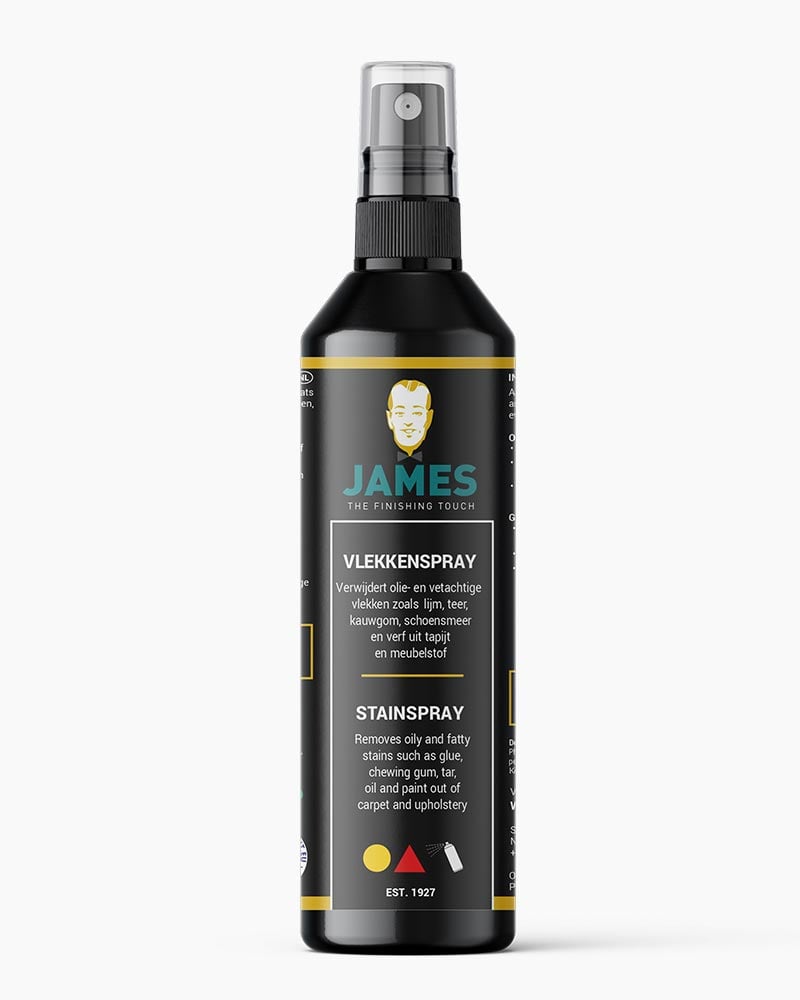
You can treat this stain with James Stainspray on a cotton cloth. For this you need James Stainspray and a white cotton cloth. Next:
- Test for colour and material resistance in an inconspicuous area: apply, let it dry completely and evaluate.
- Spray James Stainspray on a dry, white cotton cloth.
- Use this cloth to wipe the stain using wide sweeping strokes, without spreading the stain. Repeat frequently with a clean part of the cloth.
- Directly spray James Stainspray onto any residue and repeat the process using wide sweeping strokes.
Treat with James Stainspray on a cotton cloth
You can treat this stain with James Stainspray on a cotton cloth. For this you need James Stainspray and a white cotton cloth. Next:
- Test for colour and material resistance in an inconspicuous area: apply, let it dry completely and evaluate.
- Spray James Stainspray on a dry, white cotton cloth.
- Use this cloth to wipe the stain using wide sweeping strokes, without spreading the stain. Repeat frequently with a clean part of the cloth.
- Directly spray James Stainspray onto any residue and repeat the process using wide sweeping strokes.
Olive oil stains on hard floors
On hard floors such as PVC, vinyl, LVT, laminate and natural stone, olive oil often leaves a shiny trail or a slippery film. This is particularly noticeable on matt floors, where it appears as a ‘greasy haze’. Olive oil can remain in the structure and along edges, collecting dirt and causing the area to become darker and stained after drying.
If it stays there, it will become a real dirt magnet. Dust sticks to it, leaving visible tracks. On laminate flooring, edges and seams can retain the oil, creating an edge pattern. With natural stone, olive oil can penetrate the pores and cause a dark spot that remains visible longer than a superficial film.
What you need to bear in mind is that olive oil spreads extremely easily. One step through the stain can turn the problem from a single drop to an entire route. Sand in the oil can also have an abrasive effect, causing fine scratches that accentuate the difference in shine. The risk here is therefore a slipping hazard and a permanent difference in appearance.
Treatment with James Remover
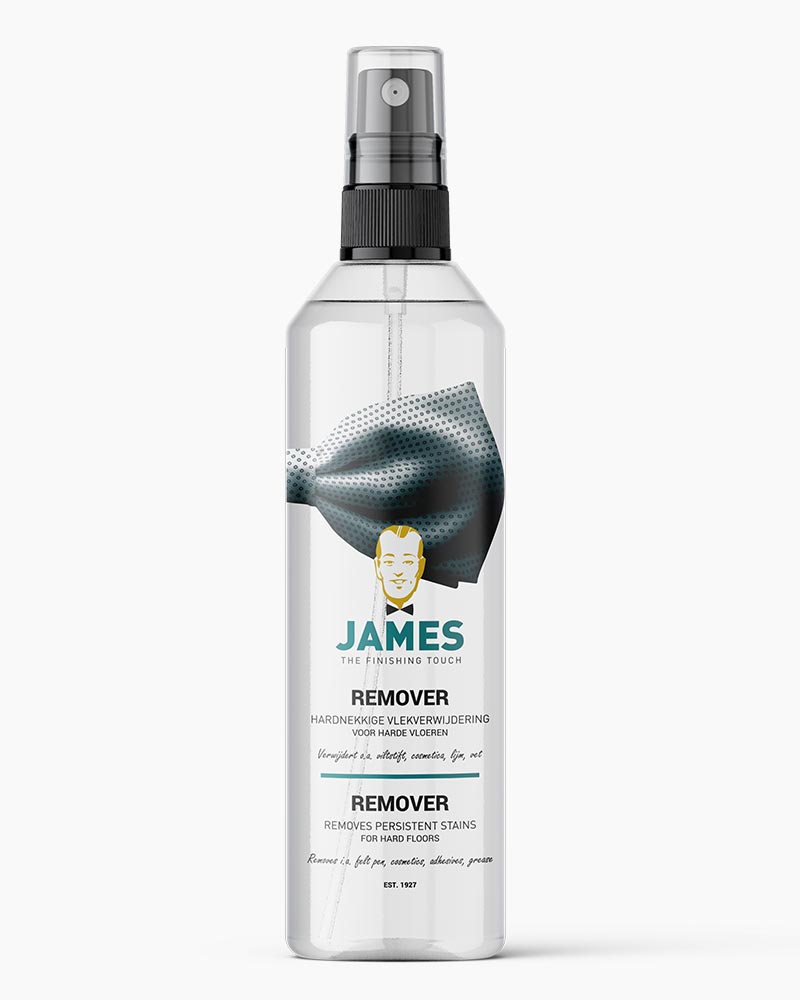
This stain can be treated with James Remover.
Before use, always test in an inconspicuous area for color and material resistance: apply, leave for 5 minutes, clean the tested area with water, allow to dry and evaluate.
- Spray directly onto the purpose area
- Leave to soak for about 1 to 5 minutes
- Then, use a white cotton cloth to remove the grease
- If necessary, gently treat stubborn stains with a soft brush or plastic spatula.
- After use, always clean the area with water.
Attention: be careful when working near a glue seams. Allow James Remover to soak in shortly. Do not let the product penetrate into cracks or seams.
Treatment with James Remover
This stain can be treated with James Remover.
Before use, always test in an inconspicuous area for color and material resistance: apply, leave for 5 minutes, clean the tested area with water, allow to dry and evaluate.
- Spray directly onto the purpose area
- Leave to soak for about 1 to 5 minutes
- Then, use a white cotton cloth to remove the grease
- If necessary, gently treat stubborn stains with a soft brush or plastic spatula.
- After use, always clean the area with water.
Attention: be careful when working near a glue seams. Allow James Remover to soak in shortly. Do not let the product penetrate into cracks or seams.
Olive oil stains on upholstery fabric
Olive oil is readily absorbed by upholstery fabric, leaving behind a dark, sometimes shiny mark. With fabrics that have a nap or pile direction, it may appear as if the colour changes when you look at them from different angles. On woven fabrics, the stain may become irregular because grease spreads along the threads.
If it remains in place, it attracts dirt and the area becomes grey, especially on armrests and seats. The fabric may also become flatter and ‘smoother’ in that area, resulting in a noticeable difference. In cushions, the oil can be drawn into the filling, causing the stain to reappear later, even if the surface appears less dark.
What you need to bear in mind is that heat and pressure will make the stain bigger. Also, a seemingly small spot may in reality have a larger fatty area without a sharp edge. Olive oil is particularly treacherous because it can cause differences in colour, shine and texture.
Treat with James Stainspray on a cotton cloth
You can treat this stain with James Stainspray on a cotton cloth. For this you need James Stainspray and a white cotton cloth. Next:
- Test for colour and material resistance in an inconspicuous area: apply, let it dry completely and evaluate.
- Spray James Stainspray on a dry, white cotton cloth.
- Use this cloth to wipe the stain using wide sweeping strokes, without spreading the stain. Repeat frequently with a clean part of the cloth.
- Directly spray James Stainspray onto any residue and repeat the process using wide sweeping strokes.
Treat with James Stainspray on a cotton cloth
You can treat this stain with James Stainspray on a cotton cloth. For this you need James Stainspray and a white cotton cloth. Next:
- Test for colour and material resistance in an inconspicuous area: apply, let it dry completely and evaluate.
- Spray James Stainspray on a dry, white cotton cloth.
- Use this cloth to wipe the stain using wide sweeping strokes, without spreading the stain. Repeat frequently with a clean part of the cloth.
- Directly spray James Stainspray onto any residue and repeat the process using wide sweeping strokes.
Why rely on home remedies that can do more harm than good? Opt for a professional approach with James’ reliable products. Our products have been extensively tested and offer the assurance of a clean and stain-free solution for almost any situation.
Frequently asked questions and myths
There are all sorts of stories circulating about how to remove these olive oil stains. From granny’s remedies to persistent tips from the internet – but what really works? In this section, we answer frequently asked questions and debunk a few myths. This allows you to get started with confidence.
Olive oil penetrates deeply into materials due to its small molecular structure and leaves behind a greasy film that is difficult to dissolve. This grease adheres to fibres or pores and causes a lasting shine or dark haze, even if the surface appears clean. On porous floors or textiles, this grease film is difficult to remove with water or mild cleaning agents alone. Thorough grease-dissolving cleaning is required to completely remove the residue.
Dishwashing liquid is often used because it dissolves grease, but it is not always effective in a domestic context. It foams heavily, often leaves a soap film and requires a lot of rinsing. In the case of textiles or flooring, this can lead to mould formation or stickiness. Furthermore, it is often not powerful enough to loosen deeply embedded olive oil. A special grease-dissolving product without residue usually works better.
Baking soda is often mentioned as a home remedy, but in practice it only has limited effectiveness. It absorbs some of the fat, but does not address it deeply enough. In addition, the powder remains in the fabric or floor structure and can lead to white spots or a dull appearance. It is therefore not a substitute for targeted grease cleaning and works mainly as a supplement for very fresh stains.
If you use too much moisture or rub the stain, the grease will move to the edge of the treated area. There it adheres and dries as a visible circle. This often occurs with textiles or carpets where the oil spreads horizontally. The best approach is gradual cleaning from the inside out, with minimal moisture.
Yes, partly. In addition to fatty acids, olive oil also contains antioxidants and colourants (such as chlorophyll in extra virgin oil), which can adhere more strongly to the surface. This creates not only a greasy film, but also a light yellow or greenish haze. This often makes removal more difficult than with neutral oils such as sunflower oil. In that case, a product that can remove both the grease and the colouring is required.
Deal with any stain using the right approach from James
Olive oil adds flavour to your food, but is less welcome on your floor, sofa or carpet. Fortunately, with the right approach and James’ effective products, you can safely remove these greasy stains. This prevents shiny spots, stickiness and unpleasant odours – and keeps your interior clean and tidy.