



Removing Resin
On this page:
Removing Resin
Wax often seems like a minor problem at first. You walk under a pine tree, put a Christmas branch on the table, or your child comes in after climbing. Before you know it, there will be a sticky, shiny stain on your rug, sofa or floor. Wax is annoying because it immediately sticks to everything that comes along: dust, sand and fluff. This quickly makes the area darker and more visible. Resin can also harden over time, making it impossible to simply ‘brush it off’.
The sooner you tackle the stain, the easier it is to prevent it from becoming a permanent, dirty spot. With the right approach, wax can usually be removed easily. Below you will find out what you need to bear in mind for each type of surface.
The same advice applies to these stains: Resin
Characteristics (anatomy) of a resin stain
Resin is a natural, sticky substance that trees use for protection. When fresh, it is syrupy and sticks to everything. It then dries slowly and becomes harder, sometimes almost glass-like. In textiles, resin adheres to fibres and attracts fluff, making the area appear larger. On hard floors, it usually remains on the top layer, but can become embedded in the structure, edges and small scratches. Incorrect handling, such as rubbing or applying heat, often makes wax softer and more spreadable, causing you to spread the stain.
Wax stains in carpets and rugs
Wax sticks directly to fibres and clings to the pile of carpets and rugs. As a result, you often see not only a spot, but also an area where fluff and dust stick to it. With deep-pile carpets, resin can become embedded more deeply and cause multiple layers of fibres to stick together.
If wax remains in place, it often becomes darker because dirt adheres to it. Over time, resin can harden, making the pile feel stiff and look rough. The spot may also appear larger because the sticky edge continuously picks up new particles.
Please note that heat softens the wax and makes it spread more quickly. Pulling on the clump can also damage the fibres, leaving you with a bald or fluffy spot. Wax is particularly treacherous because it does not stop at the original drop.
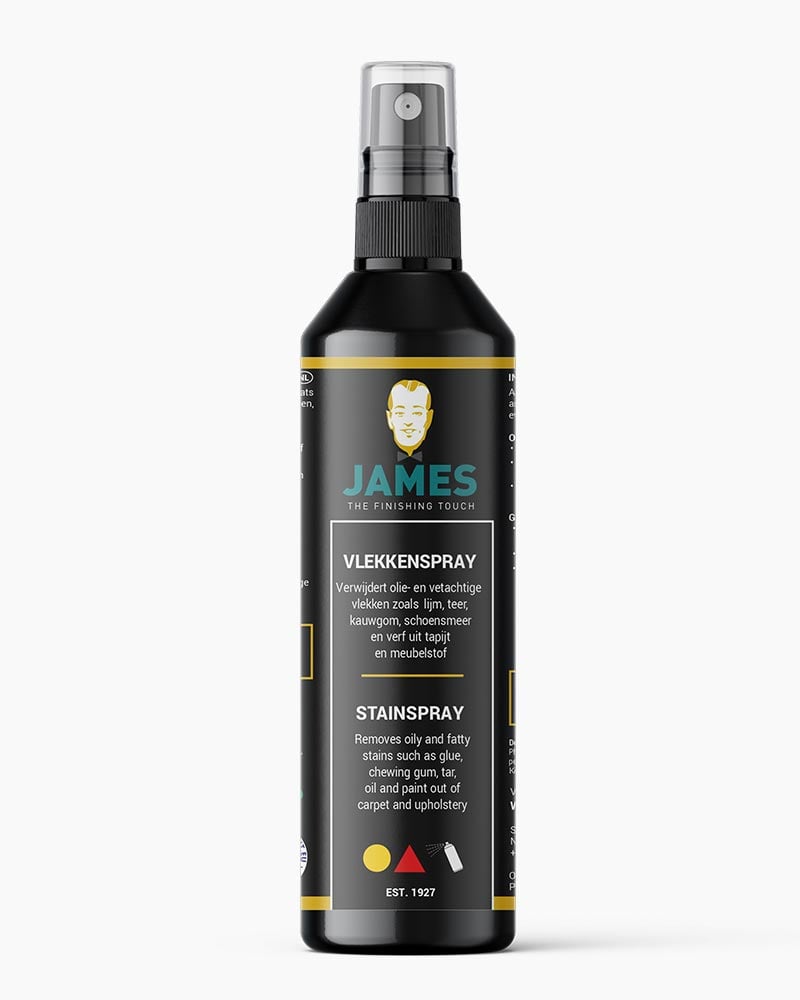
Treat directly with James Stainspray
This stain can be treated directly with James Stainspray.
- First test for colour and material resistance in an inconspicuous place: apply, let dry and evaluate.
- Spray James Stainspray on and, as far as possible, under the stain.
- Leave on for 5 minutes.
- Scrape away the loosened dirt with a spoon.
- Spray James Stainspray on a dry white terry cloth towel and rub out the remains of the stain with large, gentle strokes.
- Repeat treatment if necessary.
Treat directly with James Stainspray
This stain can be treated directly with James Stainspray.
- First test for colour and material resistance in an inconspicuous place: apply, let dry and evaluate.
- Spray James Stainspray on and, as far as possible, under the stain.
- Leave on for 5 minutes.
- Scrape away the loosened dirt with a spoon.
- Spray James Stainspray on a dry white terry cloth towel and rub out the remains of the stain with large, gentle strokes.
- Repeat treatment if necessary.
Wax stains on hard floors
On hard floors, resin usually remains on the top layer, but it adheres strongly to the structure and edges. It often looks like a shiny drop or streak that collects dirt. Resin can remain in small scratches, leaving a sticky trail.
If you leave it lying around, it will alternately become hard or soft again due to temperature changes. This means that it can move when you walk over it, or it breaks into small pieces that you spread further. Natural stone can continue to look grey if dirt gets into its pores.
Please note that scratching or scrubbing can quickly damage the top layer, which will remain visible as a difference in gloss. Sometimes a thin layer of resin remains, making the surface appear dirty. The problem is often less the lump and more the sticky residue around it.
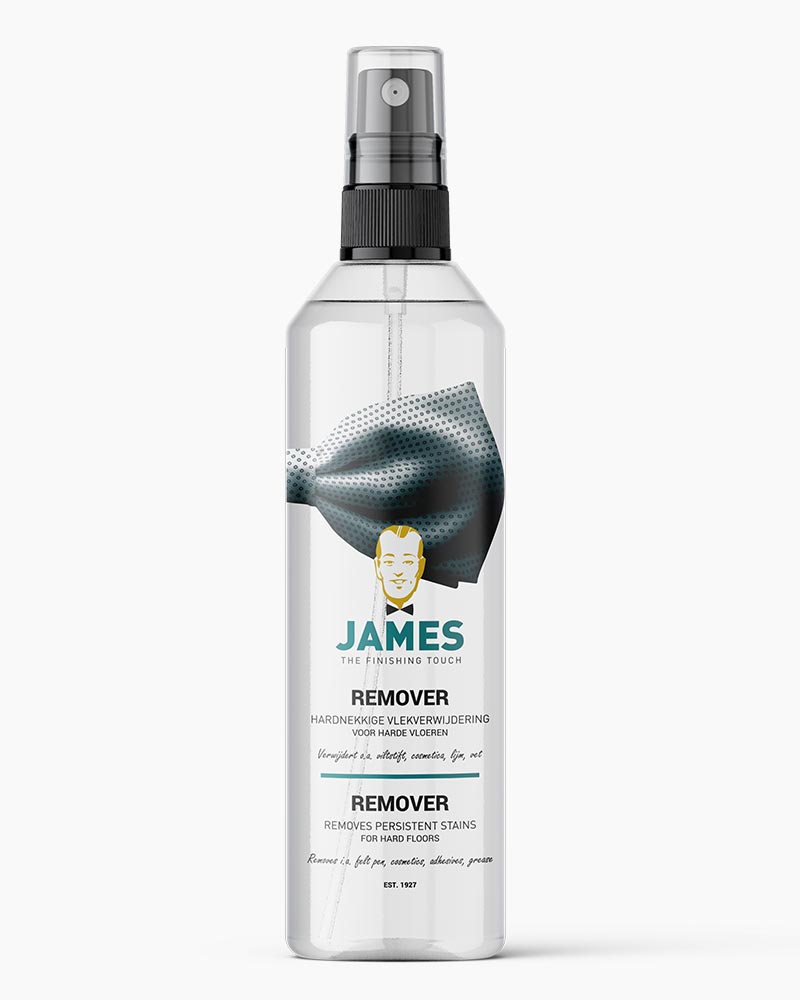
Treatment with James Remover
This stain can be treated with James Remover.
Before use, always test the surface in an inconspicuous area for colour and material resistance: apply, leave for 5 minutes, wipe the tested area with water, allow to dry and evaluate.
- Spray directly onto the purpose area
- Leave to soak for about 1 to 5 minutes
- Then, use a white cotton cloth to remove the grease
- Persistent stains may be treated carefully with a soft brush or plastic spatula. After use, always clean the area with water!
- After use, always clean the area with water.
Attention: be careful when working near a glue seams. Only allow James Remover to work for a short time. Under no circumstances should the product penetrate the seams.
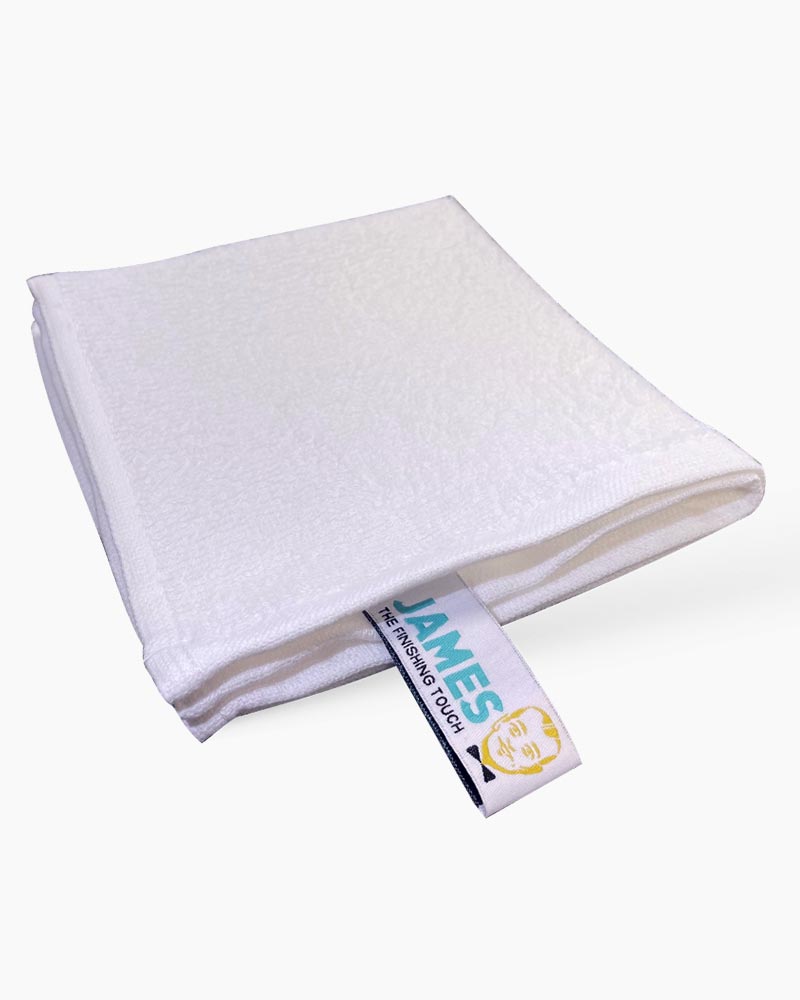
Treat using a moist cotton cloth
This stain can be treated immediately with water. Use clean water and preferably a white, cotton cloth.
Wax stains on upholstery fabric
Wax on upholstery fabric creates a sticky spot that immediately attracts fluff and hair. This can quickly make the stain look dark and messy, even if it was only a small drop. With coarse fabrics, resin can get between the threads and stick there.
If it remains in place, the resin can harden and make the fabric stiff in that spot. This can be particularly bothersome on seats because pressure pushes the hard particles into the fabric. This not only causes discolouration, but also leaves a noticeable rough patch.
Please note that friction can further spread the resin and alter the structure of the fabric. A ring-like zone can also develop due to sticky edges that constantly retain dirt. Resin draws particular attention to the prevention of spreading and loss of structure.
Treat directly with James Stainspray
This stain can be treated directly with James Stainspray.
- First test for colour and material resistance in an inconspicuous place: apply, let dry and evaluate.
- Spray James Stainspray on and, as far as possible, under the stain.
- Leave on for 5 minutes.
- Scrape away the loosened dirt with a spoon.
- Spray James Stainspray on a dry white terry cloth towel and rub out the remains of the stain with large, gentle strokes.
- Repeat treatment if necessary.
Treat directly with James Stainspray
This stain can be treated directly with James Stainspray.
- First test for colour and material resistance in an inconspicuous place: apply, let dry and evaluate.
- Spray James Stainspray on and, as far as possible, under the stain.
- Leave on for 5 minutes.
- Scrape away the loosened dirt with a spoon.
- Spray James Stainspray on a dry white terry cloth towel and rub out the remains of the stain with large, gentle strokes.
- Repeat treatment if necessary.
Would you also like to benefit from James’ effective stain removal? Discover our full range and order your James products easily online. You’ll soon be enjoying a clean and stain-free interior again!
Frequently asked questions and myths
There are all sorts of stories circulating about how to remove these tea stains. From granny’s remedies to persistent tips from the internet – but what really works? In this section, we answer frequently asked questions and debunk a few myths. This allows you to get started with confidence.
You often see this advice circulating, because fat can sometimes soften resin. In practice, it usually causes additional hassle. You make the wax more spreadable, but you also add fat. On carpet and upholstery, you will often get a second stain: a grease ring around the resin stain. A slippery layer remains on floors, attracting dirt. So it seems like a quick trick, but it often ends up in more cleaning work and a bigger mess.
Cold temperatures often work well because resin becomes harder and more brittle, making it less sticky. But ‘always’ is too strong. On some fabrics, a hard resin lump can actually trap fibres, causing you to use too much force when removing it. It works best if you then proceed slowly, in small steps, and do not attempt to remove the entire lump at once. So view cold as a smart preparation, not as the complete solution. You usually have to deal with the sticky residue separately.
This is often mentioned because resin can be sensitive to solvents. However, the risk is high. On PVC, vinyl, LVT and laminate, such a product can damage the top layer and cause a dull spot or difference in gloss. On upholstery fabric, it can affect the colour or actually make the stain larger. And with natural stone, it can react strangely depending on the type. If you are already using something along these lines, always test it on an inconspicuous area and choose a product that is intended for your surface.
Because you often only remove the ‘lump’, but not the thin layer around it. Sometimes you can only feel that layer when you run your hand over the spot. Dust and sand immediately stick to it, so that after a few days you will see a dark spot again. After removal, the solution is to clean the area again and wipe it thoroughly to remove the last sticky layer. Then dry thoroughly so that nothing remains that could attract dirt again.
It is possible, but it is rarely wise. Hard floors can quickly scratch the top layer. On upholstery fabric and carpet, you will tear or cut fibres, causing the damage to remain visible. It is preferable to use something blunt and work patiently. Wax often comes off if you harden it first and then remove it step by step. This may take a little more time, but it prevents damage that cannot be repaired.
Deal with any stain using the right approach from James
Wax is particularly troublesome because it is sticky, attracts dirt and hardens over time. By first securing it firmly, carefully removing it, and then removing the sticky residue locally, you can prevent a permanent stain or damage to the top layer or fibres. With the right James products and advice from James, you can safely tackle resin on carpets, hard floors and upholstery. This will ensure that your interior is thoroughly cleaned and prevent the same area from becoming dirty again quickly.