



Removing acrylic paint
On this page:

Removing acrylic paint
Acrylic paint is popular for crafts and painting, but a drop on the carpet, a smear on the sofa or splashes on the floor can happen in an instant. Acrylic paint is water-based, which makes it fairly easy to work with at first. However, once it dries, it forms a solid layer of paint that adheres to fibres and surfaces. This will result in a visible spot that feels hard, sometimes with a rough edge or a dull area around it.
When working with acrylic paint, it is particularly important to work quickly. Fresh paint can often be removed before it hardens. If you wait too long, it will become a layer that you have to carefully peel off instead of just ‘giving it a quick clean’.
The same advice applies to these stains: Acrylic, Acrylic paint, Acrylic lacquer, Acrylic resin, Polymer paint
Properties (anatomy) of an acrylic paint stain
Acrylic paint consists of pigment (colour) and an acrylic binder that allows the paint to adhere. As long as the paint is wet, it is mainly a colour stain that you can remove. However, after drying, the binder forms a plastic-like layer. This layer can remain on the floor like a film or end up as hard particles between fibres in carpets and Upholstery. In addition, pigments can leave a haze, even if the paint layer has largely disappeared. If you start with too much water or rub too hard, you will spread the paint or press the binder deeper into the material.
Removing acrylic paint stains from carpets or rugs
Acrylic paint is treacherous on carpets and rugs. Wet paint quickly sinks between the fibres and spreads when you rub it. When the paint dries, it leaves behind a hard, coloured spot that makes the fibres stiff. With deep-pile carpets, the dye can sink deeper into the pile, meaning that you will still see colour after the first round of cleaning. A clear shadow often remains visible on light-coloured carpets, even when the paint layer appears to have been removed.
If you leave the stain, the paint will adhere more and more strongly. Trying to scratch or scrub is not a good idea, as this will damage the fibres and make the carpet fluffy or bald in that spot. Cleaning with too much water can also cause rings and cause pigment to spread to a larger area.
First remove as much paint as possible without smearing. Then clean only the stained area with a product that is suitable for use on carpet and that helps to loosen paint residues. Work with little moisture and keep removing loose paint rather than rubbing it around. Allow the carpet to dry completely and vacuum carefully to remove any loose paint particles from the fibres. When dealing with dried paint, a second gentle treatment is often more effective than one vigorous attempt.
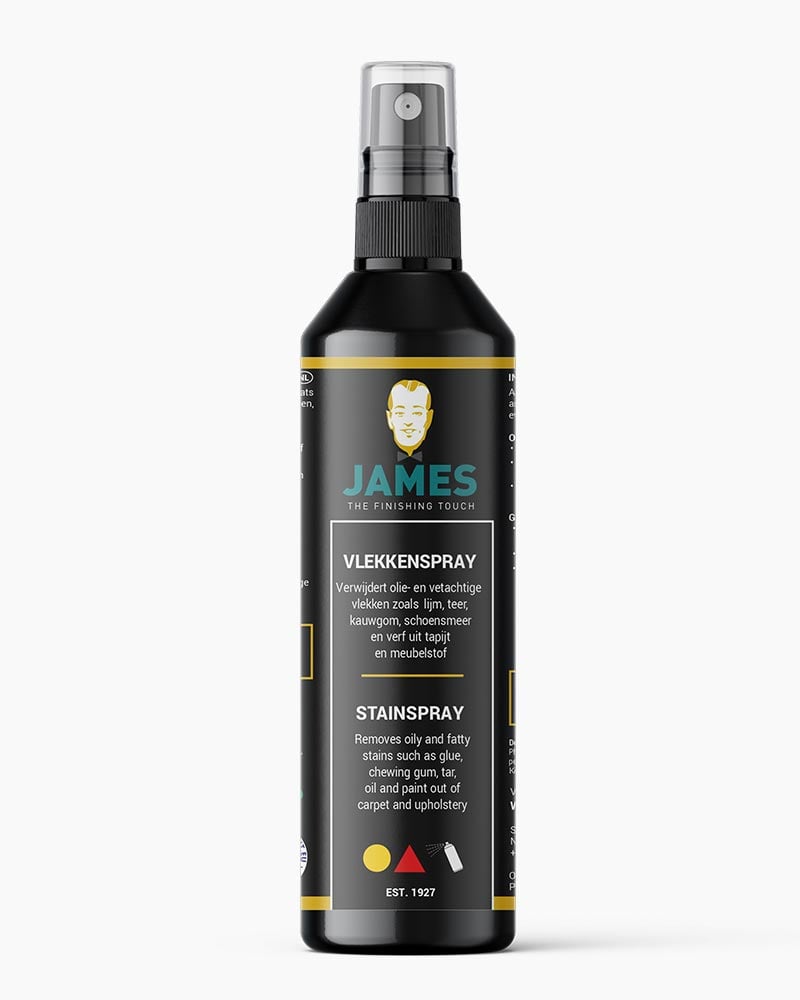
Treat with James Stainspray on a cotton cloth
You can treat this stain with James Stainspray on a cotton cloth. For this you need James Stainspray and a white cotton cloth. Next:
- Test for colour and material resistance in an inconspicuous area: apply, let it dry completely and evaluate.
- Spray James Stainspray on a dry, white cotton cloth.
- Use this cloth to wipe the stain using wide sweeping strokes, without spreading the stain. Repeat frequently with a clean part of the cloth.
- Directly spray James Stainspray onto any residue and repeat the process using wide sweeping strokes.
Treat with James Stainspray on a cotton cloth
You can treat this stain with James Stainspray on a cotton cloth. For this you need James Stainspray and a white cotton cloth. Next:
- Test for colour and material resistance in an inconspicuous area: apply, let it dry completely and evaluate.
- Spray James Stainspray on a dry, white cotton cloth.
- Use this cloth to wipe the stain using wide sweeping strokes, without spreading the stain. Repeat frequently with a clean part of the cloth.
- Directly spray James Stainspray onto any residue and repeat the process using wide sweeping strokes.
Removing acrylic paint stains from hard floors
On hard floors such as PVC, vinyl, LVT, laminate and natural stone, acrylic paint often forms a visible speck or thin layer that you can feel when you run your hand over it. You can remove a lot of wet paint, but when it dries, it forms a plastic-like layer that adheres to the top layer. This can be particularly noticeable on matt floors due to differences in gloss. Paint can remain in the structure and small seams, causing the stain to remain visible even after regular mopping.
If you allow the paint to harden, it is tempting to scrape it off with a knife, but this risks causing scratches. Abrasives are also dangerous: you damage the top layer and are left with a permanent difference in shine. Extra care is needed with natural stone, as some products can damage the surface and pigments can be absorbed into the pores, especially in light-coloured stone types.
First, absorb wet paint without spreading it. Then clean only the area with a product suitable for your floor type that can remove paint residue. Work gently, use a soft cloth and then wipe thoroughly. Dry the floor so that no residue remains. For stubborn stains, repeating the process usually works better than scrubbing harder.
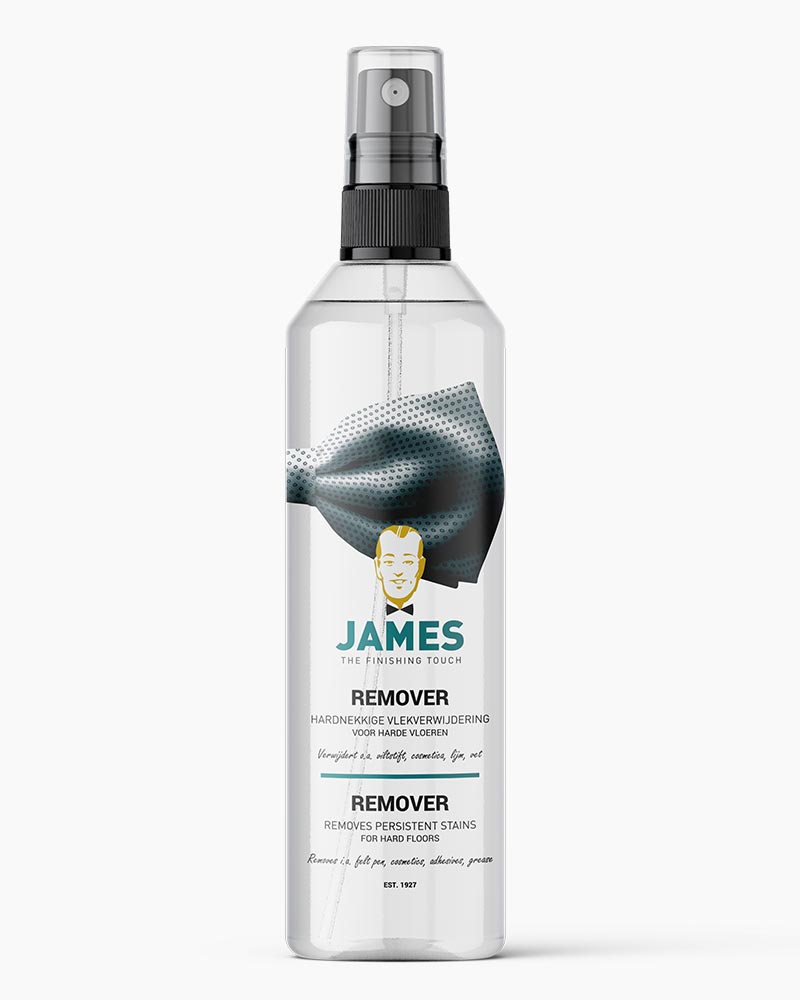
Treatment with James Remover
This stain can be treated with James Remover.
Always test in an inconspicuous area for color and material resistance: apply, allow to soak for 5 minutes, rinse the tested area with water, allow to dry and evaluate.
- Spray directly onto the purpose area
- Leave to soak for about 1 to 5 minutes
- Then, use a white cotton cloth to remove the grease
- If necessary, gently treat stubborn stains with a soft brush or plastic spatula.
- After use, always clean the area with water.
Please note: Caution is advised when working in the vicinity of a joint. Allow James Remover to soak in shortly. Do not let the product penetrate into cracks or seams.
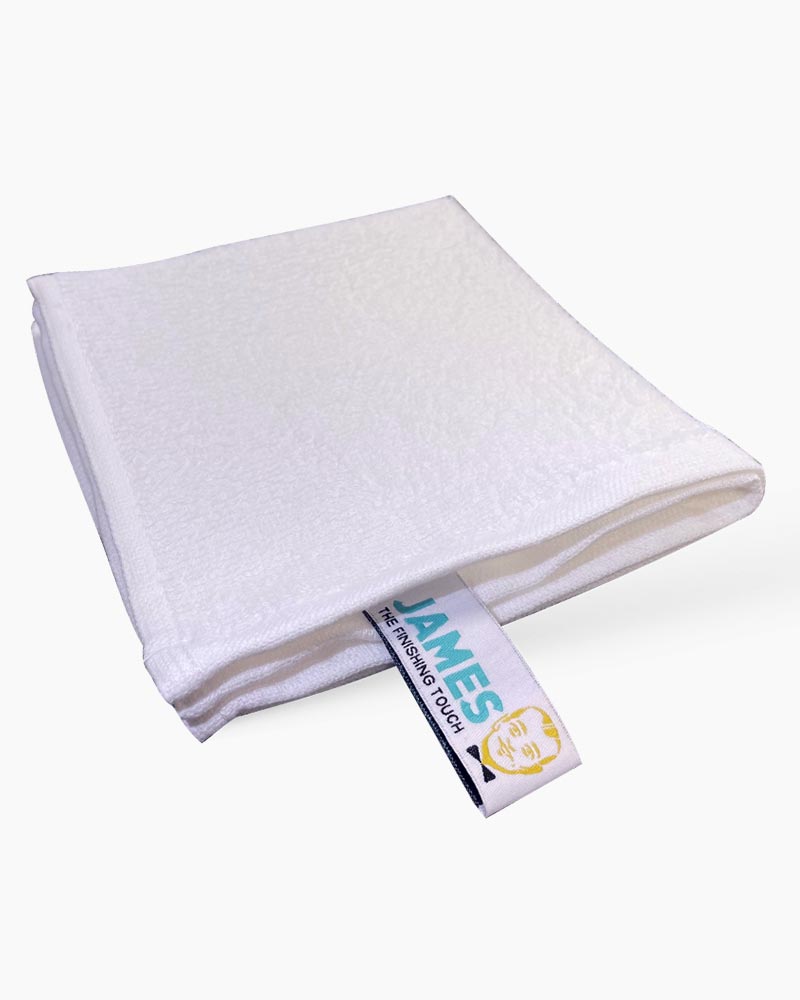
Treat using a moist cotton cloth
This stain can be treated immediately with water. Use clean water and preferably a white, cotton cloth.
Removing acrylic paint stains from upholstery fabric
Acrylic paint on upholstery fabric is tricky because it quickly soaks into the fibres and then hardens. With wet paint, you often see a bright colour stain that spreads when you rub it. When paint dries, it forms a hard spot that feels stiff and remains visible, sometimes with a rough edge. A haze may also remain on light-coloured fabrics because pigment has been drawn into the fibres. With some fabrics, the stain may appear to have faded after cleaning, but a shadow will reappear after drying.
Cleaning with too much water is a major risk here. Then the paint can spread to a larger area and you will get circles. Rubbing vigorously damages the fabric structure, making the stain even more noticeable. The aim is therefore to loosen and absorb the paint without smearing and without ‘opening’ the fabric.
First, carefully dab the wet paint. If the paint is already dry, first try to remove only the loose part without pulling on the fibres. Then treat only the stained area with a cleaner that is suitable for use on upholstery fabric and can remove paint residue. Use a small amount of moisture and pat dry thoroughly to prevent circles from forming. Allow the fabric to dry completely before assessing whether any haze is still visible.
Treat with James Stainspray on a cotton cloth
You can treat this stain with James Stainspray on a cotton cloth. For this you need James Stainspray and a white cotton cloth. Next:
- Test for colour and material resistance in an inconspicuous area: apply, let it dry completely and evaluate.
- Spray James Stainspray on a dry, white cotton cloth.
- Use this cloth to wipe the stain using wide sweeping strokes, without spreading the stain. Repeat frequently with a clean part of the cloth.
- Directly spray James Stainspray onto any residue and repeat the process using wide sweeping strokes.
Treat with James Stainspray on a cotton cloth
You can treat this stain with James Stainspray on a cotton cloth. For this you need James Stainspray and a white cotton cloth. Next:
- Test for colour and material resistance in an inconspicuous area: apply, let it dry completely and evaluate.
- Spray James Stainspray onto a dry, white cotton cloth.
- Use this cloth to wipe the stain using wide sweeping strokes, without spreading the stain. Repeat frequently with a clean part of the cloth.
- Directly spray James Stainspray onto any residue and repeat the process using wide sweeping strokes.
Would you also like to benefit from James’ effective stain removal? Discover our full range and order your James products easily online. You’ll soon be enjoying a clean and stain-free interior again!
Frequently asked questions and myths
There are all sorts of stories going around about how to remove these acrylic paint stains. From granny’s remedies to persistent tips from the internet – but what really works? In this section, we answer frequently asked questions and debunk a few myths. This allows you to get started with confidence.
That is only true if the paint is still wet. Fresh acrylic paint can often be reduced by gently dabbing it and adding a little moisture. However, once acrylic paint dries, it forms a plastic layer that no longer dissolves easily in water. Water will spread the pigment and increase the risk of stains, especially on carpets and Upholstery. For dried paint, you need an approach that loosens paint residues, and this must be suitable for the surface.
Sometimes alcohol can loosen paint residue, but it is risky. On floors, it can cause differences in gloss or damage the top layer. On upholstery fabric, it can pull the colour out of the fabric, leaving you with a lighter spot. Nail polish remover is often even more aggressive and can cause damage, especially to synthetic floors and textiles. If you are considering doing this, always test on an inconspicuous area first. In practice, a suitable cleaning agent is usually safer and more predictable.
This is sometimes possible on hard floors, but there is a high risk of scratches. On PVC, vinyl and laminate, you can quickly damage the top layer, resulting in a permanent difference in gloss. Natural stone surfaces can be damaged or become dull. Scratching carpets and upholstery is not recommended, as it pulls out fibres. It is better to first try to loosen the paint with a suitable product and then carefully remove it, possibly in several rounds.
Dishwashing liquid is primarily intended for grease, not for dried paint. It may help a little with wet paint, but it is usually too weak for dried acrylic paint. In addition, washing-up liquid can remain in carpets and upholstery as a sticky residue, causing the area to attract dirt. It may leave streaks on floors. If you use it, use it very sparingly and make sure you absorb everything properly. A product designed for paint residue usually works better.
This is because pigment can penetrate the fibres or pores, even if the paint layer itself has already worn away. With carpet and upholstery fabric, you will see a shadow, and on natural stone, slight discolouration may remain. A residual layer of paint or cleaning agent can also keep the spot visible. The solution is to clean the area further with a suitable product and then absorb and dry thoroughly. Sometimes a second treatment is necessary to remove the last traces of colour.
Deal with any stain using the right approach from James
Acrylic paint is easy to remove if you act quickly and, above all, work calmly. Fresh paint can often be removed quite easily by absorbing it immediately, but dried paint requires an approach that loosens the paint layer without damaging the top layer or fibres. With James’ products and advice, you can safely tackle acrylic paint on carpet, hard floors and upholstery without scratches, rings or permanent haze. Handle it carefully, and you will usually be able to clean it properly.