



There are all kinds of stories circulating about how to remove this algae green stain. From granny’s remedies to persistent tips from the internet – but what really works? In this section, we answer frequently asked questions and debunk a few myths. This allows you to get started with confidence.
Stain search engine
Removing algae green stains
On this page:
Eigenaar at James B.V.
Door het delen van deze blogs en informatie wil Martijn voorop blijven lopen met kennis over binnenmilieu, hygiëne, onderhoud en vlekverwijdering van tapijt, vloerkleed en meubels. Een bedrijf evenals de consument kan bij James terecht met vragen op het gebied van onderhoud en het verwijderen van vlekken uit tapijten, vloeren, vloerkleden of meubels.
Latest posts by Martijn Peters (see all)
Removing algae green stains
An algae-green stain often develops unnoticed, but is all the more noticeable once you have seen it. Whether it’s on garden furniture, walkways or flooring near a garden door, these green stains are not only unsightly, but can also cause slippery surfaces or penetrate deeper than you think. Algae mainly forms in places where moisture and shade come together, and it often leaves behind a stubborn deposit that clings to fibres and surfaces. The sooner you act, the better the result: in the early stages, the deposit is easier to remove and you prevent it from spreading further. Fortunately, an algae green stain can be treated effectively with the right approach. Below you can read what is best to do for each type of surface.
The same advice applies to these stains: Algae green, Moss, Green deposits
Characteristics (anatomy) of an algae green spot
An algae green stain consists of organic material – mainly algae and sometimes mosses – that adhere to damp surfaces. The stain is not just discolouration, but consists of living micro-organisms that can spread. On porous surfaces, the algae penetrates deep into pores or fibres. Carpets and upholstery fabrics are particularly sensitive, as they quickly absorb moisture. Incorrect cleaning can cause the spores to spread or penetrate even deeper. If you leave the stain for too long, it may dry out and become a stubborn stain or, in warm weather, start to smell unpleasant.
Removing algae stains from carpet or rugs
Carpets and rugs are particularly susceptible to green algae stains, especially when they come into contact with damp shoes, flower pots or animals coming in from outside. Algae can settle between the pile fibres, especially in deep pile or natural materials. Due to the structure of the carpet, moisture is quickly absorbed, along with organic contamination. This makes the stain difficult to reach for superficial cleaning.
If an algae stain is not treated immediately, it will slowly dry out and become increasingly firmly attached to the fibres. The colour may change from green to a yellowish or greyish haze, and upon renewed contact with moisture, the odour returns or the stain reappears. Over time, a dull, faded spot appears that is difficult to blend in with the rest of the carpet.
When cleaning, it is important not to scrub or rub the stain while it’s wet, because doing so will spread the spores and work them deeper into the carpet. Use a product that is suitable for gently loosening natural dirt, such as algae or moss, without damaging the material. Always work carefully, without excessive moisture, and make sure the area is allowed to dry thoroughly.
Treat with James stainwonder
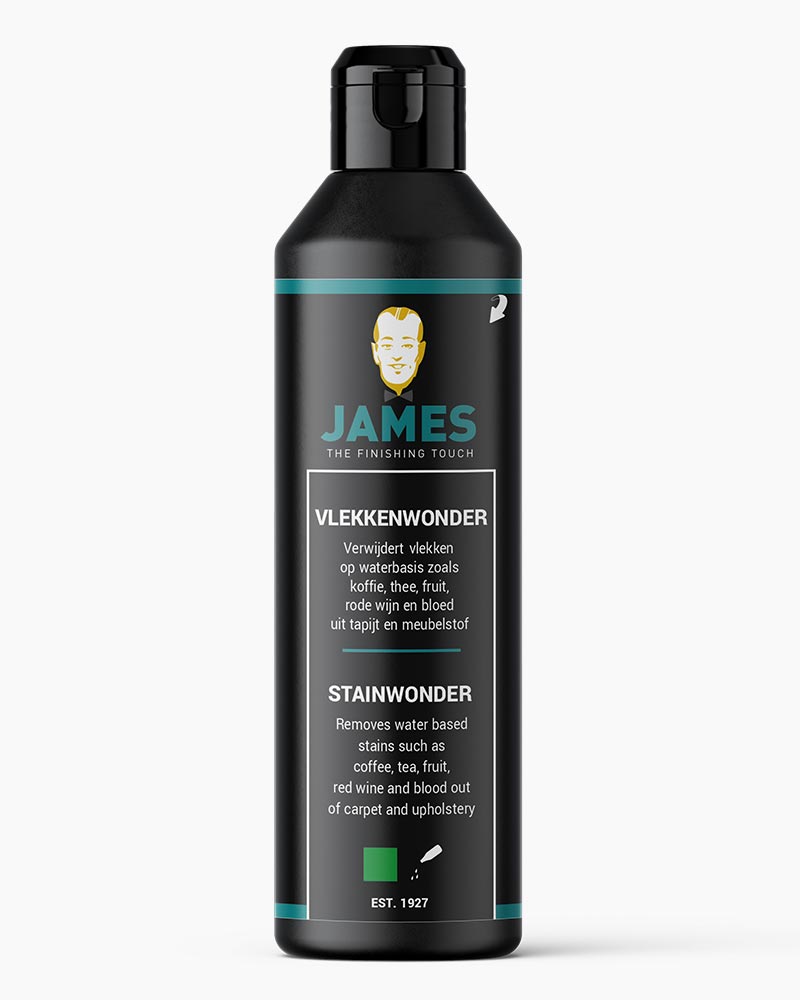
This stain can be treated with James stainwonder. All you need for this is a bottle of James stainwonder!
- Test for colour and material resistance in an inconspicuous area: apply, let it dry completely and evaluate.
- Allow the surface to dry completely.
- Distribute James stainwonder on the dry stain by holding the bottle upside down, placing the opening of the bottle on the stain and treating the entire stain.
- The product works for 12 hours, so the effect does not have to be visible immediately.*
- Is the stain not completely gone after treatment, but has it improved? You may repeat the treatment.
* With wool: in the vast majority of cases, James stainwonder does not cause any discolouration. You have already established this by testing the product in an inconspicuous area as described above. In that case, you do not need to carry out the following step. If a (slight) discolouration does occur, you should neutralise James stainwonder as soon as the stain has disappeared. In that case, immediately place a damp cotton terry towel on the spot where the stain was and let it dry.
James Interior Cleaner
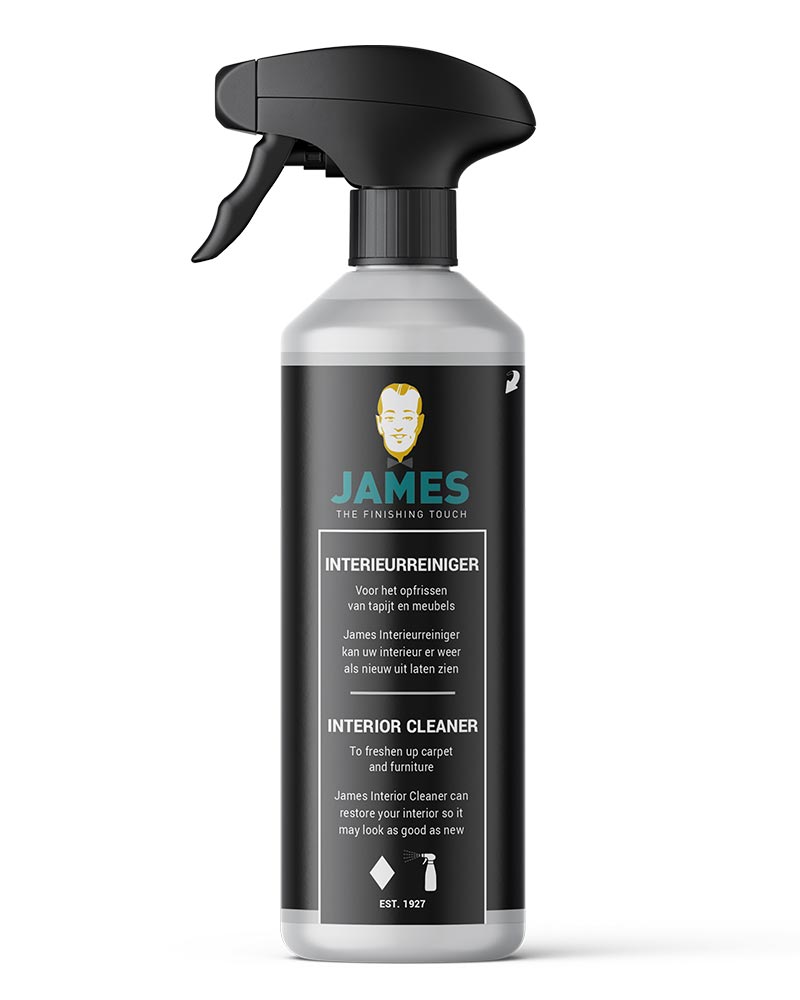
This stain can be treated with James Interior Cleaner. For this you need a white cotton terry towel and James Interior Cleaner. Then follow these steps:
- Test for colour and material resistance in an inconspicuous area: apply, let it dry completely and evaluate.
- Spray James Interior Cleaner onto a dry, white terry towel.
- Use this cloth to wipe the purpose area using wide sweeping strokes. If the cloth attracts dirt or grease, you know the treatment is effective.
- Repeat frequently with a clean part of the cloth, until you see the cloth no longer attracts dirt.
Removing green algae stains from hard floors
Hard floors such as tiles, natural stone, PVC or laminate are susceptible to green algae stains in areas where moisture remains, for example near sliding doors or under flower pots. In these areas, a thin film of algae can quickly develop and adhere to joints, relief or surface structures. The deposit quickly soaks in, especially on matt or porous finishes.
If these stains are not treated in time, they can dry out into a greyish haze that is difficult to remove. In addition, the surface becomes smoother, which can cause dangerous situations. Over time, the algae residues can give off a green or black glow, especially if the floor gets wet again. This makes the place look dirty all the time.
When cleaning an algae-green stain on a hard floor, it is essential not to use abrasive cleaners or hard brushes. This can damage the top layer and cause scratches, which actually make it easier for new dirt to stick to the surface. Use a cleaning solution that is effective against organic dirt without damaging or drying out the floor. A thorough but safe approach yields the best results.
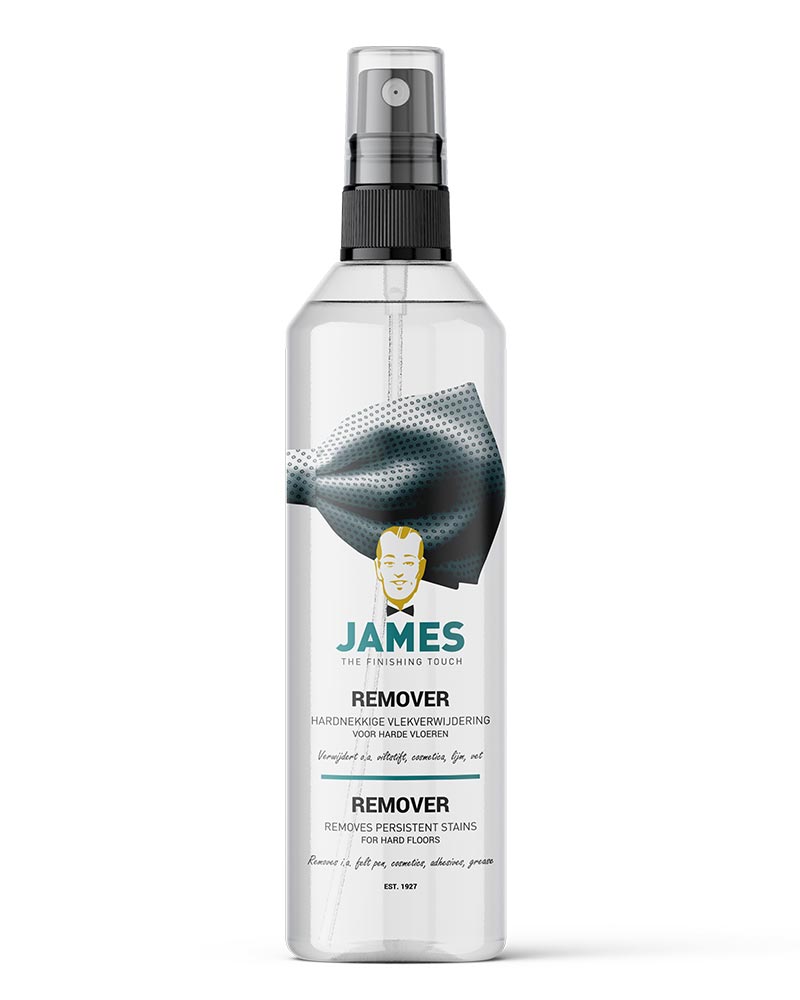
Treatment with James Remover
This stain can be treated with James Remover
Before use, always test the surface in an inconspicuous place for colour and material resistance: apply, leave to set for 5 minutes, wipe the tested area with water, allow to dry and assess.
- Spray directly onto the purpose area
- Leave to soak for about 1 to 5 minutes
- Then, use a white cotton cloth to remove the grease
- Persistent stains may be treated carefully with a soft brush or plastic spatula. After use, always clean the area with water!
- After use, always clean the area with water.
Attention: be careful when working near a glue seams. Allow James Remover to soak in shortly. Do not let the product penetrate into cracks or seams.
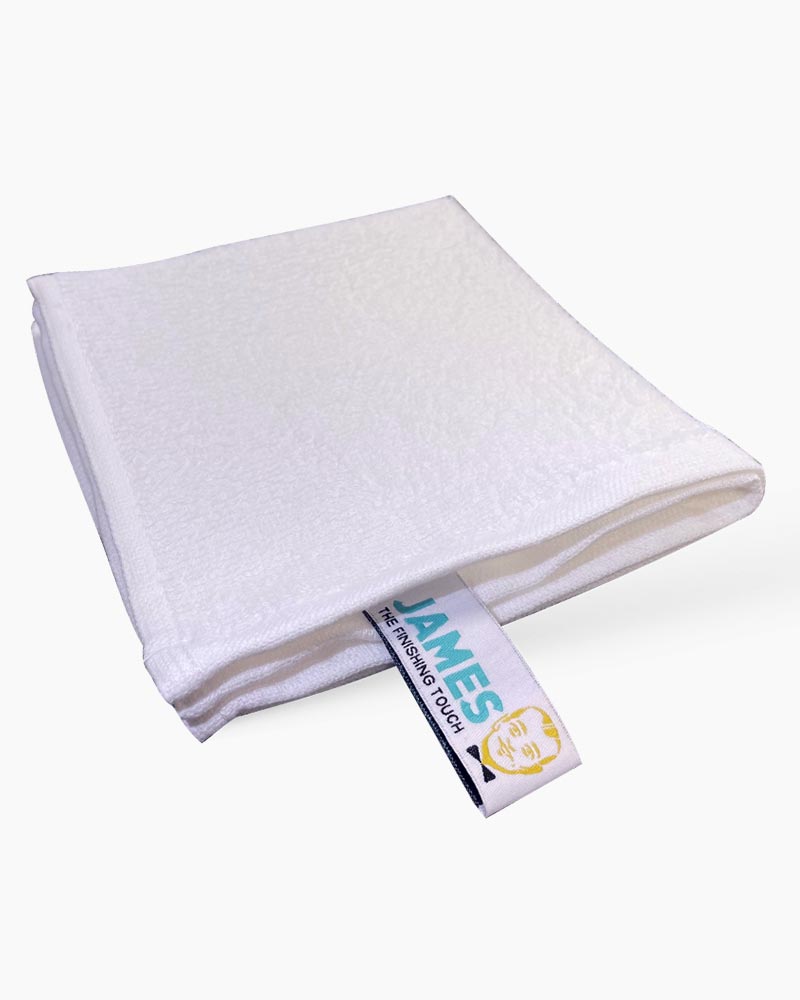
Treat using a moist cotton cloth
This stain can be treated immediately with water. Use clean water and preferably a white, cotton cloth.
Removing algae stains from upholstery
Furniture fabrics can develop algae-green stains due to prolonged exposure to damp conditions – think of cushions on garden furniture, benches under canopies or chairs close to a garden door. Because these fabrics are often absorbent, the deposit is quickly drawn in and adheres to the fibre structure.
If the stain is not treated in time, the algae will dry out and leave behind a greyish haze or green sheen. In addition, odours from the organic material can become embedded in the fabric, causing a musty smell in warm or humid weather. This can cause the fibres to lose their freshness and suppleness, making the surface feel stiff or dull.
When cleaning upholstery fabric, it is important not to use damp cloths or hard brushes. This spreads the stain or damages the structure. Choose a cleaning agent that can work deep into the fibres without fading or drying them out. After cleaning, allow the fabric to dry completely in the air to prevent new growth.
Treat with James stainwonder
This stain can be treated with James stainwonder. Always test for colour fastness and material resistance in an inconspicuous area: apply, let it dry and evaluate.
- Allow the surface to dry completely.
- Distribute James stainwonder on the dry stain by holding the bottle upside down, placing the opening of the bottle on the stain and treating the entire stain in this way. Also distribute a little James stainwonder on a dry, clean cotton terry towel and use it to cover the stain. This is to prevent rings from appearing after drying.
- The product works for 12 hours, so the effect does not have to be immediate. Do not remove the cotton cloth until it is dry to see the result.*
- Is the stain not completely gone after treatment, but it has improved? You may repeat the treatment.
* With wool: in the vast majority of cases, James stainwonder does not cause any discolouration. You have already established this by testing the product in an inconspicuous area as described above. In that case, you do not need to carry out the following step. If a (slight) discolouration does occur, you should neutralise James stainwonder with water as soon as the stain has disappeared (to do this, you must lift the towel in between to assess whether the stain is already gone). In that case, immediately place another damp cotton terry towel on the spot where the stain was and let it dry.
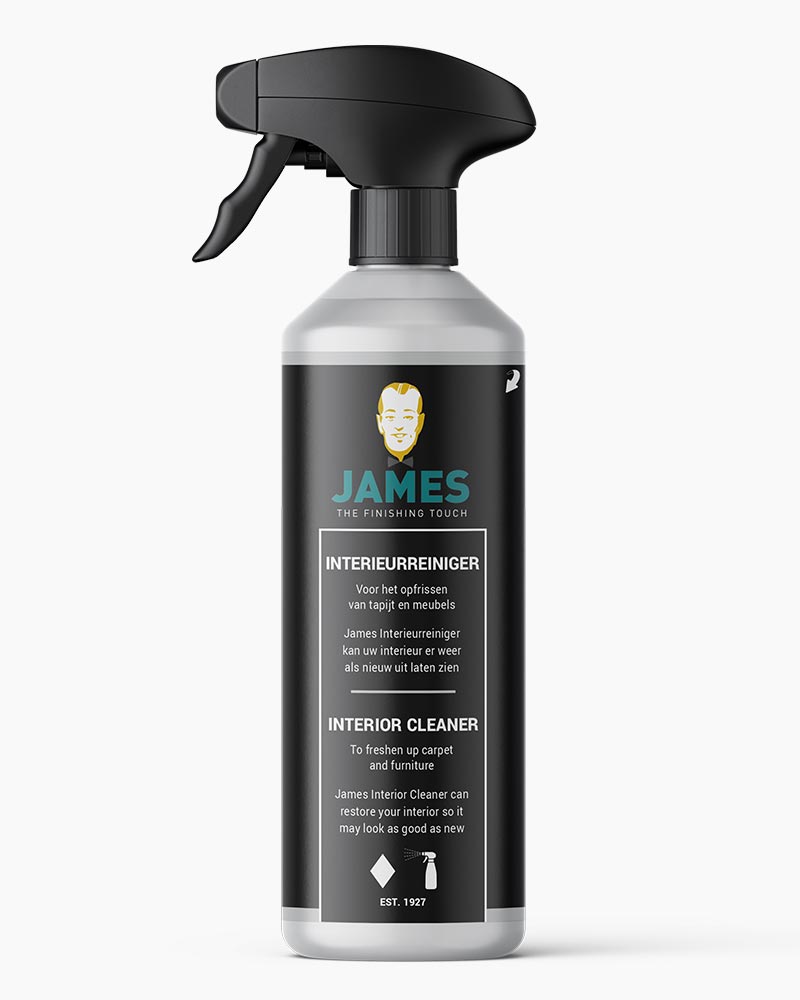
James Interior Cleaner
This stain can be treated with James Interior Cleaner. For this you need a white cotton terry towel and James Interior Cleaner. Then follow these steps:
- Test for colour and material resistance in an inconspicuous area: apply, let it dry completely and evaluate.
- Spray James Interior Cleaner onto a dry, white terry towel.
- Use this cloth to wipe the purpose area using wide sweeping strokes. If the cloth attracts dirt or grease, you know the treatment is effective.
- Repeat frequently with a clean part of the cloth, until you see the cloth no longer attracts dirt.
Would you also like to benefit from James’ effective stain removal? Discover our full range and order your James products easily online. You’ll soon be enjoying a clean and stain-free interior again!
Frequently asked questions and myths
Is an algae green stain just superficial dirt?
No, definitely not. Algae can adhere to the surface, but penetrate deeper into porous or fibrous materials. As a result, simply wiping with a cloth is rarely sufficient: the traces remain active and cause discolouration or odour again later on.
Does vinegar help remove algae green?
Vinegar is often mentioned as a household remedy, but it is not always safe for every surface. It can damage joints or natural stone and cause discolouration on textiles. Furthermore, it does not eliminate all traces. A safe, versatile cleaner designed for organic dirt works better and is less harmful.
Can I scrub away an algae green stain?
Scrubbing often makes the problem worse. You spread marks, push dirt deeper into the material and possibly damage the surface. This leads to irreparable damage or discolouration, especially in the case of carpets or delicate textiles. Carefully loosening and dabbing is much safer.
Will the stain disappear on its own when it dries?
The green colour may fade, but the traces and residues remain. When there is a new period of dampness, the stain simply returns, often with an odour and a visible haze. The stain must be actively removed to prevent recurrence.
Is algae green the same as mould or moss?
No, but it is in the same biological family. Algae are single-celled organisms that grow on moist surfaces. It rarely forms threads like fungi or structures like moss, but it can be just as stubborn. The approach therefore requires the same care.
Say goodbye to algae green stains with James!
An algae-green stain may seem harmless, but it can quickly develop into a stubborn deposit that causes visible and odour problems. Whether it’s carpet, hard flooring or upholstery fabric – the right approach makes the difference between a temporary solution and a lasting clean result. Rely on a well-thought-out and safe method that suits your surface. Want to be sure you don’t overlook anything? Then James is the right place for reliable advice and the best support.