



There are all sorts of stories going around about how to remove these granule stains. From granny’s remedies to persistent tips from the internet – but what really works? In this section, we answer frequently asked questions and debunk a few myths. This allows you to get started with confidence.
Stain search engine
Removing granule stains
On this page:

Eigenaar at James B.V.
Door het delen van deze blogs en informatie wil Martijn voorop blijven lopen met kennis over binnenmilieu, hygiëne, onderhoud en vlekverwijdering van tapijt, vloerkleed en meubels. Een bedrijf evenals de consument kan bij James terecht met vragen op het gebied van onderhoud en het verwijderen van vlekken uit tapijten, vloeren, vloerkleden of meubels.
Latest posts by Martijn Peters (see all)
Removing granule stains
A grain of granule may seem harmless, but when it gets wet or comes into contact with furniture or flooring, it can leave unpleasant marks. Stains or marks often appear on carpets, hard floors or upholstery, particularly when sanding, cleaning or removing granule texture during renovations. The grainy texture combined with fine binders makes it difficult to remove. Fortunately, there is a safe approach for effectively treating granule stains on any surface.
The same advice applies to these stains: Granule, Wall paint, Latex, Latex paint, Plaster, Artex
Characteristics (anatomy) of a granule stain
Granule consists of mineral fillers and binding agents such as lime, cement or plaster. When it lands on a surface, it can adhere to the material through moisture or pressure. Wet granule in particular leaves a chalky, sometimes sticky trail. When it dries, it hardens and may cause residue or discolouration.
Careless rubbing or incorrect cleaning can lead to wear or damage to fibres and finishes.
Removing granule from carpet or rugs
Granola is notorious in carpets because it easily falls between the fibres and gets stuck there. The fine, dusty granules work their way deep into the carpet when walked on or pressed down. If the granule is damp or wet, it becomes mushy and sticks firmly to the pile fibres. When it dries, it leaves behind a chalky or lime-like residue that causes dull spots or hard build-up.
If a granule stain is not removed quickly, the grains can harden in the carpet, creating a stiff, unpleasant spot. In some cases, the carpet may discolour slightly due to contact with lime or plaster components in the granule. Light-coloured or natural materials are particularly susceptible to this type of stain.
When cleaning, it is important to start dry. First vacuum thoroughly and avoid adding moisture to powder residue.
Only once the loose parts have been removed can you further clean the surface using a damp, pH-neutral approach. Avoid soap or friction, as this will fix the residue or cause circles.
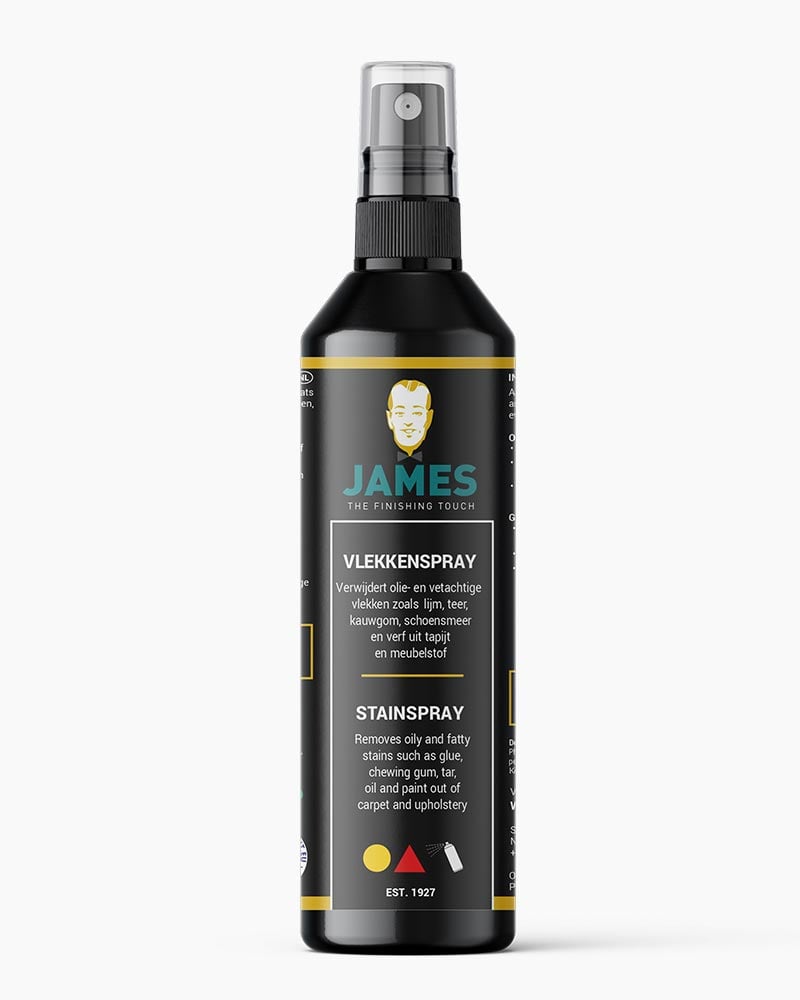
Treat with James Stainspray on a cotton cloth
You can treat this stain with James Stainspray on a cotton cloth. For this you need James Stainspray and a white cotton cloth. Next:
- Test for colour and material resistance in an inconspicuous area: apply, let it dry completely and evaluate.
- Spray James Stainspray on a dry, white cotton cloth.
- Use this cloth to wipe the stain using wide sweeping strokes, without spreading the stain. Repeat frequently with a clean part of the cloth.
- Directly spray James Stainspray onto any residue and repeat the process using wide sweeping strokes.
Treat with James Stainspray on a cotton cloth
You can treat this stain with James Stainspray on a cotton cloth. For this you need James Stainspray and a white cotton cloth. Next:
- Test for colour and material resistance in an inconspicuous area: apply, let it dry completely and evaluate.
- Spray James Stainspray on a dry, white cotton cloth.
- Use this cloth to wipe the stain using wide sweeping strokes, without spreading the stain. Repeat frequently with a clean part of the cloth.
- Directly spray James Stainspray onto any residue and repeat the process using wide sweeping strokes.
Removing granule from hard floors
On hard floors, granule often remains visible as a white, powdery trail. On smooth surfaces, this is fairly easy to wipe away, but on porous or textured floors – such as natural stone, wood or embossed PVC – the material settles in pores, grooves or microstructures. When granule gets wet, it leaves behind a chalky residue that dries to a white haze or stains.
If you leave granule stains lying around, you run the risk of the powder being trodden into the floor finish. Over time, this can lead to dull spots, scratches or a rough surface. If the granule component contains lime, chemical reactions may even occur on acid-sensitive materials such as natural stone.
Do not use water or a damp cloth while the granule is still dry. First remove all grains with a soft brush or vacuum cleaner. Then clean with a mild, pH-neutral cleaner that leaves no residue. Avoid all-purpose cleaners or acidic agents – these can react with calcareous residues and cause damage.
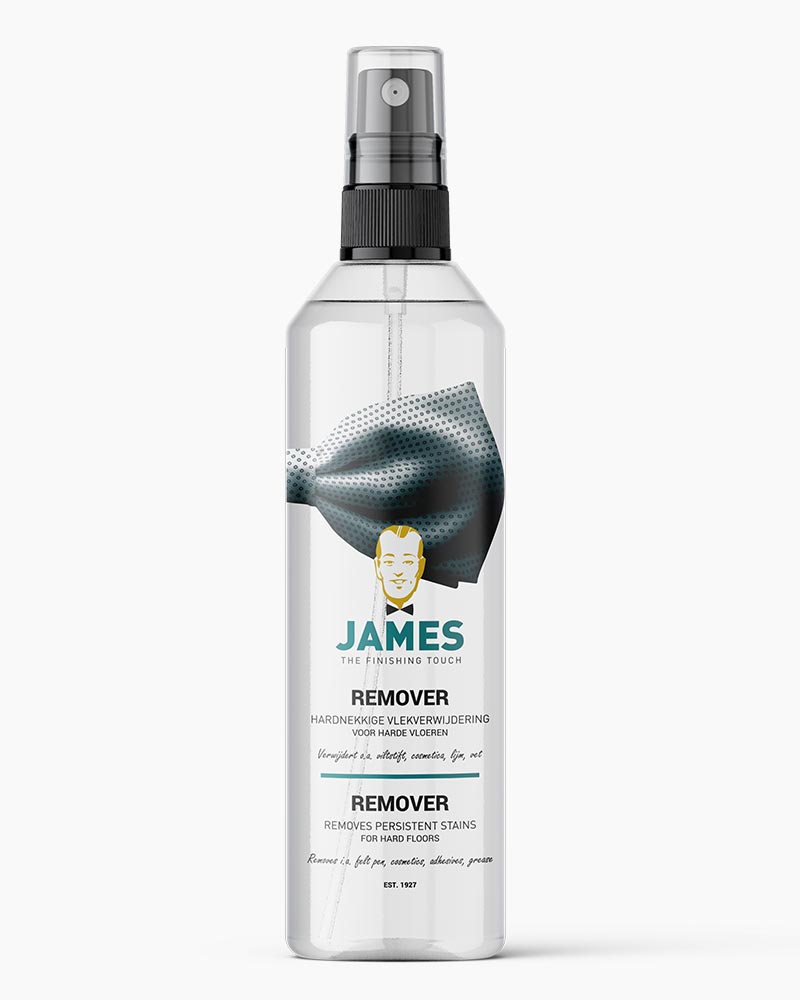
Treatment with James Remover
This stain can be treated with James Remover.
Always test in an inconspicuous area for color and material resistance: apply, allow to soak for 5 minutes, rinse the tested area with water, allow to dry and evaluate.
- Spray directly onto the purpose area
- Leave to soak for about 1 to 5 minutes
- Then, use a white cotton cloth to remove the grease
- If necessary, gently treat stubborn stains with a soft brush or plastic spatula.
- After use, always clean the area with water.
Attention: be careful when working near a glue seams. Allow James Remover to soak in shortly. Do not let the product penetrate into cracks or seams.
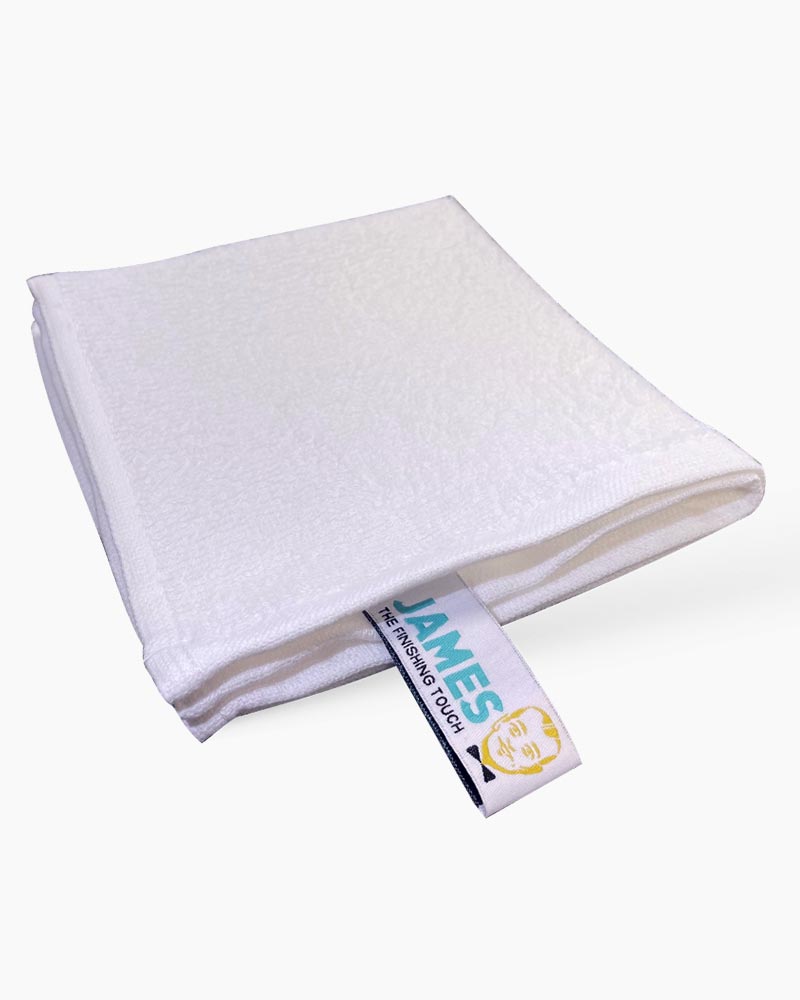
Treat using a moist cotton cloth
This stain can be treated immediately with water. Use clean water and preferably a white, cotton cloth.
Removing granule from upholstery
With upholstery fabrics, fine granule grains quickly adhere to the surface, especially if the fabric is static or was damp at the time of contact. The granules creep into fabrics and between seams, leaving a dull, chalky trail when they dry. When moisture is added, a paste-like mixture is created that penetrates deeper into the fibres and can dry into a hard spot.
If granola remains on the fabric for a long time, light-coloured fabrics may become visibly discoloured or feel stiff at the site of the stain. Removal then becomes more difficult, because the residue has become attached to the fibre structure or has even calcified. Odour is usually not a problem, but visual damage and material ageing are lurking dangers.
Always start cleaning with a dry approach: carefully vacuum or brush off dust without rubbing. Only then proceed to damp cleaning with a fabric-safe, limescale-friendly solution. Avoid all-purpose cleaners or foaming cleaning agents – these fix the limescale residue or leave marks.
Treat with James Stainspray on a cotton cloth
You can treat this stain with James Stainspray on a cotton cloth. For this you need James Stainspray and a white cotton cloth. Next:
- Test for colour and material resistance in an inconspicuous area: apply, let it dry completely and evaluate.
- Spray James Stainspray on a dry, white cotton cloth.
- Use this cloth to wipe the stain using wide sweeping strokes, without spreading the stain. Repeat frequently with a clean part of the cloth.
- Directly spray James Stainspray onto any residue and repeat the process using wide sweeping strokes.
Treat with James Stainspray on a cotton cloth
You can treat this stain with James Stainspray on a cotton cloth. For this you need James Stainspray and a white cotton cloth. Next:
- Test for colour and material resistance in an inconspicuous area: apply, let it dry completely and evaluate.
- Spray James Stainspray on a dry, white cotton cloth.
- Use this cloth to wipe the stain using wide sweeping strokes, without spreading the stain. Repeat frequently with a clean part of the cloth.
- Directly spray James Stainspray onto any residue and repeat the process using wide sweeping strokes.
Would you also like to benefit from James’ effective stain removal? Discover our full range and order your James products easily online. You’ll soon be enjoying a clean and stain-free interior again!
Frequently asked questions and myths
Why does granule leave marks immediately when it lands on the floor or fabric?
Granol is a plaster material based on lime or cement and contains binders that harden quickly on contact with air or moisture. When the powder or wet granule lands on a surface, it begins to adhere almost immediately. In textiles, the moisture is absorbed into the fibres, while the chalky components leave behind a chalky or greyish residue that is difficult to remove. It dries quickly on floors and can leave a dull spot or abrasive layer.
Is it advisable to clean granule stains while they are still wet?
Only if you do so immediately after spilling and without rubbing. When spread, wet granule can quickly penetrate pores or fibres and harden there. Once it has dried somewhat, it is best to first remove as much as possible mechanically (e.g. with a spoon or vacuum cleaner). This can be followed by targeted moist treatment. Too much water actually causes lime or cement dust to spread.
Why does the surface sometimes feel rough or abrasive after cleaning?
When Granule dries, it leaves behind a chalky residue that adheres to the surface. This can remain in joints or microstructures. Insufficient removal will result in a rough-feeling area, especially on smooth floors or furniture. Even on textiles, it can appear abrasive due to residual grains or hardened residues. Residue-free cleaning is necessary to completely remove these particles.
Can I safely remove granule stains with vinegar or an acidic cleaning agent?
Although acidic agents can dissolve limescale, they can also damage coatings, natural stone or sensitive textiles. The use of vinegar is therefore risky. Especially with floors that have a protective coating or natural stone, the effect is often more damaging than the original stain. A pH-neutral approach that specifically targets limescale without damaging the surface is a safer choice.
Why do I see a white haze reappearing after cleaning, even though the stain seemed to have disappeared?
With granule, it may appear as though the stain has disappeared, but if lime or plaster residue remains in the material, it may become visible again when it dries. This so-called “blooming” is often visible as a white haze or powdery layer, especially on floors or dark textiles. Additional treatments are usually required to remove the residue completely.
Deal with any stain using the right approach from James
Granule stains are typically one of those awkward messes that occur during DIY or renovation work – often without you even noticing. But don’t be fooled by its powdery nature: granule can be stubborn when it sticks or gets wet. However, with a calm, thoughtful approach, it can be removed without any difficulty. Ensure the right combination of dry removal and gentle after-treatment, tailored to your surface – and you won’t leave a trace.