



Removing Body oil
On this page:

Removing Body oil
Body oil stains develop very gradually. You often see them in places that are touched frequently: the armrest of the sofa, the headrest, the edge of a chair, or a favourite spot on the rug. Even on hard floors, walking routes can become duller because skin oils mix with dust and dirt. Because it builds up slowly, you often only notice it when a dark haze or shiny spot is already visible.
The sooner you tackle such a place, the easier it will be. If you wait too long, skin oil forms a stubborn layer that attracts dirt and returns more and more quickly.
Fortunately, you can effectively remove skin grease stains with an approach that loosens grease without damaging the surface. Below you will find out what you need to bear in mind for each type of surface.
The same advice applies to these stains: Skin grease, Dirt, Odour, Cat, Sleeping places Pets, Cat, Pets, Skin greases, Skin oil, Dog odour, Dog, Hair grease, Head grease
Characteristics (anatomy) of a skin fat spot
Body oil is a natural, greasy substance that remains on materials through contact. On its own, it is often barely visible, but it binds dust, soot particles and other dirt. Over time, this creates a dark, shiny or dull spot. On textiles, the grease gets between the fibres and can make the fabric stiff. On hard floors, it forms a thin layer on the top layer, causing the floor to become streaky or develop differences in shine. If you try to remove it with just water or soap, a layer of grease often remains, which attracts dirt again.
Skin grease stains in carpets and rugs
Skin fat often ends up on carpets due to bare feet, kneeling, children playing or pets. It is not always immediately visible, but it forms a greasy layer around the fibres, which can make the area appear darker. Over time, grey areas become particularly noticeable on walkways and fixed seating areas.
If it remains in place, it will attract dust and sand and the area will become increasingly darker. The carpet may also flatten more quickly there, making the difference in pile direction and colour even more noticeable. Sometimes the carpet feels sticky or stiff in that spot, without appearing to be “wet”.
Please note that this is a cumulative problem: every time Body oil is added, it becomes more difficult. The area may also be larger than you think, as fat spreads gradually. Skin fat often involves a combination of discolouration and a change in the appearance of the pile.
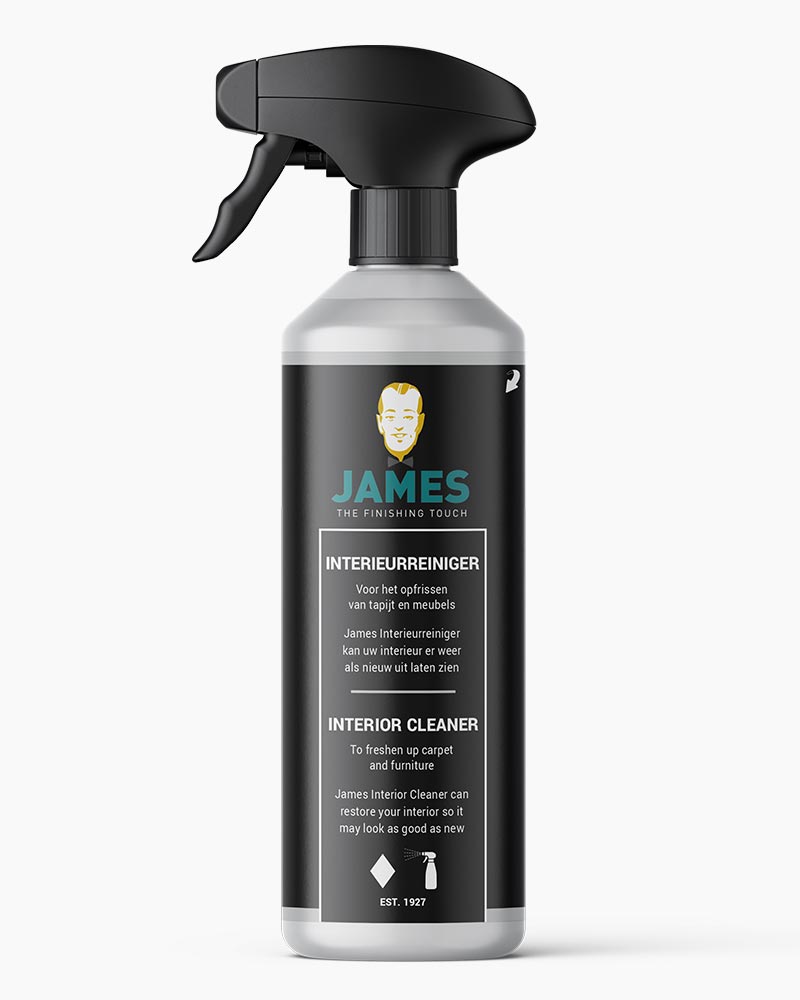
James Interior Cleaner
This stain can be treated with James Interior Cleaner. For this you need a white cotton cloth and James Interior Cleaner. Then follow the next steps:
- Test for colour and material resistance in an inconspicuous area: apply, let it dry and evaluate.
- Spray James Interior Cleaner on a dry, white cotton cloth.
- Use this cloth to wipe the purpose area using wide sweeping strokes. If the cloth attracts dirt or grease, you know the treatment is effective.
- Repeat frequently with a clean part of the cloth, until you see the cloth no longer attracts dirt.
James Interior Cleaner
This stain can be treated with James Interior Cleaner. For this you need a white cotton cloth and James Interior Cleaner. Then follow the next steps:
- Test for colour and material resistance in an inconspicuous area: apply, let it dry and evaluate.
- Spray James Interior Cleaner on a dry, white cotton cloth.
- Use this cloth to wipe the purpose area using wide sweeping strokes. If the cloth attracts dirt or grease, you know the treatment is effective.
- Repeat frequently with a clean part of the cloth, until you see the cloth no longer attracts dirt.
Skin grease stains on hard floors
On hard floors, Body oil often appears as dull spots or shiny patches, especially on walkways and around chairs. It forms a thin layer on the top layer, making streaks more visible. This is particularly noticeable on matt floors when light falls on them.
If you leave it, the layer will build up and the floor will appear to get dirty more quickly. The surface may also feel smoother in some places. It can remain stuck in the structure and along edges, resulting in a smudged image that cannot always be removed with normal mopping.
Please note that soapy residues can mix with skin fat, causing a film to form more quickly. The difference between clean and ‘greasy’ can also be particularly visible from an angle or in sunlight. It is typically a stain that does not start as a stain, but ends up as an uneven appearance.
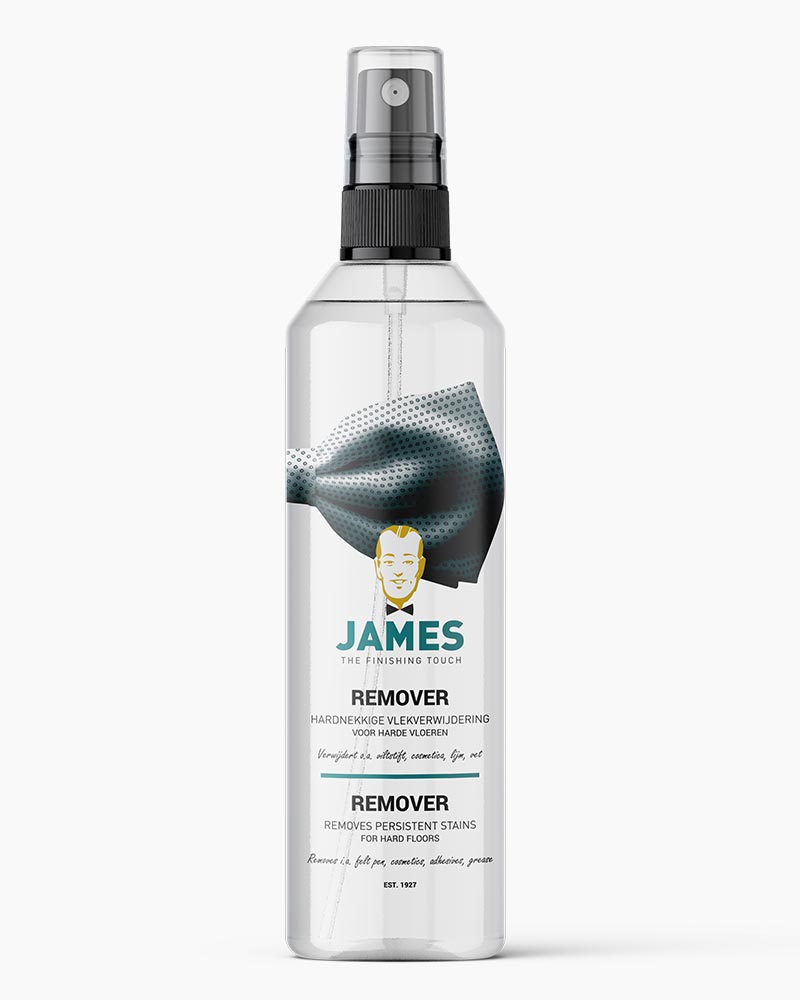
Treatment with James Remover
This stain can be treated with James Remover.
Before use, always test the surface in an inconspicuous area for colour and material resistance: apply, leave for 5 minutes, wipe the tested area with water, allow to dry and evaluate.
- Spray directly onto the purpose area
- Leave to soak for about 1 to 5 minutes
- Then, use a white cotton cloth to remove the grease
- Persistent stains may be treated carefully with a soft brush or plastic spatula. After use, always clean the area with water!
- After use, always clean the area with water.
Attention: be careful when working near a glue seams. Allow James Remover to soak in shortly. Do not let the product penetrate into cracks or seams.
Treatment with James Remover
This stain can be treated with James Remover.
Before use, always test the surface in an inconspicuous area for colour and material resistance: apply, leave for 5 minutes, wipe the tested area with water, allow to dry and evaluate.
- Spray directly onto the purpose area
- Leave to soak for about 1 to 5 minutes
- Then, use a white cotton cloth to remove the grease
- Persistent stains may be treated carefully with a soft brush or plastic spatula. After use, always clean the area with water!
- After use, always clean the area with water.
Attention: be careful when working near a glue seams. Allow James Remover to soak in shortly. Do not let the product penetrate into cracks or seams.
Skin grease stains on upholstery fabric
Skin fat is a common cause of dark marks on armrests, headrests and seat cushions. It penetrates the upper fibres and produces a darker shade, especially on light-coloured fabrics. With microfibre, you often see a shiny area that looks “polished”.
If it remains in place, the area will become dirty more quickly because dust adheres to the grease. This results in an increasingly noticeable colour difference and sometimes a somewhat sticky feeling. The fabric structure may also change in areas of pressure, making the area even more noticeable.
Please note that skin fat is usually widely distributed and does not have a clear edge. It can also be combined with residues of creams or hair products, which enhances the effect. The risk is mainly a persistent, dark zone that recurs with increasing frequency.
James Interior Cleaner
This stain can be treated with James Interior Cleaner. For this you need a white cotton cloth and James Interior Cleaner. Then follow the next steps:
- Test for colour and material resistance in an inconspicuous area: apply, let it dry and evaluate.
- Spray James Interior Cleaner on a dry, white cotton cloth.
- Use this cloth to wipe the purpose area using wide sweeping strokes. If the cloth attracts dirt or grease, you know the treatment is effective.
- Repeat frequently with a clean part of the cloth, until you see the cloth no longer attracts dirt.
James Interior Cleaner
This stain can be treated with James Interior Cleaner. For this you need a white cotton cloth and James Interior Cleaner. Then follow the next steps:
- Test for colour and material resistance in an inconspicuous area: apply, let it dry and evaluate.
- Spray James Interior Cleaner on a dry, white cotton cloth.
- Use this cloth to wipe the purpose area using wide sweeping strokes. If the cloth attracts dirt or grease, you know the treatment is effective.
- Repeat frequently with a clean part of the cloth, until you see the cloth no longer attracts dirt.
Would you also like to benefit from James’ effective stain removal? Discover our full range and order your James products easily online. You’ll soon be enjoying a clean and stain-free interior again!
Frequently asked questions and myths
There are all sorts of stories circulating about how to remove these stains from skin fat. From granny’s remedies to persistent tips from the internet – but what really works? In this section, we answer frequently asked questions and debunk a few myths. This allows you to get started with confidence.
Green soap is often used, but it is usually not an ideal solution. It can partially remove grease, but often leaves behind a soapy film. That layer actually attracts dirt, causing the area to darken again more quickly. On hard floors, it often leaves streaks or a dull haze, and on upholstery, it can leave a sticky spot. If you do use it, you must take extreme care afterwards. A cleaner that loosens grease without leaving such a residue usually gives a better and longer-lasting result.
Detergent can dissolve grease, but it is difficult to remove it completely from carpet or upholstery. This often leaves behind a sticky residue that attracts dirt again. It may leave streaks on floors if you use too much. So it seems like a quick fix, but the result is not always attractive or lasting. Better is a product designed for grease removal on your type of surface, reducing the risk of rings, haze and recurring contamination.
Hot water softens grease, but does not remove it by itself. Furthermore, heat can actually spread the grease further, resulting in a larger haze. On upholstery fabric, you increase the risk of the grease penetrating deeper, and on floors it can dry in streaks. Without a grease-cutting agent, most of the layer will remain in place. It is preferable to use a suitable cleaner and work locally. It is important to absorb and dry thoroughly afterwards to prevent a residue layer from remaining.
Baking soda can reduce odours and absorb a little grease, but it does not actually dissolve the grease layer. On fabric, the powder may remain in the fibres and cause a slight haze. If you wet it, it may clump and cause rings. It can therefore only be a temporary measure at best, but it is rarely a permanent solution for skin fat spots. For truly clean results, the grease must be loosened and absorbed, otherwise the stain will quickly reappear.
Because a layer of fat often remains, even if the area looks temporarily better. That residual layer immediately attracts new dirt, causing it to quickly become dark again. Too much cleaning agent can also leave a film that has the same effect. The solution is to clean the area locally using a grease-dissolving approach, then wipe everything thoroughly and ensure that no cleaning agent or moisture remains. This will keep the fabric or floor clean for longer and prevent the stain from reappearing so quickly.
Deal with any stain using the right approach from James
Body oil stains are typically those spots that develop slowly but return more and more quickly if you don’t really remove the layer of fat. By cleaning thoroughly and following up properly, you can prevent shiny spots, dull haze and new dirt. With James’ products and advice, you can safely tackle skin grease on carpets, hard floors and upholstery without damaging fibres or top layers. This keeps your interior fresh, smooth and tidy, even in areas that are used intensively on a daily basis.