
Vlekkenzoekmachine
Removing chocolate stains
Chocolate rarely goes neatly. A block that melts in warm hands, a stain of chocolate sauce on the sofa, or a child crawling across the carpet with a chocolate biscuit. Chocolate is tricky because it causes two problems at once: it contains fat that can be absorbed and colourings that can leave a brown shadow. And when it gets warm, it spreads very quickly. On hard floors, you often see a greasy smear, while in textiles it can disappear deep between the fibres.
When it comes to chocolate, it helps to react quickly, but above all to react smartly. Cleaning with too much heat or rubbing too hard usually makes it worse.
Removing chocolate milk stains
Chocolate milk stains are just as troublesome as stains caused by solid chocolate and can leave an unsightly mark. Treat chocolate milk stains in the same way as regular chocolate stains. To do this, follow the step-by-step instructions for removing chocolate stains from sofas (fabric or leather) or carpets, depending on where the stain is located.
Removing chocolate ice cream stains
Chocolate ice cream can melt and leave a large sticky stain. But you can use the same methods for chocolate ice cream stains as for other chocolate stains. Follow the instructions for removing chocolate stains from sofas (fabric or leather) or carpets as described on this page.
Avoid these alternative methods for removing chocolate stains
The internet is full of different methods for removing chocolate stains, often using everyday household items.
Although some people recommend these methods, it is important to emphasise that they may be harmful to the material you apply them to. Below, we discuss some popular online suggestions and why we believe they are not suitable:
- Ox gall soap: Ox gall soap is praised for its enzymes, which are effective at breaking down fats and proteins, making it useful for removing chocolate stains. However, it may affect the colour and texture of delicate fabrics. In addition, some people may have an allergic reaction to the ingredients in ox gall soap, which can cause skin irritation.
- (Coffee) milk: milk is often mentioned because of the fats and proteins it contains, which can break down chocolate and help dissolve the stain. However, milk can spoil and leave unpleasant odours in the fabric. It can also spread the stain further and lead to new stains due to the fat content in the milk.
- Glycerine and Biotex: glycerine is used for its ability to loosen old stains, while Biotex contains enzymes that can break down fats and proteins. Unfortunately, glycerine can leave a sticky residue that is difficult to rinse out, while Biotex, if used excessively, can weaken the fibres of delicate fabrics and cause discolouration.
- Washing petrol: washing petrol is often recommended for its strong solvents that can break down grease and oil. However, white spirit is a flammable and potentially hazardous substance. It can damage the fabric and cause colours to fade, especially if it is not applied with great care.
- Pure alcohol: alcohol is valued for its ability to dissolve stains and evaporate quickly without leaving a residue. However, alcohol can fade or damage the colour of the fabric. It can dry out the fibres, making the fabric brittle and causing it to wear out more quickly.
- Bleach: Bleach is often used to reduce the colour of stains, especially on white fabrics. However, bleach can weaken, discolour and permanently damage the fabric, especially on coloured textiles. It is not suitable for all materials and may damage the fibres.
- Dishwashing liquid: Dishwashing liquid is recommended for its ability to remove grease and oil. However, washing-up liquid can leave behind residue that is difficult to remove. This can cause new stains and make the fabric sticky, which attracts additional dirt.
It is essential to exercise caution when following online advice and instead opt for proven methods and professional cleaning products to minimise the risk of damage to your items. James’ products offer a safe and effective solution for removing chocolate stains.
Put an end to chocolate stains with James
At James, we understand how annoying stains can be, especially chocolate stains. That is why we offer a range of products specially designed to remove these stains quickly and effectively. Whether you use James Stain Wonder, James Stainspray or James Quick Cleaner, you can be confident that our products will deliver the best results.
James has been the leading specialist in maintenance and stain removal since 1927. With nearly 100 years of experience and a commitment to quality and customer satisfaction, we are your reliable partner in keeping your interior clean. Our products are not only effective, but also environmentally friendly and biodegradable. Try them today and experience for yourself the difference James can make!
Behandeling verse vlekken
Direct behandelen met water
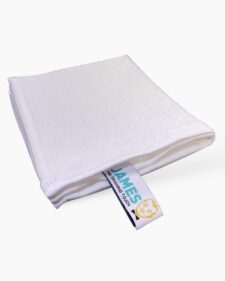
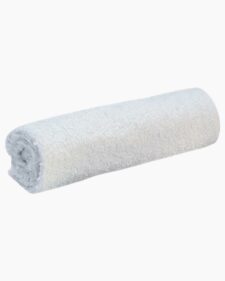
Deze vlek kun je direct behandelen met water. Hier heb je een witte, katoenen badstof handdoek en water voor nodig. Volg onderstaande stappen:
- Eerst de vaste bestanddelen zoveel mogelijk verwijderen met een lepel.
- Direct een witte, katoenen badstof handdoek natmaken met koud water, uitwringen en plat op de vlek plaatsen.
- Laat de badstof handdoek liggen, zonder te spieken. Als de handdoek verzadigd raakt, deze vervangen zoals bovenstaand beschreven. Laat vervolgens de handdoek liggen tot deze geheel droog is.
Behandeling opgedroogde vlekken
-
-
Add to cart

- Carpet / Rug, Upholstery
James Stainspray
- € 16,95
-
-
-
-
-
Stain remover for carpet and upholstery. Removes oil and grease-based stains such as chewing gum, tar, shoe polish, and paint -
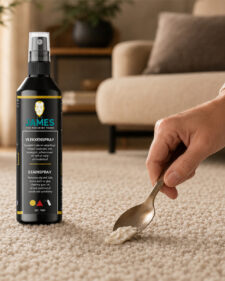
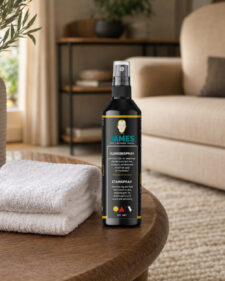
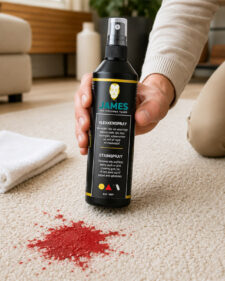
Eerst behandelen met James Vlekkenspray, daarna met James Vlekkenwonder (*meubelstoffen)
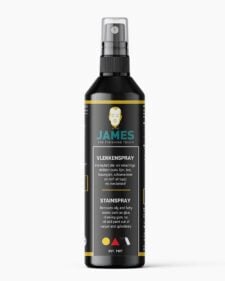
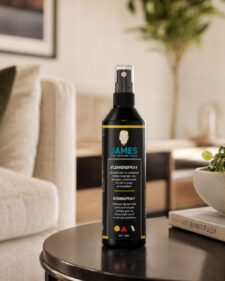
Deze vlek kun je behandelen met James Vlekkenspray en James Vlekkenwonder. Je hebt hier James Vlekkenspray, James Vlekkenwonder en een witte, badstof handdoek voor nodig.
Test beide producten eerst op een onopvallende plaats op kleur- en materiaalbestendigheid: aanbrengen, laten drogen en beoordelen.
Eerste stap:
- Spray James Vlekkenspray op een droge, witte badstof handdoek.
- Hiermee in grote, rustige halen over de vlek wrijven, zonder deze verder te verspreiden. Behandeling meermaals herhalen met een schoon stuk van de handdoek.
- U verwijdert hiermee vet en olie bestanddelen.
-
-
Add to cart
- Carpet / Rug, Upholstery
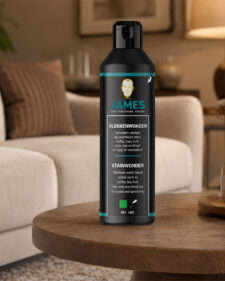
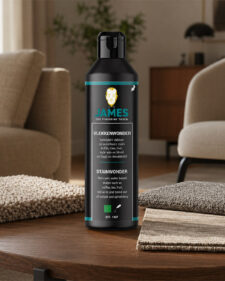
James Stainwonder
- € 16,95
-
-
-
-
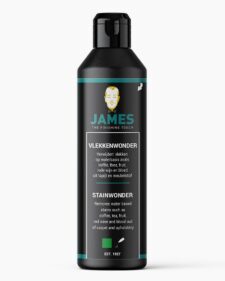
Stain remover for carpet and upholstery. Removes water-based stains, such as coffee, tea, fruit, and red wine -
Tweede stap:
- Laat de ondergrond goed drogen.
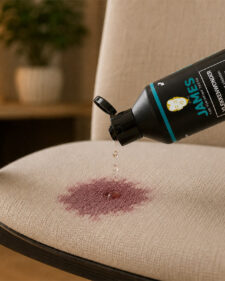
- Verdeel James Vlekkenwonder op de droge vlek door de fles op z’n kop te houden, de opening van de fles op de vlek te plaatsen en zo de gehele vlek te behandelen. Verdeel ook een beetje James Vlekkenwonder op een droge schone badstof handdoek en dek daarmee de vlek af. Dit is ter voorkoming van kringen na opdrogen.
- Het product werkt gedurende 12 uur, het effect hoeft dus niet direct zichtbaar te zijn. Neem de badstof handdoek pas weg nadat deze droog is om het resultaat te bekijken.*
- Is de vlek na behandeling niet geheel weg maar wel verbeterd? U mag de behandeling gerust herhalen.
* Bij wol: In veruit de meeste gevallen veroorzaakt James Vlekkenwonder geen verkleuring. U heeft dit al vastgesteld door het product te testen op een onopvallende plaats zoals bovenstaand omschreven. In dat geval hoeft u de navolgende handeling niet uit te voeren. Indien er wel een (lichte) verkleuring ontstaat, dient u James Vlekkenwonder te neutraliseren met water zodra de vlek is verdwenen (hiervoor dient u wél tussendoor de handdoek op te lichten om te kunnen beoordelen of de vlek al weg is). Plaats in dat geval direct een andere, vochtige badstof handdoek op de plaats waar de vlek zat en laat deze zo drogen.